EdX

水力学 | Hydraulics (edX)

水力学 | Hydraulics (edX)

This Hydraulics course explores the science of hydraulics and focuses on hydrodynamic laws and their applications, which are indispensable and a critical factor in the development and utilization of water resources. 水,是人类生活不可或缺的资源。水力学是人类开发利用水资源的有力工具。本课教你认识和掌握水流静止和运动的力学规律,了解在相关领域的工程应用。

Class Deals by MOOC List - Click here and see EdX's Active Discounts, Deals, and Promo Codes.

Hydraulics is one of the basic courses of civil engineering, hydraulic engineering, environmental engineering, architecture, and engineering physics. This science focuses on the laws of fluid dynamics and their interactions with the boundaries.
The main objective of this course is to develop the following:

  • Understanding of the basic concepts and related theories of hydraulics
  • Innovation consciousness and scientific literacy
  • Analysis and the ability to solve the hydraulic problems met in practice
The course content focuses on basic theories:

  • Physical and mechanical properties of fluid
  • Hydrostatics
  • Hydrokinematics
  • Hydrodynamics
  • Dimensional analysis and similitude
  • Flow resistance and energy loss

Hydraulics will expose you to important and interesting applications of mathematics and mechanics in engineering. You’ll participate in experiments and view videos in this class. If you take this course, you will not only gain expertise, but also have fun and know more about the nature about hydraulics in a fun and engaging way.

What you'll learn:

  • Basic concepts and related theories of hydraulics
  • Innovation consciousness and scientific literacy
  • How to analyze and solve the hydraulic problems met in practice
Go to Class
MOOC List is learner-supported. When you buy through links on our site, we may earn an affiliate commission.

Related Courses

The Basics of Transport Phenomena (edX) EdX
Delft University of Technology,DelftX

The Basics of Transport Phenomena (edX)

Learn the basic framework to work on a broad spectrum of engineering problems concerning transfer of heat, mass and momentum. Learn through examples of everyday processes at home, in the lab and in industry. Have you ever wondered why ventilation helps to cool down your hot chocolate? Do you know why a surfing suit keeps you warm? Why iron feels cold, while wood feels warm at room temperature? Or how air is transferred into aqueous liquids in a water treatment plant? How can we sterilize milk with the least amount of energy? How does medicine spread in our tissue? Or how do we design a new cooling tower of a power plant? All these are phenomena that involve heat transfer, mass transfer or fluid flow.

Self Paced
Self-Paced
Caer o No caer. El secreto de las estructuras (edX) EdX
Universidad Carlos III de Madrid - UC3M,UC3Mx

Caer o No caer. El secreto de las estructuras (edX)

Las estructuras están presentes en todos los sistemas que nos rodean. Descubrirlas y comprender cómo funcionan es sencillo y fascinante. Las estructuras están implicadas en nuestras vidas: las plantas, los animales, casi todo lo que fabrica el ser humano, incluso nuestro propio cuerpo, deben soportar una serie de fuerzas sin romperse, y por lo tanto prácticamente cualquier elemento de nuestro entorno es una estructura de una clase u otra.

Self Paced
Self-Paced
Fundamentos de Mecánica para Ingeniería (edX) EdX
Universitat Politècnica de València,UPValenciaX

Fundamentos de Mecánica para Ingeniería (edX)

Estudiaremos la cinemática y la dinámica del punto, los conceptos de trabajo y potencia y la energía mecánica. Se aborda el estudio del universo físico analizando objetos en movimiento. Se definen y analizan todas las magnitudes y leyes físicas que permiten describir geométrica y causalmente el movimiento de cuerpos representados por un punto.

Self Paced
Self-Paced
A Hands-on Introduction to Engineering Simulations (edX) EdX
CornellX,Cornell University

A Hands-on Introduction to Engineering Simulations (edX)

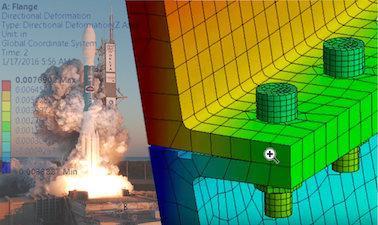
Learn how to analyze real-world engineering problems using ANSYS simulation software and gain important professional skills sought by employers. In this hands-on course, you’ll learn how to perform engineering simulations using a powerful tool from ANSYS, Inc. This is a problem-based course where you’ll learn by doing. The focus will be on understanding what’s under the blackbox so as to move beyond garbage-in, garbage-out. You’ll practice using a common solution approach to problems involving different physics: structural mechanics, fluid dynamics and heat transfer.

Self Paced
Self-Paced
Introduction to Water and Climate (edX) EdX
Delft University of Technology,DelftX

Introduction to Water and Climate (edX)

Water is a crucial element in climate and for society. Find out about the latest engineering interventions for water management in rivers, coasts and the urban environment. Water is essential for life on Earth and of crucial importance for society. Water also plays a major role in affecting climate. Its natural cycle, from ocean to atmosphere by evaporation, then by precipitation back to land returning via rivers and aquifers to the oceans, has a decisive impact on regional and global climate patterns.

Self Paced
Self-Paced
Diseño de diques rompeolas con cubípodos (edX) EdX
Universitat Politècnica de València,UPValenciaX

Diseño de diques rompeolas con cubípodos (edX)

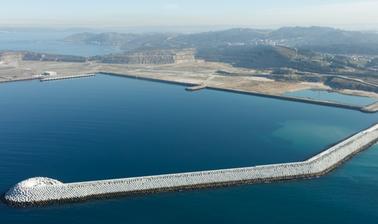
El objetivo del curso esaprender a diseñar diques en talud para los estudios de viabilidad de proyectos que incluyan obras marítimas de abrigo, con especial atención al diseño con mantos de cubípodos. Este es un curso de ingeniería dirigido a profesionales de ingeniería marítima, portuaria y civil. En él se puede aprender a diseñar diques en talud para los estudios de viabilidad de proyectos que incluyan obras marítimas de abrigo, con especial atención al diseño con mantos de cubípodos.

Self Paced
Self-Paced
Fundamentos de la obtención, estructura y modificación de materiales poliméricos (edX) EdX
Universitat Politècnica de València,UPValenciaX

Fundamentos de la obtención, estructura y modificación de materiales poliméricos (edX)

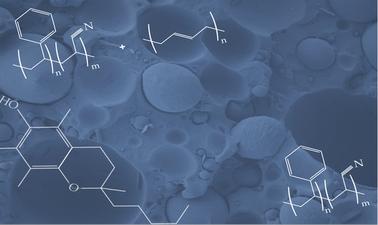
Aprende sobre la gran versatilidad de los polímeros en aplicaciones cotidianas así como también en sectores altamente tecnológicos como la aeronáutica, los deportes de competición y el sector médico. Los materiales poliméricos, se consideran materiales con un gran potencial de uso en el ámbito de la ingeniería. Actualmente, los polímeros se han convertido en materiales fundamentales en nuestra cultura y vida cotidiana, ya que los podemos encontrar en todo tipo de productos como ropa, automóviles, juguetes, etc.

Self Paced
Self-Paced
Solar Energy: Photovoltaic (PV) Technologies (edX) EdX
Delft University of Technology,DelftX

Solar Energy: Photovoltaic (PV) Technologies (edX)

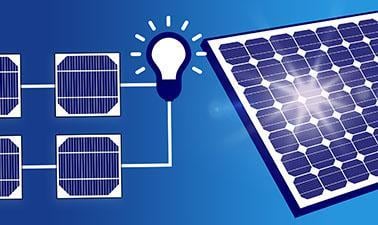
Explore the main PV technologies in the current market. Get in-depth knowledge on the design and processing methods of solar cells. The technologies used to produce solar cells and photovoltaic modules are advancing to deliver highly efficient and flexible solar panels. In this course you will explore the main PV technologies in the current market.

Self Paced
5-12 Weeks
Design of mound breakwaters for feasibility studies. Cubipod® Manual 2016 (edX) EdX
Universitat Politècnica de València,UPValenciaX

Design of mound breakwaters for feasibility studies. Cubipod® Manual 2016 (edX)

The goal of this course is to provide the tools to create feasible designs of mound breakwaters protected with Cubipod® armors fulfiling the prescribed economic, functional and safety requirements. This course is intended for professionals of coastal and port engineering who work in the preliminary design and feasibility studies of breakwaters.

Self Paced
Self-Paced
L’eau et les sols - Hydrodynamique des milieux poreux (edX) EdX
LouvainX,Université Catholique de Louvain - UCL

L’eau et les sols - Hydrodynamique des milieux poreux (edX)

Ce cours de spécialisation vous donnera les clés pour comprendre, modéliser et mesurer les processus de transferts de l’eau dans le sol. Comment l’eau de pluie s'infiltre-t-elle dans le sol (et quelle partie ruisselle) ? Quelle est la recharge d’une nappe ? Quelle quantité d’eau un sol peut-il retenir ? Quelle sont les directions des flux de polluants dans un sol ?

Self Paced
Self-Paced