EdX

The Engineering of Structures Around Us (edX)

The Engineering of Structures Around Us (edX)

Explore how engineers design bridges and buildings in our communities and iconic structures around the world. In this introductory course, you’ll learn some engineering principles that can be applied to structural systems everywhere: in nature, in furniture, in mechanical and aerospace systems, and in any solid object that resists a load. Together we’ll explore how structures work, why they were designed the way they were designed, how they support loads, and where forces flow through them.

Class Deals by MOOC List - Click here and see EdX's Active Discounts, Deals, and Promo Codes.

You’ll learn through a series of hands-on, inquiry-based activities with easily accessible materials, as well as with online simulation tools. We’ll provide lots of guidance for each activity but also encourage you to be creative and experiment so that you may discover the forms and designs that work best.

More specifically we’ll:

  • Apply the engineering design process to build innovative structural systems such as cardboard chairs, models of cable-stayed bridges, and tensegrity sculptures.
  • Learn about funicular forms and how ropes and cables resist tension.
  • Discuss how columns, arches, and anti-funicular forms resist compression.
  • Discover how trusses, beams and walls resist loads.
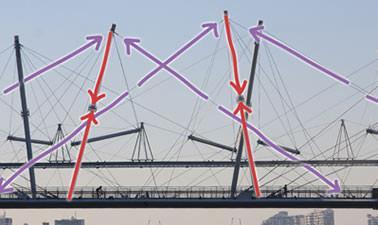
  • Sketch the flow of forces through a structure.
  • Compare and contrast different structural forms and systems to answer a range of questions such as: Why might an engineer choose a beam over a truss? How do the dimensions of a structure affect its response? How do engineers choose forms and systems to create structures that are both elegant and functional?

By experimenting with physical models you will gain a deeper understanding of structural behavior and will be able to think more critically about how structures are engineered.
Join us in exploring the engineering of structures around us.

What you'll learn:

  • How and why the world's structures (including structures in the natural and biological world) were designed and constructed the way they were
  • To conceptually design and build prototypes of structures
  • That engineering goes beyond math and science and involves much creativity and innovation
  • To identify and compare structural elements, forms, and systems
  • To describe the loads expected on a structure and the resulting flow of forces through the structure
Go to Class
MOOC List is learner-supported. When you buy through links on our site, we may earn an affiliate commission.

Related Courses

Railway Engineering: An Integral Approach (edX) EdX
Delft University of Technology,DelftX

Railway Engineering: An Integral Approach (edX)

Discover the science and complexity behind the exciting world of metro, tram and railway systems. Have you ever wondered what it takes to get your train on the right platform at the scheduled time every day? Understanding the complexity behind today’s sophisticated railway systems will give you a better insight into how this safe and reliable transportation system works. We will show you the many factors which are involved and how multiple people, behind the scenes, have a daily task that enables you to get from home to work. Journey with us into the world of rail - a complex system that connects people, cities and countries.

Oct 14th 2026
5-12 Weeks
Entrepreneurial Opportunities (edX) EdX
University of Adelaide,AdelaideX

Entrepreneurial Opportunities (edX)

Learn how to be a successful entrepreneur by understanding how to evaluate business opportunities and ideas. Do you have a business idea, but you’re not sure if it’s going to fly? Or maybe you know you want to be an entrepreneur, but you’re not sure where to start? This business course is for anyone aspiring to be an entrepreneur – regardless of the industry or type of venture you might have in mind.

Self Paced
Self-Paced
Innovating in Health Care (edX) EdX
HarvardX,Harvard University

Innovating in Health Care (edX)

Find innovation opportunities in health care technology, management, consulting, or investing by examining health care cost, quality, and access. Health care spending, quality, and access continue to plague America and global nations alike. With U.S. health care costs trending toward $4 trillion in 2020, the need to innovate and create smart, viable business plans is more important than ever before. Innovating in Health Care (IHC) explores how creating successful global business ventures in health care will not only improve access, but also better meet the needs of consumers and societies.

Self Paced
Self-Paced
Forensic Engineering: Learning from Failures (edX) EdX
Delft University of Technology,DelftX

Forensic Engineering: Learning from Failures (edX)

Don’t let good failures go to waste! Identify the causes of failure and use this knowledge to enhance safety and improve performance. What do collapsed buildings, infected hospital patients, and crashed airplanes have in common? If you know the causes of these events and conditions, they can all be prevented. In this course, you will learn how to use the TU Delft mind-set to investigate the causes of such events so you can prevent them in the future.

Self Paced
Self-Paced
Caer o No caer. El secreto de las estructuras (edX) EdX
Universidad Carlos III de Madrid - UC3M,UC3Mx

Caer o No caer. El secreto de las estructuras (edX)

Las estructuras están presentes en todos los sistemas que nos rodean. Descubrirlas y comprender cómo funcionan es sencillo y fascinante. Las estructuras están implicadas en nuestras vidas: las plantas, los animales, casi todo lo que fabrica el ser humano, incluso nuestro propio cuerpo, deben soportar una serie de fuerzas sin romperse, y por lo tanto prácticamente cualquier elemento de nuestro entorno es una estructura de una clase u otra.

Self Paced
Self-Paced
Advanced Transport Phenomena (edX) EdX
Delft University of Technology,DelftX

Advanced Transport Phenomena (edX)

Learn how to tackle complex mass and heat transfer problems and apply the results in your own environment. How can you reduce the energy loss of your home? What is the underlying science of energy loss in pipes? Which heat and mass transfer problems do we have to tackle to make consumer products? In this engineering course, you will learn about the engineering principles that play an important role in all of these and more phenomena. You will learn about microbalances, radiation, convection, diffusion and more and their applications in everyday life.

Self Paced
Self-Paced
Water and Wastewater Treatment Engineering: Biochemical Technology (edX) EdX
Tsinghua University,TsinghuaX

Water and Wastewater Treatment Engineering: Biochemical Technology (edX)

Learn the basic principles and characteristics of biochemical technology in water and wastewater treatment engineering. Biochemical technology in water and wastewater treatment engineering is essential in the field of water treatment. In this environmental studies course you will learn the basic principles and characteristics of biochemical technology.

Self Paced
Self-Paced
水力学 | Hydraulics (edX) EdX
Tsinghua University,TsinghuaX

水力学 | Hydraulics (edX)

This Hydraulics course explores the science of hydraulics and focuses on hydrodynamic laws and their applications, which are indispensable and a critical factor in the development and utilization of water resources. 水,是人类生活不可或缺的资源。水力学是人类开发利用水资源的有力工具。本课教你认识和掌握水流静止和运动的力学规律,了解在相关领域的工程应用。

Self Paced
Self-Paced
A Hands-on Introduction to Engineering Simulations (edX) EdX
CornellX,Cornell University

A Hands-on Introduction to Engineering Simulations (edX)

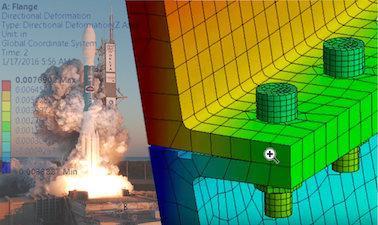
Learn how to analyze real-world engineering problems using ANSYS simulation software and gain important professional skills sought by employers. In this hands-on course, you’ll learn how to perform engineering simulations using a powerful tool from ANSYS, Inc. This is a problem-based course where you’ll learn by doing. The focus will be on understanding what’s under the blackbox so as to move beyond garbage-in, garbage-out. You’ll practice using a common solution approach to problems involving different physics: structural mechanics, fluid dynamics and heat transfer.

Self Paced
Self-Paced
Product Design: The Delft Design Approach (edX) EdX
Delft University of Technology,DelftX

Product Design: The Delft Design Approach (edX)

Learn to design meaningful products and services in this challenging design course. Do you want to learn how to design? Using the Delft Design Approach, you will learn how to use a number of key design methods to create meaningful products and services. This course is an introduction to the Delft Design Approach offering a set of signature methods from Delft to teach you how to get from understanding the user in context to defining a meaningful design challenge and – in the end – deliver a great design!

Self Paced
Self-Paced