EdX

Introducción a la Ingeniería del Software (edX)

Introducción a la Ingeniería del Software (edX)

Conoce las distintas fases de desarrollo por las que pasa un proyecto informático, así como las actividades de gestión necesarias para lograr finalizar el proyecto con éxito. ¿Alguna vez te has preguntado qué es y para qué sirve la Ingeniería de Software? ¿Quieres saber por qué es tan necesaria esta disciplina y por qué se utiliza tanto en entornos tecnológicos? ¿O cuál es el motivo de que muchos proyectos informáticos no finalizan en tiempo y coste o con la calidad deseada?

Class Deals by MOOC List - Click here and see EdX's Active Discounts, Deals, and Promo Codes.

En este curso en línea aprenderás cuáles son los métodos, técnicas y procedimientos adecuados para poder concluir con éxito un proyecto software cumpliendo requisitos de tiempo, recursos y costos.

Para ello, verás las principales diferencias de esta disciplina con el resto de ingenierías y entenderás por qué son necesarios procedimientos y técnicas específicos para el desarrollo y gestión del software.
Conocerás el ciclo de vida de un proyecto y la importancia de definir las fases y el orden a seguir durante su desarrollo.
Aprenderás a diferenciar las famosas metodologías ágiles (SCRUM, XP, KANBAN, etc.) de las tradicionales (ciclo de vida en cascada, iterativo, incremental, etc.) y cuándo aplicar cada una de ellas en función de las necesidades y características de tu proyecto.
Verás de cerca todas las fases que componen un proyecto y la importancia de cada una de ellas, desde la planificación hasta su puesta en marcha.
Cuando finalices este curso tendrás los conocimientos y herramientas necesarios para poder desarrollar y gestionar tus proyectos eficazmente. Tanto tú como tu equipo podréis ser más productivos, realizar trabajos de mayor calidad y tener mejor clima de trabajo.
Si quieres conocer todo lo que engloba la Ingeniería de Software, mejorar la forma de desarrollar y gestionar tus proyectos o simplemente aprender nuevas técnicas y metodologías que te ayuden a ser más eficaz en tu trabajo, ¡no dudes en apuntarte a este curso!

What you'll learn

  • Qué es el software y cuáles son sus diferentes componentes y características.
  • Cuáles son las principales actividades de un ingeniero de software.
  • Cómo adaptar metodologías y modelos de ciclos de vida a nuestro proyecto software.
  • Conocer las actividades principales de gestión de proyectos: estimación y planificación, negociación, coordinación del equipo de trabajo y seguimiento y control.
  • Identificar los requisitos de usuario y requisito software.
  • Asegurar la realización de un buen diseño.
  • Explorar la importancia de las pruebas exhaustivas utilizando técnicas apropiadas.
  • Finalizar el proceso de desarrollo de manera completa y satisfactoria.
  • Establecer diferentes estrategias de mantenimiento según las necesidades empresariales.
  • Identificar las principales medidas utilizadas en el aseguramiento de calidad del software.

Go to Class
MOOC List is learner-supported. When you buy through links on our site, we may earn an affiliate commission.

Related Courses

Fundamentos de Mecánica para Ingeniería (edX) EdX
Universitat Politècnica de València,UPValenciaX

Fundamentos de Mecánica para Ingeniería (edX)

Estudiaremos la cinemática y la dinámica del punto, los conceptos de trabajo y potencia y la energía mecánica. Se aborda el estudio del universo físico analizando objetos en movimiento. Se definen y analizan todas las magnitudes y leyes físicas que permiten describir geométrica y causalmente el movimiento de cuerpos representados por un punto.

Self Paced
Self-Paced
The Engineering of Structures Around Us (edX) EdX
DartmouthX,Dartmouth College

The Engineering of Structures Around Us (edX)

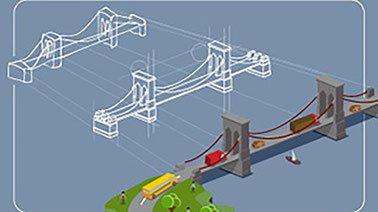
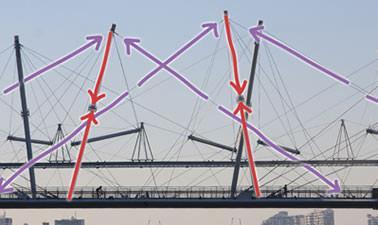
Explore how engineers design bridges and buildings in our communities and iconic structures around the world. In this introductory course, you’ll learn some engineering principles that can be applied to structural systems everywhere: in nature, in furniture, in mechanical and aerospace systems, and in any solid object that resists a load. Together we’ll explore how structures work, why they were designed the way they were designed, how they support loads, and where forces flow through them.

Self Paced
Self-Paced
International Project Management (edX) EdX
Rochester Institute of Technology,RITx

International Project Management (edX)

Learn what makes global projects uniquely challenging and how to successfully manage projects based in different industries and countries. Managing global projects presents unique challenges. This course addresses the knowledge, skills and behaviors required to successfully manage projects that span organizations, national boundaries and cultural differences.

Self Paced
Self-Paced
The Basics of Transport Phenomena (edX) EdX
Delft University of Technology,DelftX

The Basics of Transport Phenomena (edX)

Learn the basic framework to work on a broad spectrum of engineering problems concerning transfer of heat, mass and momentum. Learn through examples of everyday processes at home, in the lab and in industry. Have you ever wondered why ventilation helps to cool down your hot chocolate? Do you know why a surfing suit keeps you warm? Why iron feels cold, while wood feels warm at room temperature? Or how air is transferred into aqueous liquids in a water treatment plant? How can we sterilize milk with the least amount of energy? How does medicine spread in our tissue? Or how do we design a new cooling tower of a power plant? All these are phenomena that involve heat transfer, mass transfer or fluid flow.

Self Paced
Self-Paced
Software Engineering: Introduction (edX) EdX
The University of British Columbia,UBCx

Software Engineering: Introduction (edX)

Learn how to apply engineering principles, such as Agile, to build a full-stack software system. You will learn software engineering principles that are applicable to the breadth of large-scale software systems. The course explores topics such as agile development, REST and Async programming, software specification, design, refactoring, information security, and more.

Self Paced
Self-Paced
Project Management: Mastering Complexity (edX) EdX
Delft University of Technology,DelftX

Project Management: Mastering Complexity (edX)

Develop the project management skills you need to handle complexity in engineering, infrastructure and other large projects. Underestimating project complexity is widely accepted as one of the major causes of project failure. Based on international benchmarking activities (Merrow, 2010), we know that an average of 40% of projects do not deliver what they promised; for megaprojects in the oil and gas industry this figure is even worse (Ernst&Young, 2014).

Self Paced
5-12 Weeks
A System View of Communications: From Signals to Packets (Part 3) (edX) EdX
The Hong Kong University of Science and Technology - HKUST,HKUSTx

A System View of Communications: From Signals to Packets (Part 3) (edX)

Explore the tradeoffs in designing communication systems like mobile phones, and the engineering tools to handle them. Have you ever wondered how information is transmitted using your mobile phone or a WiFi hotspot? Gain an understanding of the basic engineering tools used and tradeoffs encountered in the design of these communication systems.

Self Paced
Self-Paced
Decision-Making for Autonomous Systems (edX) EdX
Chalmers University of Technology,ChalmersX

Decision-Making for Autonomous Systems (edX)

Learn effective tactics for making key decisions when working with autonomous, self-driving vehicles. In autonomous vehicles such as self-driving cars, we find a number of interesting and challenging decision-making problems. Starting from the autonomous driving of a single vehicle, to the coordination among multiple vehicles. This course will teach you the fundamental mathematical model for many of these real-world problems.

Self Paced
Self-Paced
Gestion de projets de développement (edX) EdX
Inter-American Development Bank - IDB,IDBx

Gestion de projets de développement (edX)

Apprenez les meilleures pratiques de gestion de projet pour promouvoir le développement socioéconomique en Amérique latine et dans les Caraïbes. Jour après jour les institutions publiques, les organisations non gouvernementales, les agences de développement ainsi que d'autres acteurs travaillant en faveur du développement économique et social en Amérique latine et dans les Caraïbes, font face à un défi majeur. Il s'agit de savoir comment transformer les propositions en réalités concrètes qui puissent améliorer le bien-être de la société et d'atteindre les résultats avec le temps et les ressources disponibles.

Self Paced
Self-Paced