EdX

Découvrir la science politique (edX)

Découvrir la science politique (edX)

Décrypter des enjeux politiques actuels à partir d’une boîte à outils: des notions importantes, une démarche analytique et une perspective critique. Le politique nous concerne tous : chaque jour, des décisions publiques sont adoptées qui impactent notre quotidien. Dans quel contexte ces décisions sont-elles adoptées ? Au 21ème siècle, de nombreux paradoxes brouillent la vision que nous pouvons en avoir.

Class Deals by MOOC List - Click here and see EdX's Active Discounts, Deals, and Promo Codes.

Qu’est-ce que le pouvoir dans la société actuelle ? Quels acteurs en détiennent ? L’État demeure-t-il un acteur politique majeur s’il est concurrencé par des organisations internationales et régionales ? Comment la démocratie prônée par la communauté internationale se différencie-t-elle des régimes autoritaires voire totalitaires ? Quelle est la place des idéologies dans le monde actuel ? Le cours vise à comprendre et à expliquer des phénomènes politiques à partir d’une posture d’analyse critique.

À la fin du cours, vous serez capable de:

  • Définir et expliquer des concepts en science politique.
  • Mettre en lien les concepts avec leurs auteurs et, plus largement, les phénomènes concrets qu'ils désignent.
  • Amorcer des analyses objectives de phénomènes politiques basées sur les connaissances acquises.

Syllabus

1. Qu'est-ce que la science politique ?

  • Que signifie "politique" ?
  • Comment un fait devient-il politique ?
  • Y a-t-il du politique dans tout ?
  • Les précurseurs de la science politique
  • La science politique comme science sociale

2. L'Etat

  • Qu'est-ce que l'Etat ?
  • D'où vient la structure étatique ?
  • A quoi sert l'Etat ?
  • Comment s'organise la structure étatique ?

3. La Démocratie

  • Les différentes typologies des régimes politiques
  • Aux origines de la démocratie
  • La démocratie moderne
  • L'ingénierie politique de la démocratie
  • La non-démocratie

4. Les idéologies

  • Le libéralisme
  • Le communisme et le socialisme
  • La démocratie chrétienne
  • Le(s) nationalisme(s)
  • Quelques autres -ismes
  • Gauche-droite

5. Les Acteurs du politique

  • Citoyens
  • Groupes d'influence
  • Partis politiques
  • Parlement
  • Gouvernement

6. Le pouvoir

  • Qui dirige dans nos sociétés ?
  • Comment exerce-t-on le pouvoir en politique ?
  • Tout pouvoir est-il légitime ?
  • Partons sur le terrain à la rencontre d'acteurs du champ politique
Go to Class
MOOC List is learner-supported. When you buy through links on our site, we may earn an affiliate commission.

Related Courses

Citizen Politics in America: Public Opinion, Elections, Interest Groups, and the Media (edX) EdX
HarvardX,Harvard University

Citizen Politics in America: Public Opinion, Elections, Interest Groups, and the Media (edX)

Learn about the forces in American politics that seek to influence the electorate and shift the political landscape. Public opinion has a powerful yet inexact influence on elected officials. Politicians risk their careers if they ignore it, yet its power is not easy to capture nor quantify. This course will look at how political parties, campaigns, social movements, special interests, and the news media all play a role in influencing public opinion.

Self Paced
Self-Paced
Il potere dei sondaggi (edX) EdX
University of Naples Federico II,FedericaX

Il potere dei sondaggi (edX)

Ascoltare, capire e governare l'opinione pubblica. I sondaggi sono diventati un elemento centrale della cassetta degli attrezzi degli attori della politica e dell'informazione. Questo corso offre un viaggio all'interno del mondo dei sondaggi, nel modo in cui sono stati usati nel tempo, per riscoprire il loro valore principale di strumento della democrazia e per eliminare i rischi di un utilizzo distorto dei sondaggi. Gli insuccessi incassati negli ultimi anni dagli exit polls hanno contribuito a rilanciare il dibattito sull’attendibilità e l’utilità dello strumento sondaggistico.

Self Paced
Self-Paced
Inequality and Democracy (Coursera) Coursera
Universiteit Utrecht

Inequality and Democracy (Coursera)

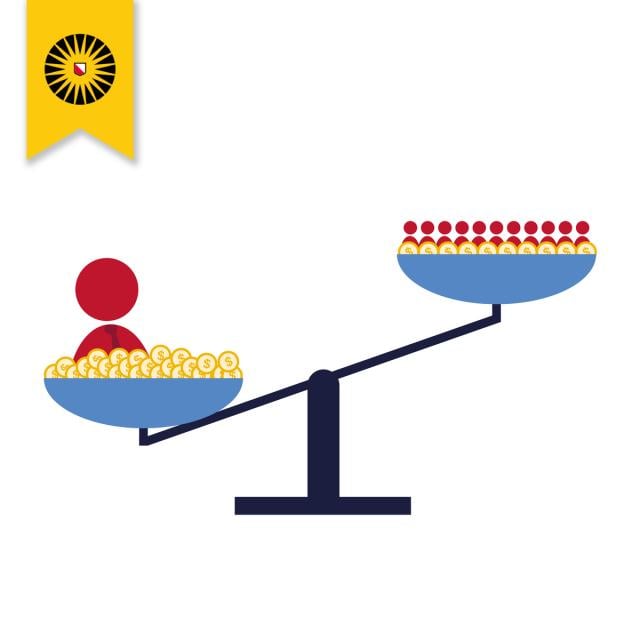
Most countries are getting more and more unequal. But the core of democracy is political equality: that everyone should have an equal say in how their country is run. Can we really expect these things to go together? Can people have equal political power while economic inequality grows and grows? Take this course and decide for yourself.

Nov 2nd 2026
5-12 Weeks
Civic Engagement in American Democracy (Coursera) Coursera
Duke University

Civic Engagement in American Democracy (Coursera)

So how does the American political system work? Who are some of the key actors? What are key concepts for a student trying to understand what’s going on? How can I as a citizen influence politics? Civic Engagement in American Democracy takes on these and other key questions. We’re Dr. Nicholas Carnes and Dr. Bruce Jentleson, the principal course instructors. Along with our Duke faculty colleagues who also contributed modules, we’ve designed the course to provide a strong foundational introduction to US politics.

Nov 2nd 2026
4 Weeks
Power, Politics, and Influence at Work (FutureLearn) FutureLearn
University of Manchester

Power, Politics, and Influence at Work (FutureLearn)

Discover the causes of global employment inequalities, how workers gain a voice through unions, and the future of work itself. Help build workers’ rights and a better future for employment and society. With the world of work in unprecedented flux, the role of workers’ rights has never been more pressing, as society grapples with issues such as how to ensure better employment equity and safety.

Self Paced
5-12 Weeks
Come ci si governa nel mondo (e in Italia) (Federica Web Learning) Federica Web Learning
University of Naples Federico II

Come ci si governa nel mondo (e in Italia) (Federica Web Learning)

Com’è organizzato il potere politico nelle nostre democrazie? Chi comanda e perché? Su quali basi giuridiche? Secondo quali soluzioni organizzative, o 'modelli', appunto? Sviluppatisi sulla base di quali criteri e principi? Adottati seguendo quali tradizioni culturali? Con quali vantaggi e quali svantaggi? Perseguendo quali obiettivi e nel rispetto di quali valori? E come si comportano quei diversi 'modelli' nella loro dinamica? Questo, è un corso giuridico, anche se, come vedremo subito, si avvale di altre discipline fino al punto che lo si potrebbe considerare – in realtà – multidisciplinare.

May 11th 2017
No Information
Transitology – Pathways to and from Democracy (GCHumanRights) Global Campus of Human Rights
Global Campus of Human Rights

Transitology – Pathways to and from Democracy (GCHumanRights)

In this MOOC, academic lecturers in the field of Regime/System Transformation, Quality of Democracy, Elections, and Comparative Politics have been invited to teach, as well as practitioners, data analysts, and policymakers from countries that are currently struggling with the backsliding of democratic institutions and/or are in demanding political regime change in their countries. **Registration deadline: 12 March 2023**

Feb 20th 2023
5-12 Weeks
Le droit, est-ce pour moi ? (FUN) FUN
Université Panthéon-Assas Paris II

Le droit, est-ce pour moi ? (FUN)

Le Droit vous passionne depuis toujours. C’est cette voie que vous voulez choisir. Mais êtes-vous sûr de ne pas vous tromper ? Comment savoir si les études de vos rêves ne vont pas virer au cauchemar ? Plongez tout de suite au cœur de cet univers fascinant pour les uns, hermétique pour les autres. Venez découvrir le secret des cours, de la vie étudiante et des métiers du droit avec l’Université Panthéon-Assas. Et ne restez pas sans réponse face à cette cruciale question : « Le droit, est-ce vraiment pour moi ?

Oct 19th 2021
5-12 Weeks
Global Politics (Coursera) Coursera
University of Naples Federico II

Global Politics (Coursera)

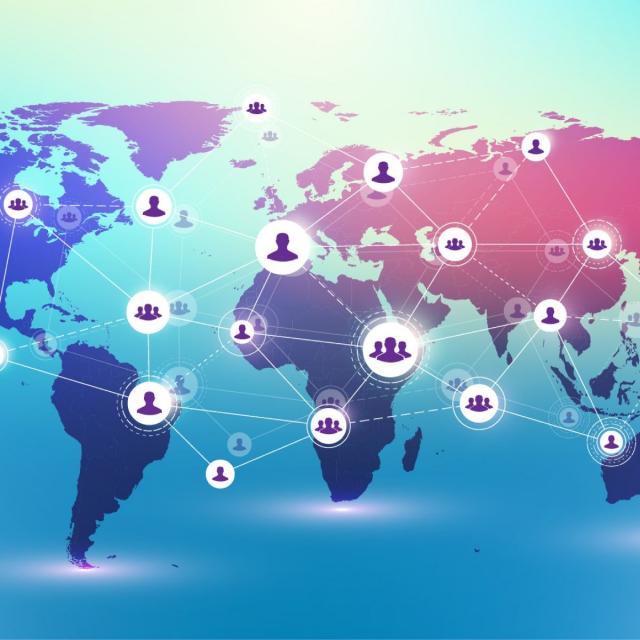
The course explains why international studies originating from the West are currently evolving towards a planetary approach to World politics, with a particular focus on global order and local disorders. Thinking globally helps explain new linkages between changes in the natural environment (demography, climate) and transformations of institutional designs.

Nov 16th 2026
3 Weeks
Digitalization in International Relations (Coursera) Coursera
Saint Petersburg State University

Digitalization in International Relations (Coursera)

Course participants will gain fundamental knowledge and practical skills regarding how to apply big data analysis, social media methods of analysis, how to build a digital information campaign strategy, how to operate by legal and technical components of global Internet governance in the practice of multilateral negotiations, and how to detect flaws and threats in the field of digital voting.

Jul 18th 2022
5-12 Weeks
The Politics of Skepticism (Coursera) Coursera
Erasmus University Rotterdam

The Politics of Skepticism (Coursera)

This is a course about the history of Skepticism from the ancient Greeks to today, with special attention to the political ramifications of questioning man's ability to know the world and himself with any certainty. We will discuss the debates raging between Plato and the Sophists, the rise of Christianity in the Roman world, and the so-called 'Skeptical Crisis' of the Renaissance as well as Pierre Bayle's Skepticism and David Hume's.

Nov 23rd 2026
5-12 Weeks