Digitalization in International Relations (Coursera)

Digitalization in International Relations (Coursera)

Course participants will gain fundamental knowledge and practical skills regarding how to apply big data analysis, social media methods of analysis, how to build a digital information campaign strategy, how to operate by legal and technical components of global Internet governance in the practice of multilateral negotiations, and how to detect flaws and threats in the field of digital voting.

Class Deals by MOOC List - Click here and see Coursera's Active Discounts, Deals, and Promo Codes.

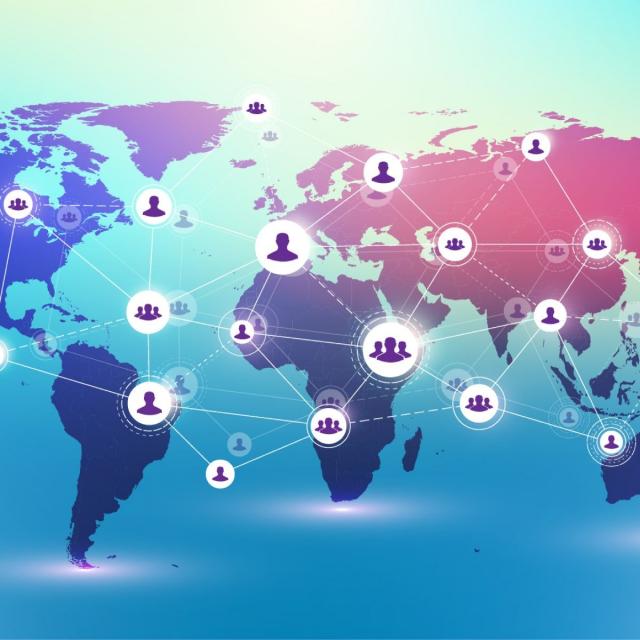
International relations, diplomacy, and foreign policy are being digitalized. Four aspects of digitalization in international relations are explored in the course, notably digital diplomacy, big data and data diplomacy, global internet governance, and digital electoral technologies. These components have significant impacts on diplomacy, world politics, and on our everyday lives, in particular.
Digital diplomacy utilizes social media in order to influence foreign audiences and is the most effective element in current diplomacy. Big data and data diplomacy refer to various methods used to analyze social networks and embrace artificial intelligence in order to cope with foreign policy issues including the challenges of information confrontation.
Global internet governance comprises problems, multilateral negotiations, and agreements between various stakeholders including states and civil society in regard to questions of international and sovereign control of cyberspace. Issues relating to cybersecurity and information security are also discussed in the course and reviewed in terms of international agendas.
Digital electoral technologies are a rapidly developing area that have not only national but also international dimensions. The digital technologies include the practices around electronic or digital voting that reveal critical problems related to the influence of foreign actors on national elections.
The course is designed for those who want to update their skills for twenty-first professions including digital diplomacy, digital foreign policy, public diplomacy, and other digital professions applicable in international relations.

Syllabus

WEEK 1: Digitalization in International Relations: Theory and Practice
WEEK 2: Digital Diplomacy and Data Diplomacy
WEEK 3: Data Science and World Politics
WEEK 4: Big Data in Foreign Policy: Methods of Analysis
WEEK 5: Internet Governance and International Agendas
WEEK 6: Cybersecurity and Information Security
WEEK 7: Digitalization of Elections and Voting
WEEK 8: Digital Technologies in Electoral Campaigns


Go to Class
MOOC List is learner-supported. When you buy through links on our site, we may earn an affiliate commission.

Related Courses

操作系统与虚拟化安全 (Coursera) Coursera
Peking University

操作系统与虚拟化安全 (Coursera)

从操作系统与虚拟化平台面临的安全问题和应该采取的安全机制入手,帮助你学习和掌握计算机系统安全的基本理论、技术、方法和评测标准。Learn about operating systems, virtualization security issues, and related security theories, technologies, methods and evaluation criteria, as well as gain a deeper understanding of computer systems security.

Jun 1st 2026
13-24 Weeks
Genomic Data Science and Clustering (Bioinformatics V) (Coursera) Coursera
University of California, San Diego

Genomic Data Science and Clustering (Bioinformatics V) (Coursera)

How do we infer which genes orchestrate various processes in the cell? How did humans migrate out of Africa and spread around the world? In this class, we will see that these two seemingly different questions can be addressed using similar algorithmic and machine learning techniques arising from the general problem of dividing data points into distinct clusters.

Jun 1st 2026
3 Weeks
Internet History, Technology, and Security (Coursera) Coursera
University of Michigan

Internet History, Technology, and Security (Coursera)

The impact of technology and networks on our lives, culture, and society continues to increase. The very fact that you can take this course from anywhere in the world requires a technological infrastructure that was designed, engineered, and built over the past sixty years. To function in an information-centric world, we need to understand the workings of network technology. This course will open up the Internet and show you how it was created, who created it and how it works. Along the way we will meet many of the innovators who developed the Internet and Web technologies that we use today.

Jun 1st 2026
5-12 Weeks
Teaching Impacts of Technology: Data Collection, Use, and Privacy (Coursera) Coursera
University of California, San Diego

Teaching Impacts of Technology: Data Collection, Use, and Privacy (Coursera)

In this course you’ll focus on how constant data collection and big data analysis have impacted us, exploring the interplay between using your data and protecting it, as well as thinking about what it could do for you in the future. This will be done through a series of paired teaching sections, exploring a specific “Impact of Computing” in your typical day and the “Technologies and Computing Concepts” that enable that impact, all at a K12-appropriate level.

Jun 3rd 2026
4 Weeks
Data Privacy Fundamentals (Coursera) Coursera
Northeastern University

Data Privacy Fundamentals (Coursera)

This course is designed to introduce data privacy to a wide audience and help each participant see how data privacy has evolved as a compelling concern to public and private organizations as well as individuals. In this course, you will hear from legal and technical experts and practitioners who encounter data privacy issues daily.

Jun 3rd 2026
3 Weeks
The Roles and Responsibilities of Nonprofit Boards of Directors within the Governance Process (Coursera) Coursera
University at Buffalo,The State University of New York

The Roles and Responsibilities of Nonprofit Boards of Directors within the Governance Process (Coursera)

This course provides a more in-depth look at the roles and responsibilities of boards of directors in the governance of nonprofit organizations. While the course has been developed with North American culture in mind, we do appreciate that in other parts of the world, the nature of the roles and responsibilities of boards of directors may not be the same. Nevertheless,it is our hope that much of the course content will still be of value to those in other parts of the world.

Jun 3rd 2026
5-12 Weeks
Ask Questions to Make Data-Driven Decisions (Coursera) Coursera
Google

Ask Questions to Make Data-Driven Decisions (Coursera)

This is the second course in the Google Data Analytics Certificate. These courses will equip you with the skills needed to apply to introductory-level data analyst jobs. You’ll build on your understanding of the topics that were introduced in the first Google Data Analytics Certificate course. The material will help you learn how to ask effective questions to make data-driven decisions, while connecting with stakeholders’ needs. Current Google data analysts will continue to instruct and provide you with hands-on ways to accomplish common data analyst tasks with the best tools and resources.

Jun 2nd 2026
4 Weeks
The Structured Query Language (SQL) (Coursera) Coursera
University of Colorado Boulder

The Structured Query Language (SQL) (Coursera)

In this course you will learn all about the Structured Query Language ("SQL".) We will review the origins of the language and its conceptual foundations. But primarily, we will focus on learning all the standard SQL commands, their syntax, and how to use these commands to conduct analysis of the data within a relational database. Our scope includes not only the SELECT statement for retrieving data and creating analytical reports, but also includes the DDL ("Data Definition Language") and DML ("Data Manipulation Language") commands necessary to create and maintain database objects.

Jun 2nd 2026
5-12 Weeks
Introduction to Machine Learning (Coursera) Coursera
Duke University

Introduction to Machine Learning (Coursera)

This course will provide you a foundational understanding of machine learning models (logistic regression, multilayer perceptrons, convolutional neural networks, natural language processing, etc.) as well as demonstrate how these models can solve complex problems in a variety of industries, from medical diagnostics to image recognition to text prediction.

Jun 5th 2026
5-12 Weeks