Cybersecurity and Its Ten Domains (Coursera)

Cybersecurity and Its Ten Domains (Coursera)

This course is designed to introduce students, working professionals and the community to the exciting field of cybersecurity. Throughout the MOOC, participants will engage in community discourse and online interaction. Participants will gain knowledge and understanding of cybersecurity and its domains. They will engage with expertly produced videos, gain insight from industry experts, participate in knowledge assessments, practice assessing their environmental awareness, and gain access to materials that address governance and risk management, compliance, business continuity and disaster recovery, cryptography, software development security, access control, network security, security architecture, security operations, and physical and environmental security.

Class Deals by MOOC List - Click here and see Coursera's Active Discounts, Deals, and Promo Codes.

Learning will be assessed using strategies aligned to knowledge and understanding.
You do not need prior experience in IT security to do well in this course. All you need is a willingness to learn. We will point you to relevant open and free resources to assist you.

Syllabus

WEEK 1
Welcome and Course Overview
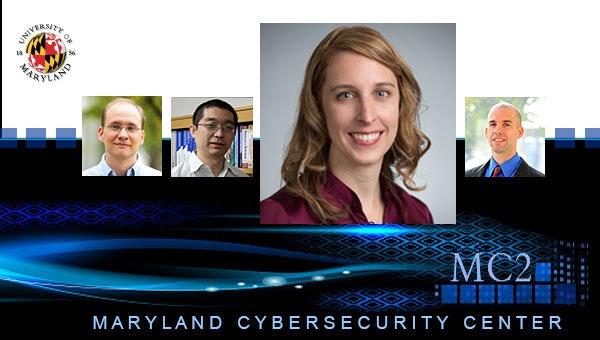
Checkout our marquee speaker. She's the Chief Privacy Officer at Coca Cola.

WEEK 2
Introduction to Security, Access Control, and Software Development Security
In this module we cover some of the fundamentals of security that will assist you throughout the course. We will then introduce you to two domains of cyber security: access control and software development security. Focus will be on areas such as confidentiality, integrity, and availability, as well secure software development techniques.

WEEK 3
Business Continuity and Disaster Recovery Planning and Cryptography
In this module we are going to delve a little deeper into cyber security by covering business continuity and disaster recovery planning and cryptography. Learners will be exposed to what a disruptive event is and how the federal government through agencies such as FEMA handles disasters. We will also covers encryption and decryption and the various techniques used.

WEEK 4
Information Security Governance and Risk Management & Legal, Regulations, Investigations, and Compliance
In this module we are going to cover some of the non-technical topics associated to cyber security: Information security governance and risk management and legal, regulations, investigations, and compliance. It is important to realize, that non-technical does not mean easy, or not important. In fact, I would like to argue that they are more important that the technical side of cyber security.

WEEK 5
Operations Security & Physical and Environmental Security
In this module we are going to cover what amount to some of the more intuitive parts of cybersecurity: operations security and physical and environmental security. Learners will understand operations security from a competitor/enemy/hacker’s viewpoint and then develop and apply countermeasures accordingly. Learners will also be exposed to electric power issues such as brownouts, fire detection and suppression, and HVAC.

WEEK 6
Security Architecture and Design & Telecommunications and Network Security
In this module we are going to cover some of the most technical and comprehensive topics that cyber security has to offer as we look at Security Architecture and Design and Telecommunications and Network Security. Learners will be exposed to security models such as Bell LaPadula, Clark-Wilson, Mandatory Access Control (MAC), Discretionary Access Control (DAC), Role-Based Access Control (RBAC), and Access Matrix. We will also describe the Open Systems Interconnect (OSI) model and its seven layers.

WEEK 7
Receive Undergraduate Course Credit at Kennesaw State University
In this module we provide details about leveraging this MOOC for credit at the undergraduate level at Kennesaw State University. It is very important that learners follow directions carefully.

Go to Class
MOOC List is learner-supported. When you buy through links on our site, we may earn an affiliate commission.

Related Courses

Introduction to Network Security (Coursera) Coursera
University of London,Royal Holloway, University of London

Introduction to Network Security (Coursera)

The security of computer networks is a key element in cyber security. Computer networking provides the foundational connectivity services that are used for the world wide web, distributed computer applications and services, operations and manufacturing, and national infrastructure. This course provides understanding of key technologies used in computer networks and infrastructure. This includes protocols, computer networks, data centres, operational technologies that form key infrastructure critical to the success of organisations and services from a local to an international scale.

Oct 5th 2026
5-12 Weeks
Cybersecurity Awareness and Innovation (Coursera) Coursera
EIT Digital

Cybersecurity Awareness and Innovation (Coursera)

It’s not you, it’s me! What’s going on? This course empowers students, professionals and wider community to deal with cybersecurity attacks and risks focused on identity management and it is an introduction to the upcoming full course focused on cybersecurity awareness. It is provided a practical overview of challenging issues like identity credentials management and security, e-mail threats and web impersonation, or web hacking.

Sep 28th 2026
5-12 Weeks
Usable Security (Coursera) Coursera
University of Maryland, College Park

Usable Security (Coursera)

This course focuses on how to design and build secure systems with a human-centric focus. We will look at basic principles of human-computer interaction, and apply these insights to the design of secure systems with the goal of developing security measures that respect human performance and their goals within a system.

Oct 5th 2026
5-12 Weeks
The Cybersecurity Culture Blueprint: A Proactive Approach (Coursera) Coursera
LearnQuest

The Cybersecurity Culture Blueprint: A Proactive Approach (Coursera)

In today's rapidly evolving digital landscape, the importance of cybersecurity cannot be overstated. Threats to organizations, both large and small, are on the rise, and the consequences of security breaches can be devastating. It's no longer enough to rely solely on technical solutions; a resilient cybersecurity culture is essential.

Sep 28th 2026
4 Weeks
Securing Digital Democracy (Coursera) Coursera
University of Michigan

Securing Digital Democracy (Coursera)

In this course, you'll learn what every citizen should know about the security risks--and future potential — of electronic voting and Internet voting. We'll take a look at the past, present, and future of election technologies and explore the various spaces intersected by voting, including computer security, human factors, public policy, and more.

Sep 21st 2026
5-12 Weeks
Intel® Network Academy - Network Transformation 102 (Coursera) Coursera
Intel Corporation

Intel® Network Academy - Network Transformation 102 (Coursera)

Welcome to the Intel® Network Academy – a comprehensive training program on network transformation. In this program, we will be covering the topic areas of software defined infrastructure (SDI) network functions virtualization (NFV), software-defined networking (SDN) and beyond. Network Transformation 102 covers topics such as VNF Operations & Development, Cryptography, and Hyperscan technology, students will dive into the benefits of Intel hardware and software and explore how to accelerate compute-intensive operations with Intel® QuickAssist Technology (Intel® QAT).

Sep 28th 2026
4 Weeks
Cloud Computing Security (Coursera) Coursera
University of Colorado System

Cloud Computing Security (Coursera)

In this MOOC, we will learn Cloud Computing basics using AWS as an example, We will guide you to create AWS account, planning AWS resources for your cloud systems, create AWS EC2 instances, access them and configure the popular LAMP web services with MySQL database. We will guide you to create user accounts for your programmer or operators using AWS Identify and Access management GUI, Register your domain name and setup DNS entry for your servers using AWS Route 53 in 22 mintues! and show you how to use AWS Command Line interface to create and managing instances and services programmatically.

Oct 5th 2026
4 Weeks
Managing Cybersecurity Incidents and Disasters (Coursera) Coursera
University System of Georgia

Managing Cybersecurity Incidents and Disasters (Coursera)

Most organizations plan for routine operations, but what happens when unexpected events overtake the routine? This course examines contingency planning used to prepare for and manage non-normal operations, including cybersecurity incidents – like hacking attempts, web site defacement, denial of service attacks, information disclosures; a well as other natural and man-made cybersecurity disasters.

Sep 21st 2026
5-12 Weeks
Cybersecurity Best Practices (Coursera) Coursera
Coursera Instructor Network

Cybersecurity Best Practices (Coursera)

"Cybersecurity Best Practices" is a transformative course designed for any learners whether they are just getting started with cybersecurity or are seasoned professionals looking for a refresher. This course uses real world examples and explains cybersecurity concepts in relatable ways to make it accessible for anyone while still challenging seasoned professionals to think of these concepts with a different lens.

Sep 28th 2026
1 Week
Java Programming: Arrays, Lists, and Structured Data (Coursera) Coursera
Duke University

Java Programming: Arrays, Lists, and Structured Data (Coursera)

Build on the software engineering skills you learned in “Java Programming: Solving Problems with Software” by learning new data structures. Use these data structures to build more complex programs that use Java’s object-oriented features. At the end of the course you will write an encryption program and a program to break your encryption algorithm.

Sep 21st 2026
4 Weeks
Competencias digitales. Conceptos y herramientas básicas (Coursera) Coursera
Universitat Autònoma de Barcelona

Competencias digitales. Conceptos y herramientas básicas (Coursera)

Los continuos cambios tecnológicos, sobre todo en aquellos aspectos vinculados a las tecnologías de la información y la comunicación (TIC) hacen que las personas tengan la necesidad de actualizarse de forma continua para que sus conocimientos no queden obsoletos. En este contexto, para las empresas se convierte en algo imprescindible disponer de profesionales que tengan las competencias necesarias para ejercer con éxito las actividades que requieren en su lugar de trabajo.

Sep 28th 2026
4 Weeks