Network Dynamics of Social Behavior (Coursera)

Network Dynamics of Social Behavior (Coursera)

How do revolutions emerge without anyone expecting them? How did social norms about same sex marriage change more rapidly than anyone anticipated? Why do some social innovations take off with relative ease, while others struggle for years without spreading? More generally, what are the forces that control the process of social evolution –from the fashions that we wear, to our beliefs about religious tolerance, to our ideas about the process of scientific discovery and the best ways to manage complex research organizations?

Class Deals by MOOC List - Click here and see Coursera's Active Discounts, Deals, and Promo Codes.

The social world is complex and full of surprises. Our experiences and intuitions about the social world as individuals are often quite different from the behaviors that we observe emerging in large societies. Even minor changes to the structure of a social network - changes that are unobservable to individuals within those networks - can lead to radical shifts in the spread of new ideas and behaviors through a population. These “invisible” mathematical properties of social networks have powerful implications for the ways that teams solve problems, the social norms that are likely to emerge, and even the very future of our society.
This course condenses the last decade of cutting-edge research on these topics into six modules. Each module provides an in-depth look at a particular research puzzle -with a focus on agent-based models and network theories of social change -and provides an interactive computational model for you try out and to use for making your own explorations!
Learning objectives - after this course, students will be able to...

  • explain how computer models are used to study challenging social problems
  • describe how networks are used to represent the structure of social relationships
  • show how individual actions can lead to unintended collective behaviors
  • provide concrete examples of how social networks can influence social change
  • discuss how diffusion processes can explain the growth social movements, changes in cultural norms, and the success of team problem solving

Syllabus

WEEK 1
Course Introduction and Schelling's Segregation Model
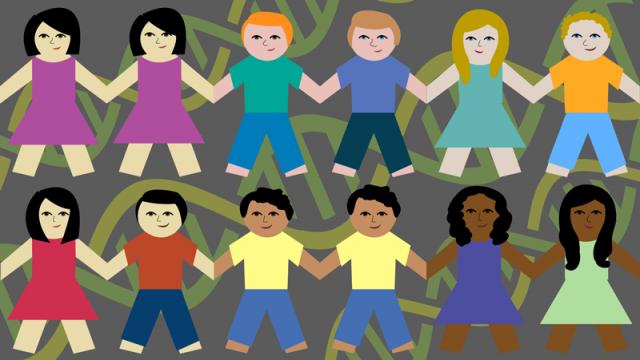
This week will introduce students to agent-based modeling and social network theory. We will present one of the earliest and most famous agent-based models, Thomas Schelling’s model of segregation, which shows how segregation can emerge in a population even when people individually prefer diversity. This week will demonstrate this model both conceptually and with NetLogo, and illustrate how agent-based models can be used to demonstrate sufficient conditions for the emergence of social phenomena.

WEEK 2
Diffusion in Small Worlds
This week will introduce students to social network theory and the “small worlds” paradox. We will introduce contagion models of diffusion, and discuss how network structure can impact the speed with which information spreads through a population. This week includes both high level conceptual overviews of social network theory, explaining how networks are used to represent complex social relationships, as well as technical descriptions of two basic types of networks.

WEEK 3
Complex Contagions and the Weakness of Long Ties
This week will begin by discussing the limitations of simple disease-like models of social contagion, introducing the idea of “complex contagions” to model people’s frequent need for social reinforcement before spreading a piece of information or behavior. While simple contagions always spread faster as networks get smaller, this week will demonstrate the paradoxical nature of complex contagions, which can spread slower (or not at all!) in the smallest networks.

WEEK 4
Emperor's Dilemma and the Spread of Unpopular Norms
How can behaviors become popular even when most people dislike them? This week will introduce a model based on the classic allegory by Hans Christian Anderson, “The Emperor’s New Clothes.” We will first provide a conceptual overview of the model, discussing the role of private versus public beliefs and the enforcement of social norms. We will then present this model in NetLogo, showing which conditions favor the spread of unpopular behaviors.

WEEK 5
The Spontaneous Emergence of Conventions
This week will tackle another puzzle in social conventions: how can populations reach widely shared social conventions in the absence of any central organizing mechanism? We will begin by discussing classic explanations for the emergence of conventions, and why these explanations are insufficient to explain our social world. We will then discuss an agent-based model of conventions that builds on a model of local peer-to-peer coordination, and use NetLogo to show how local interactions can generate global convergence.

WEEK 6
Problem Solving in Networks
How can you best organize a team to produce innovative solutions to complex problems? If people on the team can’t communicate, then they can’t share strategies, and won’t learn from each other’s success. But if they communicate too much, they’ll cluster around just a few ideas, and won’t explore the entire problem space. This week introduces an agent-based model of problem solving and shows how network structure can be used to navigate this classic exploration/exploitation trade-off.

Go to Class
MOOC List is learner-supported. When you buy through links on our site, we may earn an affiliate commission.

Related Courses

The Factors that Influence the Effectiveness of Boards and the Governance Process (Coursera) Coursera
University at Buffalo,The State University of New York

The Factors that Influence the Effectiveness of Boards and the Governance Process (Coursera)

The third course in this Specialization introduces you to the factors that influence how effective boards of directors will be in carrying out their roles and responsibilities and hence the impact they have in shaping the success of the organization they govern. While this course has been developed with North American culture in mind, we do appreciate that, in other parts of the world, the nature of the factors that influence the effectiveness of nonprofit boards of directors may vary. Nevertheless,it is our hope that much of the course content will still be of value to those in other parts of the world.

Aug 17th 2026
5-12 Weeks
Factory Automation: Shaping the Future of Manufacturing (Coursera) Coursera
Starweaver

Factory Automation: Shaping the Future of Manufacturing (Coursera)

This course provides a comprehensive understanding of factory automation, covering foundational concepts to practical applications. Participants explore the evolution of automation technology, including robotics and control systems, witnessing its role in optimizing production processes and enhancing productivity. Through real-world case studies, they learn how automation improves efficiency, safety, and innovation in manufacturing.

Aug 17th 2026
4 Weeks
Chemerinsky on Constitutional Law - The Structure of Government (Coursera) Coursera
University of California, Irvine

Chemerinsky on Constitutional Law - The Structure of Government (Coursera)

This course will highlight the construction and interpretation of the U.S. Constitution through the centuries. You'll learn the history behind the Constitution, cases that formed important precedent, and how changes in interpretation have been dependent on shifts in cultural and political climate as well as the composition of the Supreme Court.

Aug 17th 2026
5-12 Weeks
Samsung Customer Care Essentials (Coursera) Coursera
Samsung

Samsung Customer Care Essentials (Coursera)

Prepare to join a group of over 10,000 Samsung Mobile certified repair technicians in the U.S. who have gone through a training certification that equips them with the skills to conduct a mobile repair safely. Samsung has more than 1,000 Authorized Service Centers and service locations which is a care network that 75% of Americans have access to. This is an entry level course that will teach you the basics of Samsung Care that are needed to become a Samsung mobile repair technician or customer care representative.

Aug 17th 2026
3 Weeks
Computational Neuroscience (Coursera) Coursera
University of Washington

Computational Neuroscience (Coursera)

This course provides an introduction to basic computational methods for understanding what nervous systems do and for determining how they function. We will explore the computational principles governing various aspects of vision, sensory-motor control, learning, and memory. Specific topics that will be covered include representation of information by spiking neurons, processing of information in neural networks, and algorithms for adaptation and learning.

Aug 17th 2026
5-12 Weeks
Data and Urban Governance (Coursera) Coursera
Sciences Po

Data and Urban Governance (Coursera)

Since the beginning of the 2000s, cities have witnessed a massive influx of data, transforming how cities are governed. Data has an impact on how city life is structured, as it influences coalitions, actors, instruments, policies, and forms of regulation. In this MOOC, we will look at this shift more closely: what has the advent of big data done to urban governance? Have platforms disrupted local authorities? How has big data changed local politics? How do we govern using algorithms? What is the place of citizens in the digital city? Is it still possible to be anonymous in the city?

Aug 17th 2026
4 Weeks
IoT Communications and Networks (Coursera) Coursera
Institut Mines-Telecom

IoT Communications and Networks (Coursera)

By presenting the building blocks of the IoT network architecture, this MOOC will help learners adapt to the fast changing communications and networking environment of IoT. The IoT world represents billions of sophisticated objects, such as sensors, actuators and meters, that are deployed nearly everywhere, in homes, hospitals, factories, cities, and are connected to the Internet. However, they come with limited capacity in terms of memory storage, computational power and energy; how can these objects then ensure network reliability and timely transmission?

Aug 17th 2026
4 Weeks
Introduction to the Nonprofit Sector, Nonprofit Organizations, Nonprofit Leadership and Governance (Coursera) Coursera
The State University of New York

Introduction to the Nonprofit Sector, Nonprofit Organizations, Nonprofit Leadership and Governance (Coursera)

This course introduces you to the nonprofit sector, nonprofit organizations, and the concepts of leadership and governance. While this course has been developed with North American culture in mind, we do appreciate that in other parts of the world the nature of the nonprofit sector, nonprofit organizations, nonprofit leadership and governance may not be the same. Nevertheless, it is our hope that much of the course content will still be of value to those in other parts of the world.

Aug 17th 2026
5-12 Weeks
Psychology of Popularity (Coursera) Coursera
University of North Carolina

Psychology of Popularity (Coursera)

The level of popularity you experienced in childhood and adolescence is still affecting you today in ways that you may not even realize. Learn about how psychologists study popularity and how these same concepts can be used in adulthood to be more successful at work, become better parents, and have a happier life.

Aug 17th 2026
5-12 Weeks
EU policy and implementation: making Europe work! (Coursera) Coursera
Leiden University

EU policy and implementation: making Europe work! (Coursera)

People have become more critical of EU policy and often seem to prefer local policy solutions in response to globalisation problems. How do you experience EU policy? Does it help? And if not, how can we change this? In this course, we learn how the European Union prepares and decides on policy, and how policy is transferred to member states and implemented by various authorities, including regional and local governments. We discuss the challenges of the European multi-level governance structure. We also focus on the main causes of policy failure or success. On this journey, we focus on actual policy and present the views of various experts: how easy is it to establish yourself in another EU-country?

Aug 17th 2026
5-12 Weeks
Studying Cities: Social Science Methods for Urban Research (Coursera) Coursera
Erasmus University Rotterdam

Studying Cities: Social Science Methods for Urban Research (Coursera)

Are you looking to learn more about how to conduct scientific research, specifically in an urban or local context? Then you have found the right course: Studying Cities: Social Science Methods for Urban Research by the Institute for Housing and Urban Development Studies (IHS), Erasmus University Rotterdam. During the course you will gain more insight in the different steps of the research cycle, and build a firm foundation for your own future research endeavors.

Aug 17th 2026
5-12 Weeks