EdX

Citizen Politics in America: Public Opinion, Elections, Interest Groups, and the Media (edX)

Citizen Politics in America: Public Opinion, Elections, Interest Groups, and the Media (edX)

Learn about the forces in American politics that seek to influence the electorate and shift the political landscape. Public opinion has a powerful yet inexact influence on elected officials. Politicians risk their careers if they ignore it, yet its power is not easy to capture nor quantify. This course will look at how political parties, campaigns, social movements, special interests, and the news media all play a role in influencing public opinion.

Class Deals by MOOC List - Click here and see EdX's Active Discounts, Deals, and Promo Codes.

We’ll examine the attributes of public opinion, how polling attempts to measure those attributes, and how they impact the decisions of policymakers. We’ll address the unique features of the two-party system in the U.S., how those parties realign themselves in response to shifting norms, and how their candidates are vetted behind the scenes before the start of a campaign.
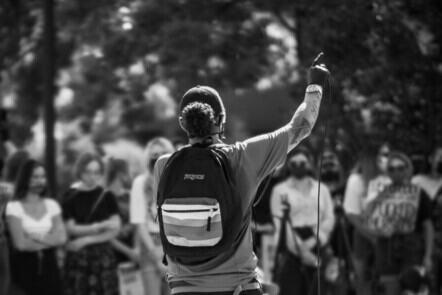
Outside of the formal organization of party politics, groups representing various interests aim to affect a change through the political system. Special interest groups resemble political parties, but while parties try to influence elections, groups concentrate on gaining influence over policies. Meanwhile, social movements take place outside these established institutions, often in the form of protest demonstrations and rallies. All of these interests are filtered through the news media, which plays a critical role in shaping people’s images of politics.
This course will help you to understand how these forces shape American politics, from “invisible primaries” to election day and beyond.
This course is part of the U.S. Government XSeries Program.

What you'll learn

  • The theory and practice of polling
  • The nature of today’s Republican and Democratic parties
  • How U.S. elections differ from those of other democracies
  • Key points of the 2016 Trump-Clinton race
  • Why social movements succeed or fail
  • Why some special interests are more influential than others
  • How the news system has changed in recent decades
  • The political consequences of a decentralized news media

Syllabus

Week 1: Public Opinion
This session will examine the attributes of public opinion and explore its impact on the decisions of policymakers—a subject that has been closely studied by political scientists. We will also explain the theory and practice of polling, which has become the primary method of assessing public opinion.

Week 2: Political Parties
Unlike most democracies, the United States has a two-party system, the Republicans and the Democrats. This session will examine this feature of the U.S. party system and will explain the nature of today’s Republican and Democratic parties. Party realignments will be a focus of the session.

Week 3: Campaigns & Elections
This session will begin with a look at the presidential nominating process, which includes what’s called the “invisible primary” along with the primaries and caucuses. The focus will then shift to the general election campaign, which centers on the battleground states—those that are competitive enough to be won by either candidate.

Week 4: Political Movements
This session will examine the factors affecting the success of political movements, such as their ability to attract the resources required for sustained advocacy. Four cases will be used to illustrate the significance of these factors: the black civil rights movement, the Vietnam War protest movement, the Tea Party movement, and Occupy Wall Street.

Week 5: Interest Groups
This session will examine interest groups, focusing on group influence and why some interests are more influential and fully organized than others. The Dodd-Frank Act of 2010, enacted in response to the economic downturn that began in 2008, will be used to illustrate key points about group influence.

Week 6: News Media
This session will examine the news media’s influence on politics, focusing on the extraordinary changes that have taken place in the news system in recent decades and on the consequences of those changes. The U.S. news system was once dominated by the television broadcast networks and local newspapers. Today, they have to compete with cable and Internet outlets, many of which operate by a different standard. News coverage of Trump’s and Clinton’s 2016 presidential campaigns will be used to illustrate key points.


Go to Class
MOOC List is learner-supported. When you buy through links on our site, we may earn an affiliate commission.

Related Courses

Luther and the West (Coursera) Coursera
Northwestern University

Luther and the West (Coursera)

In this course we will discuss the history of some ideas that have been hugely influential in the modern west and that were taken out to the rest of the world. The discussion centers on an extraordinary and historically important figure, a sixteenth century German man named Martin Luther. Luther is recognized today as the originator of many of the most significant ideas that continue to affect and shape who we as modern people are and how we see the world and ourselves for better and for worse.

Jun 1st 2026
5-12 Weeks
From Freedom Rides to Ferguson: Narratives of Nonviolence in the American Civil Rights Movement (Coursera) Coursera
Emory University

From Freedom Rides to Ferguson: Narratives of Nonviolence in the American Civil Rights Movement (Coursera)

The Modern Civil Rights Movement is a significant landmark in United States history. This movement was a struggle for human rights directly challenging the nation to extend its democratic principles to African Americans and all peoples. This course sheds light on the often overlooked strategic planning that supported the direction of the events and is told by a voice intimately involved in the organization of movement—Dr. Bernard LaFayette, Jr. Topics include the history of the campaigns, the different coalitions and groups, philosophy and methods of nonviolent direct action, and the contemporary application of nonviolent conflict transformation. The course hosts several guest speakers, including Andrew Young, Reverend C.T. Vivian, Henry "Hank" Thomas, and Constance Curry.

Jun 1st 2026
5-12 Weeks
Justice (edX) EdX
HarvardX,Harvard University

Justice (edX)

Justice, one of the most famous courses taught at Harvard College, is an introduction to moral and political philosophy, offering an opportunity to discuss contemporary dilemmas and controversies. Taught by lauded Harvard professor Michael Sandel, Justice explores critical analysis of classical and contemporary theories of justice, including discussion of present-day applications.

Self Paced
Self-Paced
Découvrir l'anthropologie (edX) EdX
LouvainX,Université Catholique de Louvain - UCL

Découvrir l'anthropologie (edX)

Expérimentez un autre regard sur les sociétés humaines avec des chercheurs en anthropologie prospective. Comment les humains s’organisent-ils en sociétés ? Qu’appelle-t-on « familles » et comment se constituent-elles ? Quel regard et quels types d’analyse l’anthropologie propose-t-elle sur les systèmes de parenté, symboliques, politiques, religieux ?

Self Paced
Self-Paced
Gender and Development (FutureLearn) FutureLearn
Deakin University

Gender and Development (FutureLearn)

Does gender matter in international and community development? Find out in this free online course. Explore the relationship between gender and development. This online course explores why gender matters in contemporary international and community development, asking you to: explore the challenges for achieving gender justice throughout the world; examine the concepts of gender, development and what brings gender and development together.

Jul 3rd 2023
2 Weeks
Ecologie Politique: défi de la durabilité pour les démocraties (Coursera) Coursera
University of Lausanne

Ecologie Politique: défi de la durabilité pour les démocraties (Coursera)

De quoi parle-t-on lorsque l’on parle d’environnement ? Existe-t-il une crise écologique ? L’environnement se résume-t-il à la pollution ? Est-on vraiment fondé à parler de risques environnementaux ? L’environnement a-t-il affaire à la politique et si oui pourquoi ? Pourquoi et à partir de quand a-t-on pu parler d’écologie politique ? Quelles en sont les différentes expressions ? Les démocraties et leurs expressions courantes ne suffisent-elles pas à répondre aux problèmes écologiques ? Et si ce n’est pas le cas, quels sont les apports éventuels et potentiels de l’écologie politique ? Ce cours se propose à répondre à ces questions, l’objectif global étant de comprendre les tenants et aboutissants de l’interface écologie et politique.

Jun 8th 2026
4 Weeks
Global Diplomacy: the United Nations in the World (Coursera) Coursera
University of London,SOAS University of London

Global Diplomacy: the United Nations in the World (Coursera)

The course offers a well-researched and broad-ranging primer to the United Nations system. Consisting of an introduction to the complex UN family and its history, and a series of ‘snapshots’ of key UN functions, which are used to explore important UN themes and help learners develop important analysis, communication, and policy-based skills.

Jun 8th 2026
5-12 Weeks
Crowdfunding (Coursera) Coursera
University of Pennsylvania

Crowdfunding (Coursera)

Crowdfunding, the practice of raising small amounts of money from large numbers of people, has enabled people around the world to start new businesses, fund initiatives, and raise money for themselves and others. Yet, not all crowdfunding efforts reach their desired goal. Why do some succeed, while others fail? This course will reveal the science behind successful crowdfunding, drawing on data from hundreds of thousands of campaigns.

Mar 16th 2026
4 Weeks
U.S. Political Institutions: Congress, Presidency, Courts, and Bureaucracy (edX) EdX
HarvardX,Harvard University

U.S. Political Institutions: Congress, Presidency, Courts, and Bureaucracy (edX)

Examine the inner workings of the three branches of the U.S. Federal Government. How do the three branches of government operate? How is power shared among Congress, the president, and the Supreme Court? What role is played by federal agencies that have no direct constitutional authority of their own?

Self Paced
Self-Paced
Fundraising and Development Foundations (Coursera) Coursera
University of California, Davis

Fundraising and Development Foundations (Coursera)

In this course, you will gain an introduction to the basic terminology and concepts in the field, along with an overview of the development cycle from identification and cultivation through stewardship and recognition. You will learn how to develop a case for support, identify and assess prospective donors, match a donor’s interests and needs with your organization’s mission and goals, recognize planned giving benefits to your donors, structure a successful solicitation, and respond to ethical dilemmas.

Jun 8th 2026
4 Weeks