Civic Engagement in American Democracy (Coursera)

Offered by Duke University,
Civic Engagement in American Democracy (Coursera)

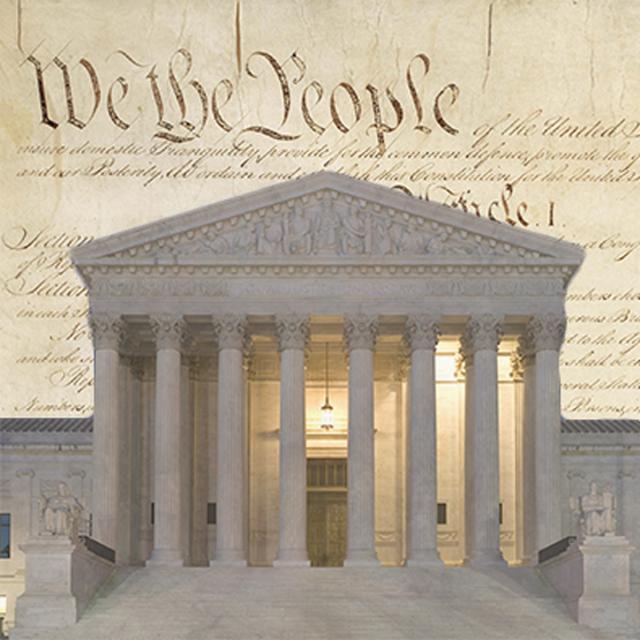
So how does the American political system work? Who are some of the key actors? What are key concepts for a student trying to understand what’s going on? How can I as a citizen influence politics? Civic Engagement in American Democracy takes on these and other key questions. We’re Dr. Nicholas Carnes and Dr. Bruce Jentleson, the principal course instructors. Along with our Duke faculty colleagues who also contributed modules, we’ve designed the course to provide a strong foundational introduction to US politics.

Class Deals by MOOC List - Click here and see Coursera's Active Discounts, Deals, and Promo Codes.

If you’re new to this material, proceed through the modules one by one and build up your knowledge of politics and government. If some of the material is familiar, go ahead and set your own pace. Either way we hope Civic Engagement in American Democracy helps you be an effective student in more advanced politics courses and/or an engaged citizen in 21st century America.

Syllabus

WEEK 1
Course Overview and Introduction

WEEK 2
Who are the key players?
This week we'll learn who is who in American Democracy.

WEEK 3
How do the players fit together?
This week we'll learn how American Democracy is structured and how forces—internal and external—affect it.

WEEK 4
How do citizens influence politics?
This week we'll learn how American citizens can affect their political system.

Go to Class
MOOC List is learner-supported. When you buy through links on our site, we may earn an affiliate commission.

Related Courses

Capstone Project: Teaching Impacts of Technology (Coursera) Coursera
University of California, San Diego

Capstone Project: Teaching Impacts of Technology (Coursera)

In this project-based course you’ll review the Advanced Placement Computer Science Principles course and exam description guide to prepare for the “Explore Task”, where students must research a recent computing innovation and and analyze its impacts on the world. You’ll also review the description of this task from the student perspective and complete the task yourself. Then you’ll assess sample secondary student work by following the APCSP scoring guidelines as well as provide feedback to a fellow learner on their submitted task and receive the same from fellow learners.

Jun 3rd 2026
5-12 Weeks
Quantitative Methods (Coursera) Coursera
University of Amsterdam

Quantitative Methods (Coursera)

Discover the principles of solid scientific methods in the behavioral and social sciences. Join us and learn to separate sloppy science from solid research! This course will cover the fundamental principles of science, some history and philosophy of science, research designs, measurement, sampling and ethics. The course is comparable to a university level introductory course on quantitative research methods in the social sciences, but has a strong focus on research integrity. We will use examples from sociology, political sciences, educational sciences, communication sciences and psychology.

May 25th 2026
5-12 Weeks
The Construction Industry: The Way Forward (Coursera) Coursera
Columbia University

The Construction Industry: The Way Forward (Coursera)

This course provides an introduction on types of the construction projects as well as the main concern of the productivity challenge in the construction industry. Through case studies, you will learn the industry characteristics and its unique environment that led to such productivity performance as well as touch base on other several examples of challenges we are facing internally in the industry.

Jun 1st 2026
5-12 Weeks
What future for education? (Coursera) Coursera
University of London,UCL Institute of Education

What future for education? (Coursera)

Through this course you will start to critically examine your own ideas about education, teaching and learning. The critique will be developed through engagement with theories and ideas developed through educational research. You will be encouraged to use these ideas to challenge or support your own ideas about education. Each week we will focus on one key question, using video lectures, key readings and challenges to explore some commonplace notions about education.

May 25th 2026
5-12 Weeks
Cities are back in town : urban sociology for a globalizing urban world (Coursera) Coursera
Sciences Po

Cities are back in town : urban sociology for a globalizing urban world (Coursera)

Urbanization is reaching a new peak in the contemporary world with the rise of mega cities. Researchers try to make sense of these large urban areas using a variety of concepts. The class will review debates and present social science models of cities to analyse and compare contemporary developments. The class will review debates and present social science models of cities and metropolis to analyse and compare contemporary developments.

Jun 1st 2026
5-12 Weeks
Inequality and Democracy (Coursera) Coursera
Universiteit Utrecht

Inequality and Democracy (Coursera)

Most countries are getting more and more unequal. But the core of democracy is political equality: that everyone should have an equal say in how their country is run. Can we really expect these things to go together? Can people have equal political power while economic inequality grows and grows? Take this course and decide for yourself.

Jun 1st 2026
5-12 Weeks
Global Energy and Climate Policy (Coursera) Coursera
University of London,SOAS University of London

Global Energy and Climate Policy (Coursera)

The Global Energy and Climate Policy course offers an introduction to the theoretical and practical understanding of how energy and climate change policies are designed, shaped, advocated and implemented. As energy markets go truly global, domestic energy policies are becoming more and more entangled with wider issues of international governance. Concurrently, the urgent need to mitigate and adapt to climate change and transition to a low-carbon future is adding a further layer of complexity.

Jun 1st 2026
5-12 Weeks
Artificial Intelligence: Ethics & Societal Challenges (Coursera) Coursera
Lund University

Artificial Intelligence: Ethics & Societal Challenges (Coursera)

Artificial Intelligence: Ethics & Societal Challenges is a four-week course that explores ethical and societal aspects of the increasing use of artificial intelligent technologies (AI). The aim of the course is to raise awareness of ethical and societal aspects of AI and to stimulate reflection and discussion upon implications of the use of AI in society.

Jun 1st 2026
4 Weeks
America Through Foreign Eyes (Coursera) Coursera
Rice University

America Through Foreign Eyes (Coursera)

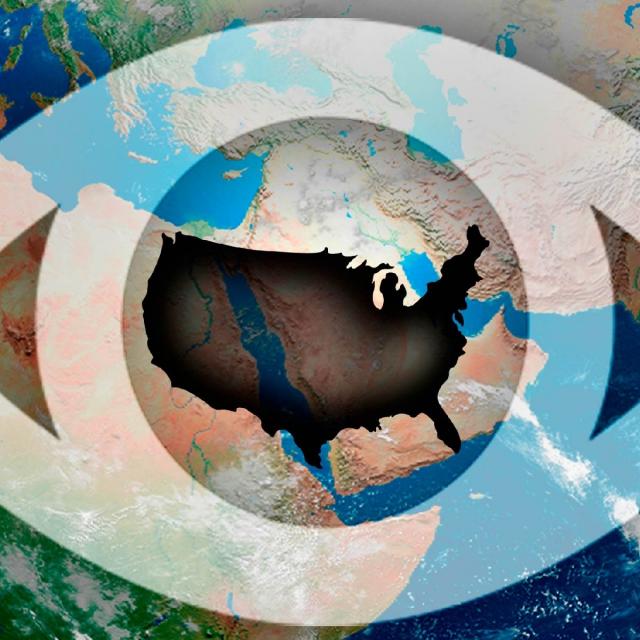
The United States has always been a source of fascination — both attraction and repulsion — for the people of France, Mexico, China, and African countries such as Nigeria, Ghana, and Sudan. "America Through Foreign Eyes" is a rich, interdisciplinary, international course that features Rice University faculty from a variety of disciplines and area studies. Focused on perceptions of America abroad, the course is a cross between World Cultures and American Studies. The course features five core modules, each covering the perceptions and interactions of particular regions with America, Americans and Americanization.

Jun 1st 2026
5-12 Weeks
Driving business towards the Sustainable Development Goals (Coursera) Coursera
Erasmus University Rotterdam

Driving business towards the Sustainable Development Goals (Coursera)

Extreme weather events, wars, famine and environmental destruction are just a few of the wicked problems faced by humanity. That’s why in 2015 the United Nations adopted the 2030 Agenda for Sustainable Development. This agenda includes 17 Sustainable Development Goals (SDGs) that target the big challenges such as how to eliminate poverty, how to protect the environment and how to bring about peace. Every member state committed to achieving these goals by 2030. What can businesses do to counter climate change and create a sustainable business culture? Why is this relevant for business anyway? Explore how business can contribute to a better future for people AND the planet without giving up profits.

Jun 1st 2026
5-12 Weeks
Copyright for Educators & Librarians (Coursera) Coursera
Duke University,Emory University,University of North Carolina at Chapel Hill

Copyright for Educators & Librarians (Coursera)

Fear and uncertainty about copyright law often plagues educators and sometimes prevents creative teaching. This course is a professional development opportunity designed to provide a basic introduction to US copyright law and to empower teachers and librarians at all grade levels. Course participants will discover that the law is designed to help educators and librarians.

May 25th 2026
5-12 Weeks