America Through Foreign Eyes (Coursera)

Offered by Rice University,
America Through Foreign Eyes (Coursera)

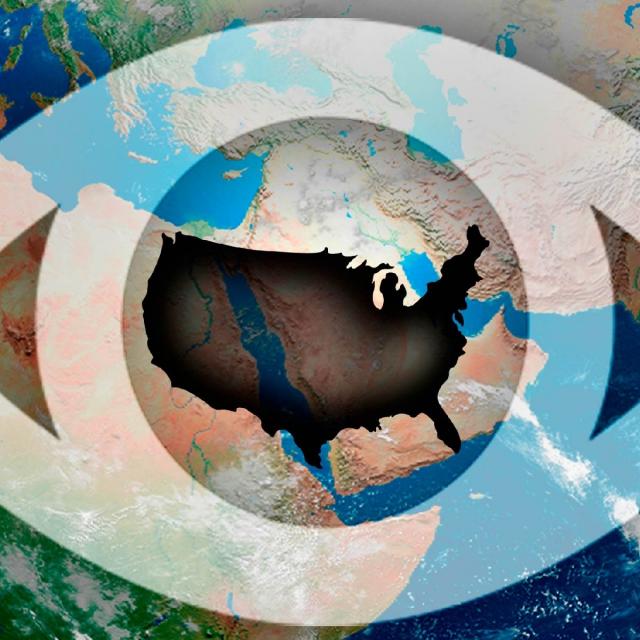
The United States has always been a source of fascination — both attraction and repulsion — for the people of France, Mexico, China, and African countries such as Nigeria, Ghana, and Sudan. "America Through Foreign Eyes" is a rich, interdisciplinary, international course that features Rice University faculty from a variety of disciplines and area studies. Focused on perceptions of America abroad, the course is a cross between World Cultures and American Studies. The course features five core modules, each covering the perceptions and interactions of particular regions with America, Americans and Americanization.

Class Deals by MOOC List - Click here and see Coursera's Active Discounts, Deals, and Promo Codes.

Syllabus

WEEK 1
Introduction
The United States has always been a source of fascination – both attraction and repulsion – for Africans, Chinese, French, Mexicans, and Russians, as well as for many other people from other countries and regions. "America through Foreign Eyes" is an interdisciplinary, international course that features Rice faculty from a variety of disciplines and area studies. Focused on perceptions of America abroad, the course is a cross between World Cultures and American Studies.The course features five modules, each covering the perceptions and interactions of a particular regions of the world with America, Americans, and Americanization. An introductory module offers ways to approach cross-cultural study and a concluding module "reverses the gaze" and analyze what Americans said, thought, or perceived of African nations or Africa as a continent, of China, France, Mexico, and Russia.

WEEK 2
America through African Eyes
The United States has always been a source of fascination for Africans. African observers and travelers are rarely indifferent to American culture and people. This module, “America Through African Eyes,” examines historical and contemporary perceptions of America, Americans, and Americanization through the lens of African writers, politicians, intellectuals, refugees, and local citizens. Taught by Dr. Jeffrey Fleisher, a professor of Archeology, this module will cover the four themes of the course: Democracy and Modernity; Globalization and Capitalism; Racism and Immigration; and Intellectual and Cultural Life.

WEEK 3
America Through Chinese Eyes
The United States has always been a source of fascination for the people of China. Chinese observers and travelers are rarely indifferent to American culture and people. This module, “America Through Chinese Eyes,” examines historical and contemporary perceptions of America, Americans, and Americanization through the lens of Chinese writers, artists, politicians, intellectuals, and public opinion. Taught by Dr. Anne Chao, a professor of History, this module will cover the four themes of the course: Democracy and Modernity; Globalization and Capitalism; Racism and Immigration; and Intellectual and Cultural Life.

WEEK 4
America Through French Eyes
The United States has always been a source of fascination for the people of France. French observers and travelers are rarely indifferent to American culture and people. This module, “America Through French Eyes,” examines historical and contemporary perceptions of America, Americans, and Americanization through the lens of French writers, artists, politicians, intellectuals, and public opinion. Taught by Dr. Julie Fette, a professor of French Studies, this module will cover the four themes of the course: Democracy and Modernity; Globalization and Capitalism; Racism and Immigration; and Intellectual and Cultural Life.

WEEK 5
America Through Mexican Eyes
The United States has always been a source of fascination for the people of Mexico. Mexican observers and travelers are rarely indifferent to American culture and people. This module, “ America Through Mexican Eyes,” examines historical and contemporary perceptions of America, Americans, and Americanization through the lens of Mexican writers, artists, politicians, intellectuals, and public opinion. Taught by Dr. Moramay López-Alonso, a professor of History, this module will cover the four themes of the course: Democracy and Modernity; Globalization and Capitalism; Racism and Immigration; and Intellectual and Cultural Life.

WEEK 6
America through Russian Eyes
The United States has always been a source of fascination for the people of Russia. Russian observers and travelers are rarely indifferent to American culture and people. This module, “America Through Russian Eyes,” examines historical and contemporary perceptions of America, Americans, and Americanization through the lens of Russian writers, thinkers, and film makers. Taught by Dr. Lida Oukaderova, a professor of Art History, this module will cover the four themes of the course: Democracy and Modernity; Globalization and Capitalism; Racism and Immigration; and Intellectual and Cultural Life.

WEEK 7
Reversing the Gaze
This course has explored how the United States has been a source of fascination for African, Chinese, French, Mexican, and Russian people. What happens when we “reverse the gaze?” This module examines historical and contemporary perceptions of Africa, China, France, Mexico, and Russia through American eyes. Join all five instructors for informal conversations over a meal at various Houston restaurants about American perceptions of the world.

Go to Class
MOOC List is learner-supported. When you buy through links on our site, we may earn an affiliate commission.

Related Courses

The Modern and the Postmodern (Part 2) (Coursera) Coursera
Wesleyan University

The Modern and the Postmodern (Part 2) (Coursera)

This course examines how the idea of "the modern" develops at the end of the 18th century in European philosophy and literature, and how being modern (or progressive, or hip) became one of the crucial criteria for understanding and evaluating cultural change. Are we still in modernity, or have we moved beyond the modern to the postmodern?

Aug 10th 2026
5-12 Weeks
Expanding SEL (Coursera) Coursera
University of Colorado Boulder

Expanding SEL (Coursera)

Social and emotional learning, or SEL, programs have flourished in schools during the last decade. In this course the instructors (Emily Price and Ben Kirshner) introduce and help you examine community based and youth-empowerment approaches to social and emotional learning. Some of these approaches address the impact of social and political systems, such as immigration and structural racism, on children’s social and emotional experiences.

Aug 3rd 2026
5-12 Weeks
Privacy in the USA (Coursera) Coursera
EIT Digital

Privacy in the USA (Coursera)

After having followed Privacy in the Western world you have become acquainted with the overall global legal system and the origins of privacy as a concept as well as privacy as a (human) right. This course deals with the American legal system to protect privacy. In the USA privacy is protected through different legal concepts. Constitutional protection through the 4th Amendment plays a crucial role in protecting the US citizen against unjust governmental intrusion. As part of a myriad of consumer protection laws (e.g. health, financial) personal data is also protected.

Aug 3rd 2026
5-12 Weeks
The Power of Team Culture (Coursera) Coursera
University of Pennsylvania

The Power of Team Culture (Coursera)

Behind the success and failure of teams lies team culture. But what exactly is culture? How and why does it contribute to success and failure? In this course, you learn how to recognize aspects of team culture of which most people are typically unaware. It is often these seemingly unimportant aspects that have the greatest effect on the outcomes of group tasks. Your recognition of them enables you to form, join and lead teams more effectively.

Aug 3rd 2026
5-12 Weeks
Civic Engagement in American Democracy (Coursera) Coursera
Duke University

Civic Engagement in American Democracy (Coursera)

So how does the American political system work? Who are some of the key actors? What are key concepts for a student trying to understand what’s going on? How can I as a citizen influence politics? Civic Engagement in American Democracy takes on these and other key questions. We’re Dr. Nicholas Carnes and Dr. Bruce Jentleson, the principal course instructors. Along with our Duke faculty colleagues who also contributed modules, we’ve designed the course to provide a strong foundational introduction to US politics.

Aug 10th 2026
4 Weeks
ART of the MOOC: Activism and Social Movements (Coursera) Coursera
Duke University,Creative Time

ART of the MOOC: Activism and Social Movements (Coursera)

This course is for activists, artists, and thinkers who wish to better understand and participate in social change. We will focus on the prolific and exciting overlap between socially engaged art and cultural practices generated by recent social movements around the world. Rather than assess the political efficacy of activities like mourning, listening, organizing, dancing, or partying, the lectures examine such cultural activities next to, and within, contemporary art practice.

Aug 17th 2026
5-12 Weeks
The Kennedy Half Century (Coursera) Coursera
University of Virginia

The Kennedy Half Century (Coursera)

When John F. Kennedy entered the presidential limousine at Love Field in Dallas, Texas on November 22, 1963, he began his ride into history. That journey continues even today and we call it the Kennedy legacy. This course will explore the Presidency, assassination, and lasting legacy of President John F. Kennedy. Students will learn how JFK’s life, administration, and tragic death have influenced the general public, the media, and each of the nine U.S. presidents who followed.

Aug 3rd 2026
4 Weeks
Psicología de la Percepción (Coursera) Coursera
Universidad de Palermo

Psicología de la Percepción (Coursera)

¿Cómo funcionan nuestros sentidos para ayudarnos a dar sentido y responder a nuestro entorno? ¿La percepción es un reflejo “fiel” del ambiente que nos rodea? ¿En qué se diferencia una alucinación de una percepción normal? ¿Cómo se relacionan los avances neurocientíficos con las teorías psicológicas clásicas de la percepción? ¿Cómo influyen la memoria, la atención y las expectativas en lo que percibimos?

Aug 17th 2026
3 Weeks
International Business I (Coursera) Coursera
University of New Mexico

International Business I (Coursera)

We live in a world of intensifying global relationships, one in which international business has become the key determinant of economic development and prosperity. This course, Global Business Environment, Part I, introduces students to a fundamental understanding of the socioeconomic political, cultural, and linguistic environment in which international businesses operate.

Aug 17th 2026
5-12 Weeks
Nuts and Bolts of U.S. Immigration Law (Coursera) Coursera
University of Pennsylvania

Nuts and Bolts of U.S. Immigration Law (Coursera)

Law

This course begins by exploring short term entry and long term entry into the United States. We will cover the various means of short term entry and long term entry, as well as the general application processes. We will also examine exclusion and deportation in the United States. In particular, we will discuss how and why individuals may not be admitted into the United States and possible reasons for deportation or removal. Lastly, we will cover the process of how to become a United States citizen and the various requirements for naturalization.

Aug 17th 2026
4 Weeks