EdX

Circular Strategies for MedTech Suppliers (edX)

Circular Strategies for MedTech Suppliers (edX)

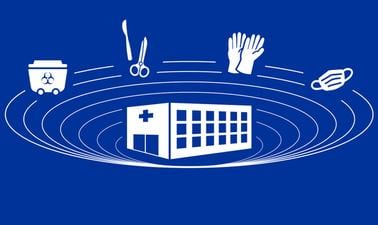
Apply theories, tools and best practices needed to design circular products or services for hospitals and other healthcare organizations. Developing or improving medical devices to ensure a continuous supply for an exponentially growing population is a critical factor in making healthcare more sustainable. This course will help you to make the transition towards a circular economy and create value in the healthcare industry on the supplier side.

Class Deals by MOOC List - Click here and see EdX's Active Discounts, Deals, and Promo Codes.

It has wide applications – designers and engineers working for MedTech manufacturers and suppliers; as well as students, managers, industry reps, sales teams or policy makers – anyone interested in knowing more about what circular design entails and how to support the improvement of product development, how to steer teams or give guidance to relevant stakeholders.
This course uses an interdisciplinary approach to create sustainable solutions in the healthcare supply industry using circular economy principles. It includes business cases with examples of circular strategies presented by experts in the field.
After taking this course you will understand the fundamentals of the circular economy and urban mining. You will learn how to create supplier value with circular strategies such as reuse, maintenance, repair, remanufacturing, and recycling of medical devices.
You will also learn how to create or stimulate circular product and circular process design. Finally, you will identify entrepreneurial possibilities and smart solutions to create a circular proposal with recommendations for your organization.
This course is part of the program Circular Strategies for Sustainable Healthcare developed by TU Delft’s MedTech experts in close collaboration with industry and renowned institutes. These courses provide not only academic insights but also practical tools and examples which can be implemented in any healthcare organization, and can help you propose and develop your own circular solutions and programs.
Free e-book
In addition to 24/7 online access to video lectures and other course material, you will receive an electronic copy of the brand-new book 'Creating a Circular Healthcare Economy'. This book will further equip you to drive sustainable change and embrace circularity in the healthcare sector.
This course is part of the Circular Strategies for Sustainable Healthcare Professional Certificate.

What you'll learn

  • The basics of circular economy and how to translate circular approaches within your own context
  • Define urban mining and identify recovery strategies from an industry perspective
  • Classify different waste streams and determine how to use them
  • Consider material properties and integrate these into the design of new products
  • Develop a new circular product or process which limits or eliminates waste

Syllabus

Week 1: Fundamentals of the circular economy
In this week you will learn the fundamentals of the circular economy. Topics which we will cover this week are:

  • The history and transfer from linear to circular
  • The Butterfly Diagram as a system
  • Corporate Social Responsibility Directive
  • Trend towards reusing and recycling raw materials

Week 2: Applying circular strategies
In this week you will learn to apply circular approaches. Topics which we will cover this week are:

  • Circular approaches as strategies.
  • Maintenance, Reuse, Repair, Remanufacturing, Recycling
  • Circular products and circular processes
  • Translating the Butterfly Diagram into practical methods. Recycling of medical waste.

Week 3: Urban mining
Topics which we will cover this week are:

  • Defining urban mining
  • The advantages of urban mining
  • Identify urban mining strategies
  • Energy mining
  • Energy transition.

Week 4: Waste streams
Topics which we will cover this week are:

  • How to urban mine in different industries
  • How to use recycled materials as raw material for new products
  • Risks of contamination. Differences with household waste streams
  • Materials and properties
  • Testing methods: XRF, Tensile Testing

Week 5: Circular product and process design
Topics which we will cover this week are:

  • Develop circular products and circular processes to limit or eliminate waste streams
  • Material properties and integration into the design of new products, including using materials made from recycled resources
  • Design for maintenance, design for repair, design for refurbishment, design for remanufacturing, design for recycling
  • Modular and time-less design
  • Design strategies to extend service-life from a mechanical perspective

Week 6: Creating a circular product or process proposal
Topics which we will cover this week are:

  • How do I create a circular proposal
  • Validation criteria and determining them when creating a circular proposal
  • Circular product design
  • Circular process design
  • How to write a circular proposal
  • How to evaluate a circular proposal

Week 7: Closing week
In this week we will wrap-up and provide main takeaways as well as additional resources and information. Literature reviews and finding relevant publications were part of this course and we will provide you with more relevant literature on this topic.
Go to Class
MOOC List is learner-supported. When you buy through links on our site, we may earn an affiliate commission.

Related Courses

General AI in Action: From Theory to Real-World Impact (Coursera) Coursera
Coursera Instructor Network

General AI in Action: From Theory to Real-World Impact (Coursera)

General Artificial Intelligence (AI) has proven its value across industries. As learners explore the world of AI, they need to familiarize themselves with the myriad of possibilities available for leveraging AI to get faster results, better outcomes, and improved efficiencies. Most AI applications generally considered, involve marketing and retail. However, AI has expanded far beyond meeting and exceeding customer expectations. There are current AI use cases around the world; for learners to understand and prepare for the future, they need to know how AI is being used beyond retail spaces.

Jul 6th 2026
1 Week
Business Sustainability in the Circular Economy (Coursera) Coursera
University of London

Business Sustainability in the Circular Economy (Coursera)

We are surrounded by so much discussion of sustainability that it can sometimes become overwhelming. Important questions include: What role can business have in ensuring the sustainability of the planet? How should business work with society to preserve the environment? These questions will be answered in this course as we explore the meaning of sustainability and its impact on modern organisations as they move to circular ideas to reduce waste, increase recycling and become fit for our modern society.

Aug 17th 2026
3 Weeks
Circular Economy: An Interdisciplinary Approach (edX) EdX
Wageningen University,WageningenX

Circular Economy: An Interdisciplinary Approach (edX)

Join the transition towards a circular economy considering economic, supply chain, social, technical, managerial and environmental aspects. Do you want to contribute to a more sustainable society? Tackle the challenges in the transition towards a circular economy? In this course you will analyze what it takes to create a circular economy including sustainable supply chains.

Self Paced
Self-Paced
Introduction to Sustainable Practices in Food Service (FutureLearn) FutureLearn
International Culinary Studio

Introduction to Sustainable Practices in Food Service (FutureLearn)

Create a more sustainable food service business and make a difference to your bottom line, your stakeholders, and the environment. Improve your sustainable practices within your organisation. Sustainability isn’t just about ‘greening’; sustainability actually means ‘meeting the needs of the present without compromising the ability of future generations to meet their needs.’ On this course, you’ll look at general global sustainability concepts, issues, and concerns, before focusing on sustainability specifically within food service and what you can do to reduce your impact.

Self Paced
2 Weeks
MedTech: Trends and Product Design (FutureLearn) FutureLearn
University of Leeds

MedTech: Trends and Product Design (FutureLearn)

Explore the product design process of MedTech devices and examine future trends in healthcare technology and the MedTech industry. Learn how innovative medical devices are designed, produced and regulated. Major advances in technology are driving innovation in healthcare. On this course, you will explore the global landscape of medical device trends by looking at the past, present, and future of medical technology development.

Self Paced
2 Weeks
Circular Strategies for Hospitals (edX) EdX
Delft University of Technology,DelftX

Circular Strategies for Hospitals (edX)

Learn to apply the principles of the circular economy in a hospital or healthcare organization to reduce waste and contribute to sustainable healthcare. Reducing medical waste is a worldwide challenge that calls for smarter solutions that can make healthcare more sustainable. This course helps hospital staff, management, users and buyers of medical products and decision-makers make the transition to a circular economy and therefore contribute to reducing waste streams and costs.

Self Paced
Self-Paced
Healthcare Marketplace (Coursera) Coursera
University of Minnesota

Healthcare Marketplace (Coursera)

In this course in the Healthcare Marketplace specialization you will identify, define, and describe potential business and public policy solutions to the challenges facing society’s growing demand for health services. Students will master a body of knowledge on the health care sectors major components through reading and reflection.

Jul 27th 2026
5-12 Weeks
Beyond Systems Thinking (edX) EdX
ETH Zurich,ETHx

Beyond Systems Thinking (edX)

We need cultural and mental transformation to deal with the current global polycrisis. This MOOC is the second of four MOOCs to hybridize science, design, and transformative praxis. This joint learning journey is a fluid, intervention-driven, synergistic process addressing complex challenges with a regional focus. It entails a critical look at systems thinking, tools to navigate complexity, basics of social network analysis, resilience assessment, circularities, and systemic innovation.

Self Paced
Self-Paced
Value Co-Creation in Sport Management – A New Logic in a Changing Society (edX) EdX
University of Bayreuth,BayreuthX

Value Co-Creation in Sport Management – A New Logic in a Changing Society (edX)

Do you want to become a successful sport management expert? Learn the importance of value co-creation and gather new insights that will make you more competitive in the field of sport management. Are you a passionate sports lover interested in exploring a new innovative logic in sport management? Enroll in this online course.

Self Paced
Self-Paced
Designing Electronics for Recycling in a Circular Economy (edX) EdX
Delft University of Technology,DelftX

Designing Electronics for Recycling in a Circular Economy (edX)

Discover the latest developments in Design for Recycling (DfR) of electrical and electronic equipment (EEE) and the application of recycled plastics into new products. Electronic products bring countless benefits to society, but their production and waste treatment also lead to numerous negative environmental and economic impacts. Since E-waste is the world’s fastest growing waste stream, governments are setting ambitious targets to help this industry transition towards a circular economy.

Self Paced
4 Weeks
Sustainability and the Circular Economy (Coursera) Coursera
University of Colorado Boulder,Siemens

Sustainability and the Circular Economy (Coursera)

As the world’s population continues to rise toward an expected 10 billion citizens by 2050, it is imperative that business practices change to ensure a high quality of life is possible for all of us, both human and non-human. Today’s learners are very aware of this. Moreover, they are highly motivated and have the extraordinary capacity to create a future that provides both economic success and a more enduring, resilient, and sustainable planet. If you are one of these learners, then Sustainability and the Circular Economy is a course for you.

Aug 3rd 2026
5-12 Weeks
Economía Circular en los procesos logísticos (edX) EdX
LOGYCAX,LOGYCA

Economía Circular en los procesos logísticos (edX)

La economía circular es una alternativa que busca redefinir el crecimiento organizacional, con énfasis en los beneficios para toda la sociedad. Esto implica separar la actividad económica del consumo de recursos finitos y eliminar los residuos del sistema desde el diseño. Existen diferentes modelos que nos enseñan a utilizar este concepto, pero en este curso podrá encontrar como aplicar estos modelos en procesos logísticos de la mano de las empresas y expertos que lo han investigado.

Self Paced
Self-Paced