EdX

Circular Strategies for Hospitals (edX)

Circular Strategies for Hospitals (edX)

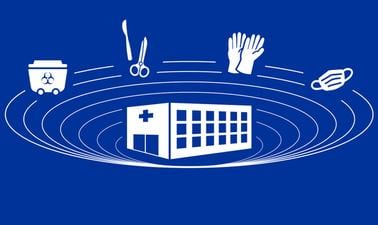
Learn to apply the principles of the circular economy in a hospital or healthcare organization to reduce waste and contribute to sustainable healthcare. Reducing medical waste is a worldwide challenge that calls for smarter solutions that can make healthcare more sustainable. This course helps hospital staff, management, users and buyers of medical products and decision-makers make the transition to a circular economy and therefore contribute to reducing waste streams and costs.

Class Deals by MOOC List - Click here and see EdX's Active Discounts, Deals, and Promo Codes.

This course uses an interdisciplinary approach to create sustainable solutions in hospitals. It includes business cases with visual examples of circular economy strategies presented by experts from the field. These strategies are also a tool to help relieve the supply chain as resources are under increasing pressure.
After taking this course you will master the concept of the circular economy from a hospital perspective. You will learn to apply circular strategies and how to set-up a green team to integrate circular processes in your organization. Finally, you will learn how to make recommendations for reducing waste streams.
This course is part of the program Circular Strategies for Sustainable Healthcare developed by TU Delft’s MedTech experts in close collaboration with industry representatives and renowned institutes. These courses provide not only academic insights but also practical tools and examples which can be implemented in any healthcare organization, and can help you propose and develop your own circular solutions and programs.
Free e-book
In addition to 24/7 online access to video lectures and other course material, you will receive an electronic copy of the brand-new book 'Creating a Circular Healthcare Economy'. This book will further equip you to drive sustainable change and embrace circularity in the healthcare sector.
This course is part of the Circular Strategies for Sustainable Healthcare Professional Certificate.

What you'll learn

  • Define the basics of circular economy from a hospital perspective
  • Translate the circular approaches of the Butterfly Diagram to a hospital or healthcare environment
  • Recognize the purpose of a green team and outline its requirements
  • Define urban mining and identify urban mining strategies in the hospital
  • Analyze waste streams in the hospital and identify how these can be reduced or eliminated
  • Formulate a set of recommendations to decrease hospital waste

Syllabus

Week 1: Basics of the circular healthcare economy, from a hospital perspective
In this week you will learn the basics of the circular healthcare economy, from a hospital perspective. Topics which we will cover this week are:
The transfer from linear to circular
The need to transfer to circular healthcare economy
Explanation of the Butterfly Diagram as a ‘system’ and its use as a model for waste reduction
The EU Climate Law and Green Deal
Trend towards reducing medical waste.

Week 2: Applying circular strategies in a hospital environment
In this week you will learn to apply circular approaches. Topics which we will cover this week are:
Visualizing all Butterfly Diagram approaches as strategies in a hospital.
Applying the circular strategies of Maintenance, Reuse, Repair, Remanufacturing, Recycling
Transforming hospitals’ use of circular products and processes
Product-life-extending programs
Circular strategies in hospitals

Week 3: Setting-up a green team
In this week you will learn how to set-up a green team. Topics which we will cover this week are:
Designing a green team
Integrating circular processes in an organization
Critical success factors and how to overcome resistance in setting-up a team
How to create a support base in the organization

Week 4: Urban Mining
In this week you will learn to define urban mining and to identify urban mining strategies in the hospital. Topics which we will cover this week are:
The definition of urban mining and its relevance
How to urban mine in a hospital
Risks of contamination
Differences between the different wastes streams: household, contaminated and non-contaminated waste streams
Materials and their properties
Mono versus mixed waste streams.

Week 5: How to reduce waste streams
In this week you will learn how to analyze waste streams in the hospital and identify how these can be reduced or eliminated. Topics which we will cover this week are:
Waste reduction strategies
Waste reduction programs
Medical devices with extended service-life and longer durability
Advantages of repair, preventive maintenance, refurbishment in the context of reducing waste streams
How to separate waste streams.

Week 6: Making recommendations to reduce waste in a hospital
In this week you will learn how to formulate a set of recommendations to decrease hospital waste. Topics which we will cover this week are:
Writing a waste reduction proposal
Evaluating a circular proposal
Creating a sustainable advice network.

Week 7: Summary of the course
In this week we will wrap-up and provide main takeaways as well as additional resources and information. Literature reviews and finding relevant publications were part of this course and we will provide you with more relevant literature on this topic.
Go to Class
MOOC List is learner-supported. When you buy through links on our site, we may earn an affiliate commission.

Related Courses

Building expertise on developing sustainable and resilient infrastructure (edX) EdX
École Polytechnique Fédérale de Lausanne,EPFLx

Building expertise on developing sustainable and resilient infrastructure (edX)

This course provides knowledge, builds expertise and provides tools on the planning, financing, procurement and contracting of sustainable and resilient infrastructure projects. This course provides knowledge, builds expertise and provides tools on the planning, financing, procurement and contracting of sustainable and resilient infrastructure projects.

Self Paced
Self-Paced
Engineering Design for a Circular Economy (edX) EdX
Delft University of Technology,DelftX

Engineering Design for a Circular Economy (edX)

Discover and develop sustainable design and engineering methods to improve the reuse, repair, remanufacturing, and recycling of products for a circular economy. Products and equipment all around us are made of materials: look around you and you will see phones, computers, cars, and buildings. We face challenges in securing the supply of materials and the impact this has on the planet. Innovative product design can help us find solutions to these challenges. This course will explore new ways of designing products.

Self Paced
Self-Paced
Creating a Pro-Renewables Environment (edX) EdX
Imperial College London,ImperialX

Creating a Pro-Renewables Environment (edX)

Understand the policy, regulatory and fiscal measures that can incentivise renewable power and drive cleaner investment along the entire electricity supply chain. This course provides the tools needed to build a low-carbon power sector around the world. By diving into the perspective of different players in the power sector - from investors through to utilities, regulators and project developers - you will be able to choose the right strategies, policies and other levers needed to incentivise a cleaner power mix in your own context.

Self Paced
Self-Paced
One Planet, One Ocean (edX) EdX
SDGAcademyX,SDG Academy

One Planet, One Ocean (edX)

A holistic view of how the ocean functions, how human interactions with the ocean can be understood, and what solutions are available to support both sustainable use and stewardship of our blue planet. Is the ocean the real final frontier? Humans have a greater understanding of the surface of the moon than they do of the depths of these waters.

Self Paced
Self-Paced
Circular Economy: An Introduction (edX) EdX
Delft University of Technology,DelftX

Circular Economy: An Introduction (edX)

Ready to make a difference? Learn how to contribute to a sustainable economic system by implementing novel business and design approaches! Our global society is not sustainable. We all know about the challenges we’re facing: waste, climate change, resource scarcity, loss of biodiversity. At the same time, we want to sustain our economies and offer opportunities for a growing world population. This course is about providing solutions we really believe in: a Circular Economy.

Self Paced
Self-Paced
Built environment sustainability assessment (edX) EdX
Universitat Politècnica de València,UPValenciaX

Built environment sustainability assessment (edX)

The course introduces the basic elements and trends for performing a through built environment assessment and develops the tools for urban sustainability policy impact analysis. The course introduces the basic elements and trends for performing a through built environment assessment and develops the tools for urban sustainability policy impact analysis.

Self Paced
Self-Paced
Sustainability & Major Sport Events: Principles (edX) EdX
Hamad Bin Khalifa University - HBKU,HBKUx

Sustainability & Major Sport Events: Principles (edX)

Learn the five pillars of sustainability and how to apply these when planning and hosting a major sport event. While any major sport event can pose great opportunities for the host city or region, there are also challenges associated with hosting these events. The environmental impact on the country's natural resources, the workforce, and infrastructure are just some of the considerations. It is essential to ensure that your major sport event is sustainable for your city throughout the event, but also after the event has been completed.

Self Paced
Self-Paced
Cities and the Challenge of Sustainable Development (edX) EdX
SDGAcademyX,SDG Academy

Cities and the Challenge of Sustainable Development (edX)

What is a sustainable city? Learn the basics here. According to the United Nations, urbanization and population growth could result in an increase of 2.5 billion people into urban populations by 2050, with associated impacts ranging from increased transportation needs to more building. How do we make cities sustainable to support this growth?

Self Paced
Self-Paced
Planetary Boundaries (edX) EdX
SDGAcademyX,SDG Academy

Planetary Boundaries (edX)

Can our planet continue to support the current scope of human activity? A thriving global society relies on the stability of the Earth and its resilience across oceans, forests, waterways, biodiversity, the atmosphere and more. So how do we shape sustainability at a global scale? The boundaries set by the planet’s natural resources, the resilience of those resources, and the human activities that impact sustainability all come into play.

Self Paced
Self-Paced
Gestión del agua para las ciudades del futuro (edX) EdX
Inter-American Development Bank - IDB,IDBx

Gestión del agua para las ciudades del futuro (edX)

Este MOOC brinda herramientas para mejorar la gestión de los recursos hídricos en las ciudades bajo una visión integral y sostenibilidad. ¿Sabes cuáles son los desafíos a los que se enfrentan las ciudades relativos al agua? ¿Sabes cuáles son las acciones que puedes realizar para el mejor gestión del agua en tu ciudad?

Self Paced
Self-Paced
Sustainability & Major Sport Events: Implementation (edX) EdX
Hamad Bin Khalifa University - HBKU,HBKUx

Sustainability & Major Sport Events: Implementation (edX)

Learn the best practices and tools you need to plan and implement a sustainable major sport event. When planning to host a major sport event you must take certain steps to ensure that the event is not only sustainable for the host city or region, but also leaves a lasting legacylong after the event has concluded. Thefirst course in theSustainability & Major Sport Events Professional Certificate program teaches the five pillars of sustainability and looks at how these pillars should be implemented during the planning and hosting phase.

Self Paced
Self-Paced
Climate Change: Carbon Capture and Storage (edX) EdX
University of Edinburgh,EdinburghX

Climate Change: Carbon Capture and Storage (edX)

Explore the technology that can provide a long-term solution to protect our atmosphere from an excess of carbon dioxide, in the context of global energy, our use of fossil fuels, and climate change. The atmosphere is a shared resource and the amount of greenhouse gases it can absorb is a finite resource. This introductory course to the technology of Carbon Capture and Storage is designed for a wider audience with an interest in energy, sustainability and climate change.

Self Paced
Self-Paced