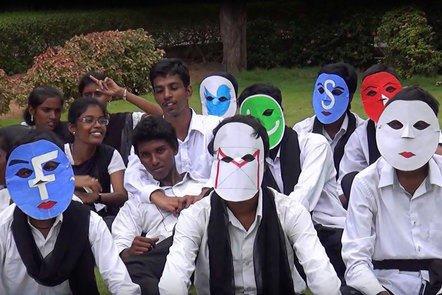
Why We Post: the Anthropology of Social Media (FutureLearn)

Why We Post: the Anthropology of Social Media (FutureLearn)

Discover the varying uses of social media around the world and its consequences for politics, relationships and everyday life. This free online course is based on the work of nine anthropologists who each spent 15 months in fieldsites in Brazil, Chile, industrial and rural China, England, India, Italy, Trinidad and Turkey.

Class Deals by MOOC List - Click here and see FutureLearn's Active Discounts, Deals, and Promo Codes.

What are the consequences of social media?
The course offers a new definition of social media which concentrates on the content posted, not just the capabilities of platforms. It examines the increasing importance of images in communication and the reasons why people post memes, selfies and photographs.
Over five weeks you will explore the impact of social media on a wide range of topics including politics, education, gender, commerce, privacy and equality. You will come to understand how the consequences of social media vary from region to region.

Take a comparative and anthropological approach to social media
The course will be taught by the same nine anthropologists who carried out the original fieldwork and who are publishing eleven books based on this research.
You will meet many of our informants through our films, engage with our team through video discussions and lectures, and encounter our ideas through animations, infographics and text.
Adopting an anthropological and comparative approach, we strive to understand not only how social media has changed the world, but how the world has changed social media.

What topics will you cover?
What is social media and how should we define it?

  • Academic approaches to social media and an introduction to anthropology.
  • The rise of images in communication.
  • The impact of social media on gender and politics.
  • The impact of social media on education, commerce and privacy.
  • The impact of social media on inequality.

What will you achieve?
By the end of the course, you‘ll be able to...

  • Apply critical thinking to a range of cross-cultural qualitative and quantitative evidence.
  • Asses social media from an anthropological perspective and conduct mini research projects.
  • Compare one's own perspective on social media to those from other cultural backgrounds.

Go to Class
MOOC List is learner-supported. When you buy through links on our site, we may earn an affiliate commission.

Related Courses

Social and Digital Media Analytics (FutureLearn) FutureLearn
Purdue University

Social and Digital Media Analytics (FutureLearn)

Learn how to analyse social and digital media and how to turn this data into useful insights and actions. Understand how to get value from digital and social media. How can social and digital media help a business improve? How can we get useful data from social and digital media? What are the limitations of such data? Get answers to these questions and more in this introductory course to social and digital media analytics.

No sessions available
3 Weeks
Data Collection: Online, Telephone and Face-to-face (Coursera) Coursera
University of Michigan

Data Collection: Online, Telephone and Face-to-face (Coursera)

This course presents research conducted to increase our understanding of how data collection decisions affect survey errors. This is not a “how–to-do-it” course on data collection, but instead reviews the literature on survey design decisions and data quality in order to sensitize learners to how alternative survey designs might impact the data obtained from those surveys.

Sep 21st 2026
4 Weeks
Social Computing (Coursera) Coursera
University of California, San Diego

Social Computing (Coursera)

People are social creatures and the modern Internet reflects that. Technology has made collaboration at a distance possible in new ways that present their own set of challenges. This course will introduce you to the major challenges and opportunities for creating online communities. What does the future hold? Learn how social computing can create collaboration experiences that go beyond what’s possible face to face.

Sep 21st 2026
3 Weeks
Découvrir l'anthropologie (edX) EdX
LouvainX,Université Catholique de Louvain - UCL

Découvrir l'anthropologie (edX)

Expérimentez un autre regard sur les sociétés humaines avec des chercheurs en anthropologie prospective. Comment les humains s’organisent-ils en sociétés ? Qu’appelle-t-on « familles » et comment se constituent-elles ? Quel regard et quels types d’analyse l’anthropologie propose-t-elle sur les systèmes de parenté, symboliques, politiques, religieux ?

Self Paced
Self-Paced
Antiquities Trafficking and Art Crime (FutureLearn) FutureLearn
University of Glasgow

Antiquities Trafficking and Art Crime (FutureLearn)

Law

Delve into the seedy underbelly of the art world, looking at smuggling, theft, fakes, and fraud, with this free online course. From fakes and fraud, to thefts and trafficking, art crime has turned archaeological sites in Iraq and Syria into “lunar landscapes”, decapitated Buddha sculptures in Cambodia and left empty frames on museum walls.

No sessions available
3 Weeks
An Anthropology of Smartphones: Communication, Ageing and Health (FutureLearn) FutureLearn
University College London

An Anthropology of Smartphones: Communication, Ageing and Health (FutureLearn)

Explore how smartphones have affected our lives by using comparative anthropology as a method of research. Discover digital anthropology and the relationship between technology and ageing. This course will develop your understanding of the concept of digital anthropology as you explore how smartphones have transformed our daily lives and how they can be used productively.

Self Paced
3 Weeks
Social Media Data Analytics (Coursera) Coursera
University of Washington

Social Media Data Analytics (Coursera)

Learner Outcomes: After taking this course, you will be able to: utilize various Application Programming Interface (API) services to collect data from different social media sources such as YouTube, Twitter, and Flickr; process the collected data - primarily structured - using methods involving correlation, regression, and classification to derive insights about the sources and people who generated that data; analyze unstructured data - primarily textual comments - for sentiments expressed in them; use different tools for collecting, analyzing, and exploring social media data for research and development purposes.

Sep 21st 2026
4 Weeks
Digital Skills: Social Media (FutureLearn) FutureLearn
Accenture

Digital Skills: Social Media (FutureLearn)

Learn how to use social media for business, from creating a social media presence to measuring success. Learn how to effectively use social media for business. What is social media, and how can it help your business? With this course, you’ll explore these questions and more. You’ll find out why social media marketing skills are becoming essential for all kinds of organisations, as well as some of the ways you can use them. You’ll explore how you can use social media to create and develop your brand, as well as some of the tools that can help as you do so.

Self Paced
2 Weeks
Transforming Citizen Participation (FutureLearn) FutureLearn
University of Birmingham

Transforming Citizen Participation (FutureLearn)

Discover the best techniques to encourage citizen participation and learn how to engage at all levels of the public sector. Explore innovative ways to communicate within the public sector. Citizen participation is an important part of democracy. It requires citizen involvement in public decisions as well as communication at all levels of the public sector. On this four-week course, you’ll discover effective techniques to engage with stakeholders, manage new ideas, co-create solutions, and investigate opportunities across the public sector.

Self Paced
4 Weeks
Career Planning: A Pathway to Employment (Coursera) Coursera
University System of Georgia

Career Planning: A Pathway to Employment (Coursera)

This course is designed to foster creative approaches to launching a new career. You will articulate best ways to make a first impression and analyze your strengths by creating a personal statement. You will identify appropriate elements to make your resume stand out from the crowd. You will also identify the most effective ways a cover letter can answer a job description, and how to best leverage social media in your job search.

Oct 5th 2026
5-12 Weeks