Antiquities Trafficking and Art Crime (FutureLearn)

Offered by University of Glasgow,
Antiquities Trafficking and Art Crime (FutureLearn)

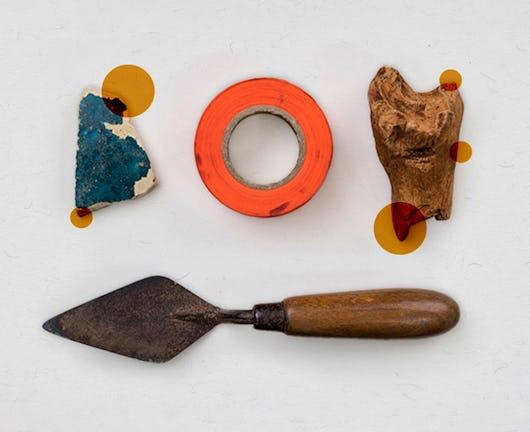
Delve into the seedy underbelly of the art world, looking at smuggling, theft, fakes, and fraud, with this free online course. From fakes and fraud, to thefts and trafficking, art crime has turned archaeological sites in Iraq and Syria into “lunar landscapes”, decapitated Buddha sculptures in Cambodia and left empty frames on museum walls.

Class Deals by MOOC List - Click here and see FutureLearn's Active Discounts, Deals, and Promo Codes.

So how do we protect our heritage from theft, illegal sale, and destruction? Delve into the world of art crime and antiquities trafficking with this online course, and get answers from those fighting to save the world’s precious artefacts.

What topics will you cover?

  • Learn how context at archaeological sites is lost through looting
  • Explore the source of antiquities on the illicit market as it relates to poverty
  • Consider how antiquities trafficking can be considered a form of organized crime
  • Think about how the market for antiquities influences both looting and smuggling
  • Learn why art has value, and how value relates to art crime
  • Consider the realities and limitations of art theft
  • Explore several cases of art forgery and how experts detect fakes
  • Think about the different types of art vandalism, and consider if vandalism, itself, can be art
  • Weigh the pros and cons of returning cultural objects to their country of origin
  • Consider the social, emotional, and ethical reasons why objects might be repatriated
  • Debate a major ongoing antiquities return case

What will you achieve?

  • Engage with the key differences between illegal art/antiquities, illicit art/antiquities, and legal art/antiquities and why these differences are significant
  • Identify the primary stakeholders in the antiquities trafficking, art crime, and repatriation spheres and how their motivations compare and contrast
  • Explore criminological and sociological ideas to better understand aspects of art crime, antiquities trafficking, and cultural property recovery
  • Develop informed opinions about the key social, political, legal, and moral issues associated with antiquities trafficking, art crime, and the return of cultural objects
Go to Class
MOOC List is learner-supported. When you buy through links on our site, we may earn an affiliate commission.

Related Courses

The Changing Landscape of Ancient Rome. Archaeology and History of the Palatine Hill (Coursera) Coursera
Sapienza University of Rome

The Changing Landscape of Ancient Rome. Archaeology and History of the Palatine Hill (Coursera)

Studying ancient - as well as medieval or modern - cities basically means telling local urban stories based on the reconstruction of changing landscapes through the centuries. Given the fragmentary nature of archaeological evidence, it is necessary to create new images that would give back the physical aspect of the urban landscape and that would bring it to life again. We are not just content with analyzing the many elements still visible of the ancient city.

Aug 17th 2026
5-12 Weeks
Introduction to Archaeology: Archaeology as Activism (Coursera) Coursera
Rice University

Introduction to Archaeology: Archaeology as Activism (Coursera)

This course is the fourth and final course in a series on the discipline of Archaeology. It is intended for learners at all stages, including advanced high school, college students, or life-long learners. Basic information about Archaeology and its history are presented in the first introductory course.

Aug 3rd 2026
5-12 Weeks
Forensic Archaeology and Anthropology (FutureLearn) FutureLearn
Durham University

Forensic Archaeology and Anthropology (FutureLearn)

Enter the fascinating world of forensics, and learn how the deceased are located, recovered and analysed using DNA and pathology. Learn the science behind the exhumation and identification of skeletal remains. The location, exhumation and identification of the dead requires highly specialised expertise. On this course, you’ll learn the latest scientific techniques for body location, recovery and analysis.

Self Paced
5-12 Weeks
Pyramids of Giza: Ancient Egyptian Art and Archaeology (edX) EdX
HarvardX,Harvard University

Pyramids of Giza: Ancient Egyptian Art and Archaeology (edX)

Explore the archaeology, history, art, and hieroglyphs surrounding the famous Egyptian Pyramids at Giza. Learn about Old Kingdom pharaohs and elites, tombs, temples, the Sphinx, and how new technology is unlocking their secrets. Where is Giza? How were the Pyramids built? How did the cemeteries and hundreds of decorated tombs around them develop? What was Giza’s contribution to this first great age of ancient Egyptian civilization, the Old Kingdom?

Self Paced
Self-Paced
Paradoxes of War (Coursera) Coursera
Princeton University

Paradoxes of War (Coursera)

The Paradoxes of War teaches us to understand that war is not only a normal part of human existence, but is arguably one of the most important factors in making us who we are. Through this course, I hope that you will come to appreciate that war is both a natural expression of common human emotions and interactions and a constitutive part of how we cohere as groups. That is, war is paradoxically an expression of our basest animal nature and the exemplar of our most vaunted and valued civilized virtues.

Jul 27th 2026
13-24 Weeks
Magic in the Middle Ages (Coursera) Coursera
University of Barcelona

Magic in the Middle Ages (Coursera)

Magical thought has always attracted human imagination. In this course we will introduce you to the Middle Ages through a wide conception of magic. Students will have an approach to medieval culture, beliefs and practices from the perspective of History and History of Science. Popular magic, as well as learned magic (alchemy, geomancy and necromancy) will be addressed. Moreover, we will also deal with how eastern practices and texts influenced western culture. In July 2016, the course will contain a brand-new module devoted to astrology. Magic in the Middle Ages offers a captivating overview of medieval society and promotes reflection about certain stereotypes associated with this period.

Aug 17th 2026
5-12 Weeks
Roman Art and Archaeology (Coursera) Coursera
University of Arizona

Roman Art and Archaeology (Coursera)

The objective of this course is to provide an overview of the culture of ancient Rome beginning about 1000 BCE and ending with the so-called "Fall of Rome". We will look at some of the key people who played a role in Rome, from the time of the kings through the Roman Republic and the Roman Empire. We will also focus on the city of Rome itself, as well as Rome's expansion through Italy, the Mediterranean, and beyond.

Jul 27th 2026
5-12 Weeks
Exploring Stone Age Archaeology: The Mysteries of Star Carr (FutureLearn) FutureLearn
University of York

Exploring Stone Age Archaeology: The Mysteries of Star Carr (FutureLearn)

Discover Star Carr, one of the world's most important archaeological sites, and learn what life was like over 10,000 years ago. Learn about the incredible discoveries at Star Carr. Star Carr is one of Britain’s most important archaeological sites. Because of extraordinary conditions of survival, we have uncovered the oldest known house in Britain, the earliest evidence of carpentry in Europe and the oldest complete bow in the world. These and other discoveries help us interpret what life might have been like over 10,000 years ago.

Self Paced
4 Weeks
At the Origins of the Mediterranean Civilization: Archaeology of the City from the Levant to the West - 3rd-1st millennium BC (Coursera) Coursera
Sapienza University of Rome

At the Origins of the Mediterranean Civilization: Archaeology of the City from the Levant to the West - 3rd-1st millennium BC (Coursera)

Which are the deepest roots of that mix of cultures that we use to call ‘Mediterranean Civilization’? Which are comminglings and exchanges which produced its most complete fruit, i.e. the city, a place for landscape-modelling communities? And which elements did contribute to build up that baulk of customs, ideas, and innovations which compelled to confrontation and hybridizations different peoples for millennia? What did it made, from pottery to metallurgy, from gastronomy to architecture, from art to religion, of a sea a cradle of civilization? Archaeology may help in disentangling such questions, seeking unexpected answers , by tinkering what ancient Mediterranean peoples left buried in the ground.

Jul 27th 2026
5-12 Weeks