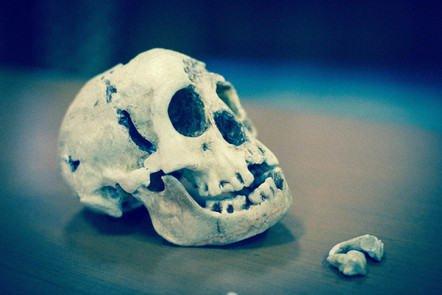
Homo Floresiensis Uncovered: The Science of ‘the Hobbit’ (FutureLearn)

Homo Floresiensis Uncovered: The Science of ‘the Hobbit’ (FutureLearn)

Discover the incredible world of 'the Hobbit' as modern archaeological science uncovers secrets hidden in time.

Class Deals by MOOC List - Click here and see FutureLearn's Active Discounts, Deals, and Promo Codes.

In a cave on the Indonesian island of Flores, a team of archaeologists were surprised to find the skeletal remains of a mysterious new species. This free online course follows the incredible discovery of Homo floresiensis - or ‘the Hobbit’ as it has come to be known. Join us on a quest of discovery and adventure as the mystery is unravelled piece by piece using a variety of scientific techniques and archaeological approaches.

Welcome to the fascinating world of modern archaeological science and Homo floresiensis
In this course you will follow a dedicated team of scientists as they continue to uncover clues that shine a light on the world in which ‘the Hobbit’ lived and our own origins as a species. You will learn about the nature and implications of the mystery of ‘the Hobbit’ through investigating a range of significant questions including:

  • Who is 'the Hobbit'?
  • When did she live?
  • What happened to her species?

Learn how modern scientific techniques are used to unravel the secrets of Homo floresiensis
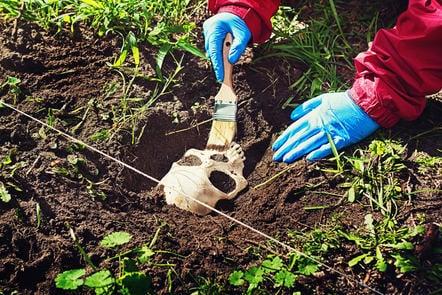
This course introduces you to a team of archaeologists and scientists with diverse areas of expertise. Go behind the scenes and join them on a journey from the cave to the lab as they unearth artefacts and learn about processes and methods used to read evidence buried in the past. These interactive investigations will help you understand the multidisciplinary approach to modern archaeology, incorporating scientific techniques and approaches. Learn what evidence can be found, what stories artefacts tell, what dating methods can be used and how the secrets hidden in time are revealed through science.

What does Homo floresiensis tell us about our own origins?
Uncovering Homo floresiensis has had significant implications for the world of archaeology and beyond. This course explores the local and international significance of Homo floresiensis and provides insights into the controversy and heated debates surrounding the discovery and biological status of ‘the Hobbit’. By beginning to unravel the mystery prepare to challenge assumptions about human evolution and develop an understanding of how ‘the Hobbit’ fits into the broader story of our origins as a species.

Keep up-to-date with the latest findings about evolution and Homo floresiensis
The Centre for Archaeological Science (CAS) at the University of Wollongong was established to develop, integrate and apply modern scientific techniques to answer fundamental questions about human evolution and the analysis of material remains of past human life and activities. Boasting world-class facilities and researchers who have played a crucial role in uncovering the latest findings about ‘the Hobbit’, CAS shares expertise throughout this course that will take you to the forefront of modern archaeological science methods and research.

Prepare to embark on an adventure filled with mystery, questions and secrets all waiting to be unearthed throughout this quest…
Go to Class
MOOC List is learner-supported. When you buy through links on our site, we may earn an affiliate commission.

Related Courses

Forensic Archaeology and Anthropology (FutureLearn) FutureLearn
Durham University

Forensic Archaeology and Anthropology (FutureLearn)

Enter the fascinating world of forensics, and learn how the deceased are located, recovered and analysed using DNA and pathology. Learn the science behind the exhumation and identification of skeletal remains. The location, exhumation and identification of the dead requires highly specialised expertise. On this course, you’ll learn the latest scientific techniques for body location, recovery and analysis.

Self Paced
5-12 Weeks
Dead Interesting: Uncovering Roman Britain in Old Museum Collections (FutureLearn) FutureLearn
University of Reading,Colchester Musuems

Dead Interesting: Uncovering Roman Britain in Old Museum Collections (FutureLearn)

Explore the archaeology of early Roman Britain an d learn techniques to build a profile of an individual from the first century AD. Uncover the history of early Roman Britain. What did a Roman funeral look, sound, and smell like? And how can you tell just from a person’s remains? Join a research team uncovering exciting new information about cremation burials excavated over 100 years ago in Colchester, the site of Camulodunum, one of Britain’s oldest towns and its first Roman capital city.

Self Paced
2 Weeks
Archaeology and Heritage of Africa (Coursera) Coursera
Universitat Autònoma de Barcelona

Archaeology and Heritage of Africa (Coursera)

Would you like to know more about the new methods archaeologists are using to study African archaeology? And to learn directly from case studies with researchers working on the continent? Are you interested in knowing the role local communities have in the preservation and protection of heritage sites? By enrolling in this course, you will have the opportunity to learn and explore these and so many other subjects in African Archaeology and Heritage and discover the rich and diverse heritage of Africa.

Sep 28th 2026
4 Weeks
Introduction to Archaeology: Knowing The Past (Coursera) Coursera
Rice University

Introduction to Archaeology: Knowing The Past (Coursera)

This course is an introduction to a series on the discipline of Archaeology. It is intended for learners at all stages, including advanced high school, college students, or life-long learners. Basic information about Archaeology and its history are presented in this course, while the following three courses cover scientific methods, forms of interpretation, and contemporary social issues that archaeologists engage with.

Sep 28th 2026
4 Weeks
Biblical Archaeology: The archaeology of ancient Israel and Judah (edX) EdX
IsraelX

Biblical Archaeology: The archaeology of ancient Israel and Judah (edX)

Join me as I share with you my passion for archaeological discovery and learn about the exciting methods of modern archaeology. Explore how archaeology illuminates biblical Israel and Judah, and the archaeological finds relate to the bible. Join me for an introductory course on biblical archaeology of ancient Israel and Judah during the Iron Age (ca. 1200-586 BCE).

Nov 1st 2022
5-12 Weeks
Pyramids of Giza: Ancient Egyptian Art and Archaeology (edX) EdX
HarvardX,Harvard University

Pyramids of Giza: Ancient Egyptian Art and Archaeology (edX)

Explore the archaeology, history, art, and hieroglyphs surrounding the famous Egyptian Pyramids at Giza. Learn about Old Kingdom pharaohs and elites, tombs, temples, the Sphinx, and how new technology is unlocking their secrets. Where is Giza? How were the Pyramids built? How did the cemeteries and hundreds of decorated tombs around them develop? What was Giza’s contribution to this first great age of ancient Egyptian civilization, the Old Kingdom?

Self Paced
Self-Paced
Discover Palestine (An-Najah National University) Other Providers
An-Najah National University

Discover Palestine (An-Najah National University)

Discover Palestine is the first English language certified Massive Open Online Course (MOOC) about Palestinian history, archaeology, culture, and heritage.
 Discover Palestine will explore the ancient land of Palestine. We will learn about the geographical and ecological makeup of the land, the different types of agriculture and water installations that have been adopted by various groups over the centuries, as well as trade and other relations between groups. We will also learn about the art, architecture and technology of the different periods covered by this course.

No sessions available
5-12 Weeks
Ancient topography, relief and technical analysis of ancient monuments (UNINETTUNO) UNINETTUNO OpenupEd
International Telematic University UNINETTUNO

Ancient topography, relief and technical analysis of ancient monuments (UNINETTUNO)

The course aims to define the goals and the systematic methodological research related to a discipline of historical and archaeological area, such as the Ancient Topography, Survey and technical analysis of ancient monuments, in order to reconstruct the shape and meaning of the ancient anthropic contexts, through the traces that remain in modern urban landscapes.

Self Paced Course - Start anytime
Self-Paced
Understanding Biological Energy (FutureLearn) FutureLearn
Royal Holloway, University of London

Understanding Biological Energy (FutureLearn)

Get an introduction to energy and explore how humans and other living things obtain and use their biological energy sources. Discover applications of biological energy, from human energy to photosynthesis. On this course, you’ll learn what energy actually is and how living things acquire and convert it.

Self Paced
4 Weeks
Antiquities Trafficking and Art Crime (FutureLearn) FutureLearn
University of Glasgow

Antiquities Trafficking and Art Crime (FutureLearn)

Law

Delve into the seedy underbelly of the art world, looking at smuggling, theft, fakes, and fraud, with this free online course. From fakes and fraud, to thefts and trafficking, art crime has turned archaeological sites in Iraq and Syria into “lunar landscapes”, decapitated Buddha sculptures in Cambodia and left empty frames on museum walls.

No sessions available
3 Weeks
At the Origins of the Mediterranean Civilization: Archaeology of the City from the Levant to the West - 3rd-1st millennium BC (Coursera) Coursera
Sapienza University of Rome

At the Origins of the Mediterranean Civilization: Archaeology of the City from the Levant to the West - 3rd-1st millennium BC (Coursera)

Which are the deepest roots of that mix of cultures that we use to call ‘Mediterranean Civilization’? Which are comminglings and exchanges which produced its most complete fruit, i.e. the city, a place for landscape-modelling communities? And which elements did contribute to build up that baulk of customs, ideas, and innovations which compelled to confrontation and hybridizations different peoples for millennia? What did it made, from pottery to metallurgy, from gastronomy to architecture, from art to religion, of a sea a cradle of civilization? Archaeology may help in disentangling such questions, seeking unexpected answers , by tinkering what ancient Mediterranean peoples left buried in the ground.

Sep 21st 2026
5-12 Weeks