Archaeology and the Battle of Dunbar 1650: From the Scottish Battlefield to the New World (FutureLearn)

Offered by Durham University,
Archaeology and the Battle of Dunbar 1650: From the Scottish Battlefield to the New World (FutureLearn)

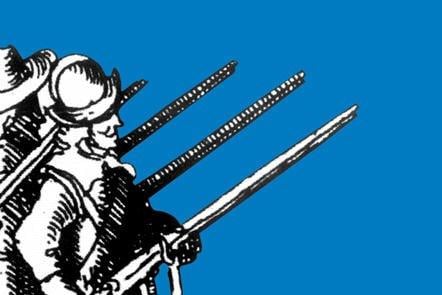
Discover how science, history and archaeology unlocked the stories of the soldiers from the Battle of Dunbar 1650. Discover what happened to the Scottish soldiers at the Battle of Dunbar 1650.

Class Deals by MOOC List - Click here and see FutureLearn's Active Discounts, Deals, and Promo Codes.

In November 2013 archaeologists observing building work near Durham Cathedral in England made an unexpected discovery: skeletons in two mass graves. Over the next two years, researchers worked to establish the identity of the human remains. Today we know them to be Scottish prisoners who died after the Battle of Dunbar on the coast of Scotland in 1650.
On this course you will learn how the latest archaeological science techniques revealed how and why these men disappeared from history. You will join researchers seeking to solve a 350 year old mystery, and explore the resulting controversies.

What topics will you cover?

  • The discovery of the soldiers and the evidence gathered from maps, historic buildings and the archaeology at the site.
  • The study of their human remains and the information extracted about pathologies, trauma and medieval conditions.
  • The role of archaeological science (radiocarbon, isotopes) in revealing more about life in the 17th century.
  • The historical background to the battle of Dunbar and its wider political context.
  • The fate of the survivors and prisoners of war sent across the Atlantic.
  • The controversy over repatriation, the reburial of the human remains and archaeological ethics.

Learning on this course
You can take this self-guided course and learn at your own pace. On every step of the course you can meet other learners, share your ideas and join in with active discussions in the comments.

What will you achieve?
By the end of the course, you'll be able to...

  • Interpret a range of on-site evidence above and below ground and draw your own conclusions
  • Explain how skeleton science can develop biographies of individuals
  • Evaluate the impact of archaeological science, for example dating techniques and isotopic analysis
  • Compare the differing contributions of archaeology and history in understanding past events
  • Debate and report on the issues around the reburial of human remains from archaeological sites

Who is the course for?
This course is for anyone interested in history or archaeology. It will be of particular interest to those in (or interested in) the North East of England, Scotland, and the United States; descendants of the Dunbar survivors; and those working in archaeology and heritage.

Go to Class
MOOC List is learner-supported. When you buy through links on our site, we may earn an affiliate commission.

Related Courses

Hadrian's Wall: Life on the Roman Frontier (FutureLearn) FutureLearn
Newcastle University

Hadrian's Wall: Life on the Roman Frontier (FutureLearn)

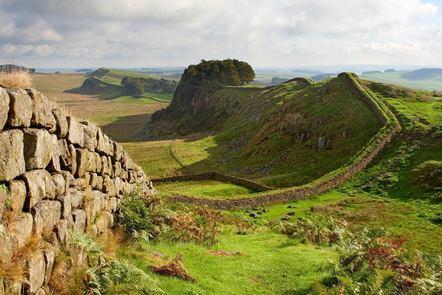
Explore the archaeology of the most heavily fortified frontier in the Roman Empire, its people and their lives. Hadrian’s Wall stretches over 73 miles (117 km), from coast to coast in what is now Northern England. The Wall, complemented by a sophisticated system of outposts and coastal watch stations, offers a remarkable glimpse of ancient society. In addition to housing one of the largest concentrations of Roman soldiers anywhere in the Empire’s provinces, Hadrian’s frontier system was home to an incredibly cosmopolitan array of civilians. This six week course offers a comprehensive introduction to Hadrian’s Wall and its people and raises fascinating issues concerning colonisation, cultural transformation, immigration, integration and imperialism.

Self Paced
5-12 Weeks
The Science Behind Forensic Science (FutureLearn) FutureLearn
King's College London

The Science Behind Forensic Science (FutureLearn)

Get an introduction to the science of forensic science and discover how it's applied in the real world. Discover the biology and chemistry behind forensic science. How does forensic science really work? How are scientific principles applied in crime scenes? Answer these questions and more with this course from the team who teach the longest-running forensic science programme of its type in England.

Self Paced
4 Weeks
Introduction to Forensic Science (Coursera) Coursera
Nanyang Technological University

Introduction to Forensic Science (Coursera)

We have all seen forensic scientists in TV shows, but how do they really work? What is the science behind their work? The course aims to explain the scientific principles and techniques behind the work of forensic scientists and will be illustrated with numerous case studies from Singapore and around the world.

Aug 24th 2026
5-12 Weeks
Invisible Worlds: Understanding the Natural Environment (FutureLearn) FutureLearn
University of Exeter,Eden Project

Invisible Worlds: Understanding the Natural Environment (FutureLearn)

Explore the connection between life and the Earth's invisible systems and gain new insights into the natural environment. Discover Earth's invisible systems and transform your understanding of the world. Given the current climate emergency, it’s increasingly important that we have a good understanding of Earth’s life support systems. We rely on these systems for fresh air, clean water, fertile soil, rich biodiversity and a stable climate. On this course, you’ll explore the natural systems we can’t see or feel, from microscopic creatures to gases.

Available Now
4 Weeks
A Question of Time: How We Date Human Evolution (FutureLearn) FutureLearn
Griffith University

A Question of Time: How We Date Human Evolution (FutureLearn)

Discover the role that dating human fossils plays in the reconstruction of human evolution: explore examples from around the world. Uncover the history of our ancestors by dating human fossils. Trace your origins and develop your understanding of human evolution, with this course from the world-leading experts at Griffith University.

No sessions available
2 Weeks
The Discovery of the Higgs Boson (FutureLearn) FutureLearn
University of Edinburgh

The Discovery of the Higgs Boson (FutureLearn)

Should we be excited about the Higgs boson? Find out more about particle physics and understanding the universe. The discovery of a new fundamental particle at the Large Hadron Collider (LHC), CERN is the latest step in a long quest seeking to answer one of physics’ most enduring questions: why do particles have mass? The experiments’ much anticipated success confirms predictions made decades earlier by Peter Higgs and others, and offers a glimpse into a universe of physics beyond the Standard Model.

Self Paced
5-12 Weeks
Humphry Davy: Laughing Gas, Literature, and the Lamp (FutureLearn) FutureLearn
Lancaster University,Royal Institution - RI

Humphry Davy: Laughing Gas, Literature, and the Lamp (FutureLearn)

Discover Humphry Davy and his contribution to science and the arts. Before culture was divided into the sciences and the arts there was a chemist who was also a poet. Sir Humphry Davy (1778-1829) is one of the best known men of science of the nineteenth century: he was the first person to inhale nitrous oxide; he isolated nine chemical elements; and he invented the miners’ safety lamp known as the Davy lamp. This course will consider Davy’s life and career using manuscript sources held at the Royal Institution of Great Britain.

Oct 9th 2023
4 Weeks
The Many Faces of Dementia (FutureLearn) FutureLearn
University College London

The Many Faces of Dementia (FutureLearn)

Gain a unique insight into dementia through the stories, symptoms and science behind four less common diagnoses. Explore key issues in dementia care and research, through four less common forms. Dementia is one of the foremost priorities in global health and is estimated to affect over 44 million people worldwide.

Self Paced
4 Weeks
Archaeology: from Dig to Lab and Beyond (FutureLearn) FutureLearn
University of Reading

Archaeology: from Dig to Lab and Beyond (FutureLearn)

Get an introduction to studying archaeology, exploring exciting discoveries in the Vale of Pewsey, near to Stonehenge and Avebury. Chart the progress of an archaeological excavation from dig to lab and beyond. We’ll show you around our field school at the Vale of Pewsey, a relatively untouched site compared to its famous neighbour, Stonehenge.

Self Paced
2 Weeks
Discovering Science: Atmospheric Chemistry (FutureLearn) FutureLearn
University of Leeds

Discovering Science: Atmospheric Chemistry (FutureLearn)

What can we learn about Earth, and other planets in and beyond our solar system, by studying their atmospheres? Learn about the role that radiation and greenhouse gases play in our understanding of atmospheric chemistry. As levels of CO2 in the atmosphere increase, you will discover the solutions scientists are exploring to reduce levels. And discover how missions to other planets and moons in our solar system are revealing extraordinarily diverse atmospheres.

Self Paced
2 Weeks
Dead Interesting: Uncovering Roman Britain in Old Museum Collections (FutureLearn) FutureLearn
University of Reading,Colchester Musuems

Dead Interesting: Uncovering Roman Britain in Old Museum Collections (FutureLearn)

Explore the archaeology of early Roman Britain an d learn techniques to build a profile of an individual from the first century AD. Uncover the history of early Roman Britain. What did a Roman funeral look, sound, and smell like? And how can you tell just from a person’s remains? Join a research team uncovering exciting new information about cremation burials excavated over 100 years ago in Colchester, the site of Camulodunum, one of Britain’s oldest towns and its first Roman capital city.

Self Paced
2 Weeks