The Discovery of the Higgs Boson (FutureLearn)

The Discovery of the Higgs Boson (FutureLearn)

Should we be excited about the Higgs boson? Find out more about particle physics and understanding the universe. The discovery of a new fundamental particle at the Large Hadron Collider (LHC), CERN is the latest step in a long quest seeking to answer one of physics’ most enduring questions: why do particles have mass? The experiments’ much anticipated success confirms predictions made decades earlier by Peter Higgs and others, and offers a glimpse into a universe of physics beyond the Standard Model.

Class Deals by MOOC List - Click here and see FutureLearn's Active Discounts, Deals, and Promo Codes.

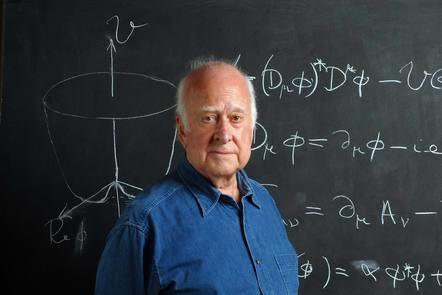
As Professor Peter Higgs continues his inspiring role at Edinburgh University’s School of Physics & Astronomy, the experiments at the LHC continue.
This free online course introduces the theoretical tools needed to appreciate the discovery, and presents the elementary particles that have been discovered at the tiniest scales ever explored. Beginning with basic concepts in classical mechanics, the story unfolds through relativity and quantum mechanics, describing forces, matter and the unification of theories with an understanding driven by the tools of mathematics.
Narrating the journey through experimental results which led to the discovery in 2012, the course invites you to learn from a team of world-class physicists at Edinburgh University. Learners participate in discussion of the consequences of the Higgs boson, to physics and cosmology, and towards a stronger understanding and new description of the universe.

Syllabus

Week 1: Theoretical description of physical phenomena
Week 2: From Maxwell to Einstein: the world at the atomic scale
Week 3: A theory of matter and light
Week 4: From QED to QCD and the weak force
Week 5: The Brout-Englert-Higgs mechanism and the Standard Model
Week 6: Experimental evidence for the Standard Model
Week 7: Beyond the Standard Model

What will you achieve?
By the end of the course, you‘ll be able to...

  • Discuss fundamental building blocks of the Standard Model
  • Explore Quantum Mechanics and Special Relativity
  • Describe elementary Particle Physics
Go to Class
MOOC List is learner-supported. When you buy through links on our site, we may earn an affiliate commission.

Related Courses

Invisible Worlds: Understanding the Natural Environment (FutureLearn) FutureLearn
University of Exeter,Eden Project

Invisible Worlds: Understanding the Natural Environment (FutureLearn)

Explore the connection between life and the Earth's invisible systems and gain new insights into the natural environment. Discover Earth's invisible systems and transform your understanding of the world. Given the current climate emergency, it’s increasingly important that we have a good understanding of Earth’s life support systems. We rely on these systems for fresh air, clean water, fertile soil, rich biodiversity and a stable climate. On this course, you’ll explore the natural systems we can’t see or feel, from microscopic creatures to gases.

Available Now
4 Weeks
Understanding Ramon Llull: Philosophy, Arts and Science through the Ars Combinatoria (FutureLearn) FutureLearn
Universitat Pompeu Fabra,Centre de Cultura Contemporània de Barcelona - CCCB

Understanding Ramon Llull: Philosophy, Arts and Science through the Ars Combinatoria (FutureLearn)

Explore the fascinating work of philosopher Ramon Llull and its impact with this free online course. Ramon Llull, born in Majorca in the 13th Century, was an influential philosopher, writer and pioneering thinker. This controversial man was admired and scorned alike by some of the most enlightened minds in European culture. He was also one of the leading lights in the intellectual circles of the late 13th century, in which Arab, Jewish and Christian philosophers and scientists participated.

No sessions available
2 Weeks
Snow: What It Is and Why It Matters (FutureLearn) FutureLearn
Luleå University of Technology

Snow: What It Is and Why It Matters (FutureLearn)

Explore the science of snow – how it forms, its different types, and how it can best be used. Learn all about snow from cold weather experts in Sweden. Snow can affect every aspect of life, from transport systems to business operations; that’s why it’s crucial to understand what exactly snow is, how it forms, and how we can manage it.

Oct 25th 2021
2 Weeks
Frontier Physics, Future Technologies (FutureLearn) FutureLearn
University of York

Frontier Physics, Future Technologies (FutureLearn)

Expand your understanding of modern physics and discover how we can solve societal problems by developing future technologies. Explore the mysteries of the universe through cutting-edge physics. Physics is the most fundamental of the sciences. By studying the properties of energy and matter, physicists aim to explain the many mysteries of the universe.

Self Paced
3 Weeks
Cracking Mechanics: Further Maths for Engineers (FutureLearn) FutureLearn
University of Bristol

Cracking Mechanics: Further Maths for Engineers (FutureLearn)

Practise the maths, learn the physics, and find out how engineers use both to solve real world problems. The aim of this free online course is to introduce you to some of the physics and maths that engineers find useful. The content comprises: parts of A-level maths and further maths (mechanics); the physical laws which this maths is used to model; and examples of how these skills are employed in mechanical, aerospace, civil, environmental, materials and electrical engineering.

No sessions available
5-12 Weeks
Through Engineers' Eyes: Engineering Mechanics by Experiment, Analysis and Design (FutureLearn) FutureLearn
UNSW Sydney - University of New South Wales

Through Engineers' Eyes: Engineering Mechanics by Experiment, Analysis and Design (FutureLearn)

Learn the techniques of Engineering Mechanics, use them to interpret experiments and apply them to design. When you design anything, how do you know that the design will work? You need Engineering Mechanics - the science-based analysis that engineers use to predict how their designs will perform, so they can meet their responsibilities for performance and safety. It starts with physics - forces, equilibrium, acceleration, gravity - but then engineers adapt it to their own purposes.

No sessions available
5-12 Weeks
The Many Faces of Dementia (FutureLearn) FutureLearn
University College London

The Many Faces of Dementia (FutureLearn)

Gain a unique insight into dementia through the stories, symptoms and science behind four less common diagnoses. Explore key issues in dementia care and research, through four less common forms. Dementia is one of the foremost priorities in global health and is estimated to affect over 44 million people worldwide.

Self Paced
4 Weeks
Introduction to Thermodynamics (FutureLearn) FutureLearn
University of Hull

Introduction to Thermodynamics (FutureLearn)

Discover the laws of thermodynamics as you learn how to calculate chemical properties and predict chemical reactions. Get an introduction to thermodynamic properties and systems. Curious about thermodynamics or thinking about studying it at university? This short course from the University of Hull offers a short introduction to the fundamentals of thermodynamics – the branch of physics that deals with heat and its relation to energy.

Available now
3 Weeks
Discovering Science: Atmospheric Chemistry (FutureLearn) FutureLearn
University of Leeds

Discovering Science: Atmospheric Chemistry (FutureLearn)

What can we learn about Earth, and other planets in and beyond our solar system, by studying their atmospheres? Learn about the role that radiation and greenhouse gases play in our understanding of atmospheric chemistry. As levels of CO2 in the atmosphere increase, you will discover the solutions scientists are exploring to reduce levels. And discover how missions to other planets and moons in our solar system are revealing extraordinarily diverse atmospheres.

Self Paced
2 Weeks
Teaching for Home Learning: Secondary Science (FutureLearn) FutureLearn
National STEM Learning Centre

Teaching for Home Learning: Secondary Science (FutureLearn)

Ease the transition to teaching science to secondary pupils during the COVID-19 pandemic with online and offline approaches. Overcome the challenges of teaching science remotely to your secondary students. Due to COVID-19 related school closures around the world, many teachers are having to adjust their teaching. Whilst teaching remotely may be new, this course will help you to develop new online and offline teaching strategies for supporting learning at home and at a distance.

No sessions available
2 Weeks