Virtual Work Experience and Exploring the Veterinary Profession (FutureLearn)

Virtual Work Experience and Exploring the Veterinary Profession (FutureLearn)

Learn what it takes to become a vet and explore the challenges of the vet profession to decide if it's the right career for you. Get virtual vet work experience before embarking on a veterinary degree. The COVID-19 pandemic means that many potential vet students cannot undertake animal handling work experience. On this course, you’ll get insight into the reality of life as a vet so that you can make an informed decision before embarking on a veterinary degree course.

Class Deals by MOOC List - Click here and see FutureLearn's Active Discounts, Deals, and Promo Codes.

You’ll learn about the structure of veterinary practice and the different governing bodies, as well as discover the day to day challenges a vet might face.
You’ll also explore the different roles available outside of general practice and find out the great opportunities such a degree can bring.

Syllabus

Week 1: Introduction to the veterinary profession
Week 2: The wider team, expectations and what it is really like being a vet

What will you achieve?
By the end of the course, you‘ll be able to...

  • Explore the history of the veterinary profession
  • Summarise the organisation of the veterinary profession
  • Describe how to become a veterinary surgeon, what it involves and the time it takes
  • Discuss the roles of the wider veterinary team
  • Identify important skills and qualities required and provide examples of why these are important
  • Investigate current and future challenges in veterinary medicine and science
  • Apply work experience reflection to future placements
  • Model levels of care and service accreditation

Who is the course for?
This course is designed for students considering a degree in veterinary medicine and science.
The course will also benefit anyone considering a role within the wider veterinary team.

Go to Class
MOOC List is learner-supported. When you buy through links on our site, we may earn an affiliate commission.

Related Courses

Humphry Davy: Laughing Gas, Literature, and the Lamp (FutureLearn) FutureLearn
Lancaster University,Royal Institution - RI

Humphry Davy: Laughing Gas, Literature, and the Lamp (FutureLearn)

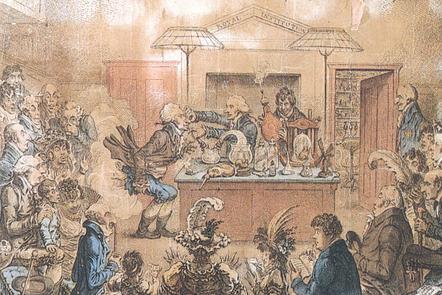
Discover Humphry Davy and his contribution to science and the arts. Before culture was divided into the sciences and the arts there was a chemist who was also a poet. Sir Humphry Davy (1778-1829) is one of the best known men of science of the nineteenth century: he was the first person to inhale nitrous oxide; he isolated nine chemical elements; and he invented the miners’ safety lamp known as the Davy lamp. This course will consider Davy’s life and career using manuscript sources held at the Royal Institution of Great Britain.

Oct 9th 2023
4 Weeks
Image Analysis Methods for Biologists (FutureLearn) FutureLearn
The University of Nottingham

Image Analysis Methods for Biologists (FutureLearn)

Get an introduction to image acquisition and analysis for biologists – from basic techniques to the future of image analysis. Improve your image analysis knowledge and ability to analyse your images. The use of automatic image analysis in the biological sciences has increased significantly in recent years, especially with automated image capture and the rise of phenotyping.

Available now
4 Weeks
Intellectual Humility: Science (Coursera) Coursera
University of Edinburgh

Intellectual Humility: Science (Coursera)

It’s clear that the world needs more intellectual humility. But how do we develop this virtue? And why do so many people still end up so arrogant? Do our own biases hold us back from becoming as intellectually humble as we could be—and are there some biases that actually make us more likely to be humble? Which cognitive dispositions and personality traits give people an edge at being more intellectually humble - and are they stable from birth, learned habits, or something in between? And what can contemporary research on the emotions tell us about encouraging intellectual humility in ourselves and others?

Oct 12th 2026
4 Weeks
Constructivism and Mathematics, Science, and Technology Education (Coursera) Coursera
University of Illinois at Urbana-Champaign

Constructivism and Mathematics, Science, and Technology Education (Coursera)

This course is designed to help participants examine the implications of constructivism for learning and teaching in science, mathematics, and technology focused areas. Course readings, discussions, and assignments will examine constructivist views of learning, research on students' ideas and idea-based interactions, research on instructional approaches taking student ideas into account, and challenges in implementing constructivist perspectives in instruction.

Oct 12th 2026
5-12 Weeks
Getting a Grip on Mathematical Symbolism (FutureLearn) FutureLearn
Loughborough University

Getting a Grip on Mathematical Symbolism (FutureLearn)

Want to be an engineer or scientist? Lack mathematical confidence? Learn to think mathematically and explore essential concepts. This course is aimed at those who aspire to study science or engineering foundation courses at university level. It draws upon the experience of staff from the Mathematics Education Centre at Loughborough University - a centre that has specialised for many years in mathematics teaching and mathematics support for science and engineering students who find the transition to university mathematics particularly challenging.

No sessions available
3 Weeks
Poultry Health (FutureLearn) FutureLearn
The University of Nottingham,British Hen Welfare Trust

Poultry Health (FutureLearn)

Get technically and scientifically accurate information on how to care for non-commercial poultry. Identify the clinical features of diseased birds and when they need treatment. On this veterinary course, you’ll get expert advice on how to recognise when poultry are unwell, and the options available to you for treatment.

May 16th 2022
5-12 Weeks
The Scientific Revolution: Understanding the Roots of Modern Science (FutureLearn) FutureLearn
University of Groningen

The Scientific Revolution: Understanding the Roots of Modern Science (FutureLearn)

Learn about the seventeenth-century Scientific Revolution and its role in shaping the modern Western world. How did the science of today come about? What constitutes ‘modern’ science? How does science relate to religion? Answer these questions and more with this course that travels back in time to the seventeenth-century Scientific Revolution to explore the roots of modern science.

Self Paced
3 Weeks
Understanding Ramon Llull: Philosophy, Arts and Science through the Ars Combinatoria (FutureLearn) FutureLearn
Universitat Pompeu Fabra,Centre de Cultura Contemporània de Barcelona - CCCB

Understanding Ramon Llull: Philosophy, Arts and Science through the Ars Combinatoria (FutureLearn)

Explore the fascinating work of philosopher Ramon Llull and its impact with this free online course. Ramon Llull, born in Majorca in the 13th Century, was an influential philosopher, writer and pioneering thinker. This controversial man was admired and scorned alike by some of the most enlightened minds in European culture. He was also one of the leading lights in the intellectual circles of the late 13th century, in which Arab, Jewish and Christian philosophers and scientists participated.

No sessions available
2 Weeks
Foundations of Science for Undergraduate Degrees (FutureLearn) FutureLearn
The University of Nottingham

Foundations of Science for Undergraduate Degrees (FutureLearn)

Develop the right skills for study and assessment in higher education while refreshing your core science knowledge.Give yourself an advantage for starting a university degree. With interruptions to education occurring all the time, many school students intending to go to university in the coming years may not feel prepared.

Aug 23rd 2021
5-12 Weeks