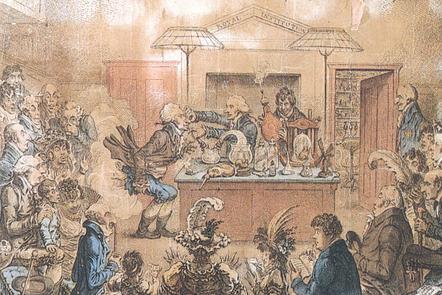
Discover Humphry Davy and his contribution to science and the arts. Before culture was divided into the sciences and the arts there was a chemist who was also a poet. Sir Humphry Davy (1778-1829) is one of the best known men of science of the nineteenth century: he was the first person to inhale nitrous oxide; he isolated nine chemical elements; and he invented the miners’ safety lamp known as the Davy lamp. This course will consider Davy’s life and career using manuscript sources held at the Royal Institution of Great Britain.
Class Deals by MOOC List - Click here and see FutureLearn's Active Discounts, Deals, and Promo Codes.
We will read Davy’s letters, his poetry and even recreate some of his most famous experiments!
What topics will you cover?
- The key moments of Humphry Davy’s early life and career
- The importance of lecturing at the Royal Institution of Great Britain
- The purpose of different kinds of writing from poetry, to letters, notebooks, and published scientific writing
- The significance of Davy’s scientific achievements
- The safety lamp controversy
- The relationship between Davy and Michael Faraday
What will you achieve?
By the end of the course, you'll be able to...
- Explore key aspects of Davy’s life, career, and the times in which he lived
- Investigate the relationships that can exist between science and the creative arts
- Identify the role that science can play in society
- Assess the cultural and political function of science
- Explore Davy's different modes of communication (e.g. poetry, lectures, scientific writings) and reflect upon their differences
Who is the course for?
This course is open to anyone with an interest in history, particularly the history of science and medicine, or with an interest in poetry. No prior knowledge of Humphry Davy’s life and times is required.