Basic Science: Understanding Numbers (FutureLearn)

Offered by The Open University,
Basic Science: Understanding Numbers (FutureLearn)

This course explains how you can use numbers to describe the natural world and make sense of everything from atoms to oceans. This practical, hands-on course will help you to start thinking like a scientist, by using numbers to describe and understand the natural world.

Class Deals by MOOC List - Click here and see FutureLearn's Active Discounts, Deals, and Promo Codes.

It might be the size of the Greenland ice sheet, the number of molecules in a raindrop, or the latest set of mind-boggling numbers about climate change presented in the media.
No longer will you be put off by averages or percentages, and you’ll even learn to love negative numbers. You will understand and manage numbers like a scientist. The course will introduce all the main skills you’ll need to understand and communicate scientific numbers, relate them to the real world, and share your discoveries with other learners.
You may also be interested in joining Basic Science: Understanding Experiments.

What topics will you cover?
The course is divided into 4 weeks:

  • Why science needs numbers including writing and presenting very large and very small numbers for science
  • Using numbers for science including calculating areas, volumes and density
  • Important concepts in numbers for science including rounding, fractions, percentages and negative numbers
  • Communicating numbers for science including averages, drawing and interpreting graphs, correlation, causation and coincidence

What will you achieve?
By the end of the course, you'll be able to...

  • Calculate and use a scientific calculator
  • Calculate volumes, areas and density
  • Apply numbers to understand how simple models help understand scientific problems, such as ice melting and climate change
  • Demonstrate and use numbers to test scientific hypotheses
  • Apply SI units to length, time, mass temperature used for science
  • Interpret numbers written in scientific notation to understand the natural world
  • Develop skills to round numbers written in scientific notation
  • Calculate and use fractions, percentages and averages for science
  • Evaluate positive and negative numbers
  • Apply, create and evaluate graphs to understand issues in science
Go to Class
MOOC List is learner-supported. When you buy through links on our site, we may earn an affiliate commission.

Related Courses

The Science Behind Forensic Science (FutureLearn) FutureLearn
King's College London

The Science Behind Forensic Science (FutureLearn)

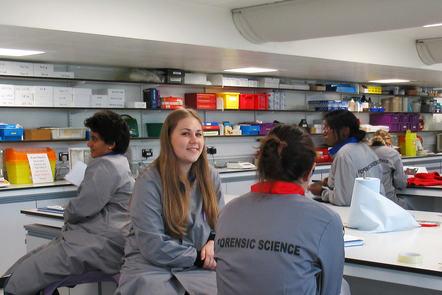
Get an introduction to the science of forensic science and discover how it's applied in the real world. Discover the biology and chemistry behind forensic science. How does forensic science really work? How are scientific principles applied in crime scenes? Answer these questions and more with this course from the team who teach the longest-running forensic science programme of its type in England.

Jun 24th 2024
4 Weeks
Introduction to Cognitive Psychology: An Experimental Science (FutureLearn) FutureLearn
University of York

Introduction to Cognitive Psychology: An Experimental Science (FutureLearn)

Learn how to use cognitive psychology experiments to explore the internal workings of the mind with this online psychology course. Learn how to conduct, analyse and understand cognitive psychology experiments. Cognitive psychology is the scientific study of internal mental processes. On this course, you will be introduced to two key areas of cognitive psychology: reasoning and thinking and mental imagery.

Available now
3 Weeks
Introduction to Genetics and Evolution (Coursera) Coursera
Duke University

Introduction to Genetics and Evolution (Coursera)

Introduction to Genetics and Evolution is a college-level class being offered simultaneously to new students at Duke University. The course gives interested people a very basic overview of some principles behind these very fundamental areas of biology. We often hear about new "genome sequences," commercial kits that can tell you about your ancestry (including pre-human) from your DNA or disease predispositions, debates about the truth of evolution, why animals behave the way they do, and how people found "genetic evidence for natural selection." This course provides the basic biology you need to understand all of these issues better, tries to clarify some misconceptions, and tries to prepare students for future, more advanced coursework in Biology (and especially evolutionary genetics). No prior coursework is assumed.

Jun 8th 2026
5-12 Weeks
Discovering Science: Atmospheric Chemistry (FutureLearn) FutureLearn
University of Leeds

Discovering Science: Atmospheric Chemistry (FutureLearn)

What can we learn about Earth, and other planets in and beyond our solar system, by studying their atmospheres? Learn about the role that radiation and greenhouse gases play in our understanding of atmospheric chemistry. As levels of CO2 in the atmosphere increase, you will discover the solutions scientists are exploring to reduce levels. And discover how missions to other planets and moons in our solar system are revealing extraordinarily diverse atmospheres.

Sep 23rd 2024
2 Weeks
Understanding Ramon Llull: Philosophy, Arts and Science through the Ars Combinatoria (FutureLearn) FutureLearn
Universitat Pompeu Fabra,Centre de Cultura Contemporània de Barcelona - CCCB

Understanding Ramon Llull: Philosophy, Arts and Science through the Ars Combinatoria (FutureLearn)

Explore the fascinating work of philosopher Ramon Llull and its impact with this free online course. Ramon Llull, born in Majorca in the 13th Century, was an influential philosopher, writer and pioneering thinker. This controversial man was admired and scorned alike by some of the most enlightened minds in European culture. He was also one of the leading lights in the intellectual circles of the late 13th century, in which Arab, Jewish and Christian philosophers and scientists participated.

No sessions available
2 Weeks
The Science of Medicines (FutureLearn) FutureLearn
Monash University

The Science of Medicines (FutureLearn)

Learn the science behind how and why medicines work, and what can improve patient's treatment, with this online course. What do you know about the medicines you take? The world’s growing population faces major health issues, and medicines are a primary pillar to effect better health. Learn about the science of key medicines used to manage heart disease, depression, diabetes, pain control and smoking cessation.

Jan 17th 2022
5-12 Weeks
Foundations of Science for Undergraduate Degrees (FutureLearn) FutureLearn
The University of Nottingham

Foundations of Science for Undergraduate Degrees (FutureLearn)

Develop the right skills for study and assessment in higher education while refreshing your core science knowledge.Give yourself an advantage for starting a university degree. With interruptions to education occurring all the time, many school students intending to go to university in the coming years may not feel prepared.

Aug 23rd 2021
5-12 Weeks
Getting a Grip on Mathematical Symbolism (FutureLearn) FutureLearn
Loughborough University

Getting a Grip on Mathematical Symbolism (FutureLearn)

Want to be an engineer or scientist? Lack mathematical confidence? Learn to think mathematically and explore essential concepts. This course is aimed at those who aspire to study science or engineering foundation courses at university level. It draws upon the experience of staff from the Mathematics Education Centre at Loughborough University - a centre that has specialised for many years in mathematics teaching and mathematics support for science and engineering students who find the transition to university mathematics particularly challenging.

No sessions available
3 Weeks
Discovering Science: Science Writing (FutureLearn) FutureLearn
University of Leeds

Discovering Science: Science Writing (FutureLearn)

What science discoveries will you choose to write about? Without science writing, science could not really exist. By recording experiments and publishing the results of studies and discoveries, scientists can share their important work, and find an engaged audience. Science writing takes many forms: from press releases to video scripts. You’ll learn about different types of science writing, and look at the factors which you need to consider to write a story.

Sep 23rd 2024
2 Weeks