Basic Science: Understanding Experiments (FutureLearn)

Offered by The Open University,
Basic Science: Understanding Experiments (FutureLearn)

Get an introduction to science-based skills through simple, exciting, hands-on physics, chemistry and biology experiments. On this practical course you will start thinking like a scientist, by carrying out experiments at home.

Class Deals by MOOC List - Click here and see FutureLearn's Active Discounts, Deals, and Promo Codes.

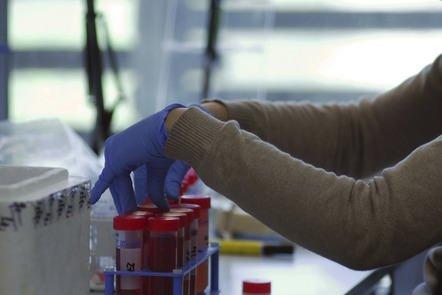
You will extract the DNA from fruit, observe osmosis in action, see how different liquids behave when frozen, and bake a potato to destruction.
As you carry out these experiments, you will develop scientific skills including observation, record-keeping, data analysis and experiment control.
The course was produced with the kind support of Dangoor Education. You may also enjoy Basic Science: Understanding Numbers.

What topics will you cover?

  • Evaporation during heating, quantified by weight
  • Relationship between density and state of matter by freezing fluids
  • Living organisms and the requirements for life
  • Extraction of DNA from fruit

What will you achieve?
By the end of the course, you'll be able to...

  • Demonstrate and carry out a basis scientific experiment
  • Investigate and test any hypothesis using experimental techniques
  • Record and analyse results from your experiments
  • Discuss and share ideas with fellow students online
Go to Class
MOOC List is learner-supported. When you buy through links on our site, we may earn an affiliate commission.


Related Courses

The Genomics Era: the Future of Genetics in Medicine (FutureLearn) FutureLearn
St George's, University of London,St George's University Hospitals NHS Foundation Trust

The Genomics Era: the Future of Genetics in Medicine (FutureLearn)

Get an introduction to the growing role of genomics in healthcare, for patient diagnoses, treatment and disease prevention. This free online course will provide healthcare professionals with a basic grounding in genomic medicine. It will introduce you to new genomic technologies, which are revolutionising medicine and will, in time, provide the mainstay of patient diagnosis, treatment and disease prevention.

Self Paced
5-12 Weeks
Understanding Genetic Disorders: How DNA Influences Health (FutureLearn) FutureLearn
University of Glasgow

Understanding Genetic Disorders: How DNA Influences Health (FutureLearn)

Explore the science behind our genetics and health and empower those with genetics disorders to make more informed health choices. Gain insight into cutting-edge genetics testing technologies and research. This course offers a fascinating insight into how genetics can impact our health and the importance of understanding genetic diseases in order to better manage and treat patients.

Self Paced
4 Weeks
How Does the Body Use DNA as a Blueprint? (FutureLearn) FutureLearn
University of Aberdeen

How Does the Body Use DNA as a Blueprint? (FutureLearn)

Get an introduction to the basics of molecular biology, and how DNA code works. Find out how the body repairs and regulates itself. Every part of the body is made according to a code that is carried in the body’s cells. This code is called DNA, and knowing how it works is fundamental to understanding how the body regulates itself throughout our lives.

Self Paced
3 Weeks
Small and Mighty: Introduction to Microbiology (FutureLearn) FutureLearn
University of Reading

Small and Mighty: Introduction to Microbiology (FutureLearn)

Understand the basics of microbiology and explore the diversity of microbial life in our world. Discover the fascinating world of microbes. Microbes may be invisible to the eye, but they dominate every environment on Earth – including you. Microbes are often associated with disease yet the majority of species help to keep us alive. How can you distinguish the good from the bad?

Self Paced
3 Weeks
So You Want to Study Life Science? (FutureLearn) FutureLearn
University of Glasgow

So You Want to Study Life Science? (FutureLearn)

Explore the exciting subjects within life sciences and the rewarding careers that studying life sciences at university lead to. This short, free online course will introduce you to studying life sciences at university level.We’ll take you on a whistle stop tour of the exciting world of life sciences, exploring the vast array of subjects within the discipline – from anatomy to zoology and everything in between, including immunology, cellular and molecular biology, genetics, physiology and parasitology.

Self Paced
2 Weeks
Cancer in the 21st Century - the Genomic Revolution (FutureLearn) FutureLearn
University of Glasgow

Cancer in the 21st Century - the Genomic Revolution (FutureLearn)

Discover how modern genetics has revolutionised approaches to the detection and treatment of cancer. Cancer Research UK estimates that 1 in 2 people in the UK will be diagnosed with cancer during their lifetime. It is a disease that impacts on most people’s lives at some stage. So understanding cancer, and the development of new treatments, is of intrinsic interest to us all.

No sessions available
5-12 Weeks
Through Engineers' Eyes: Engineering Mechanics by Experiment, Analysis and Design (FutureLearn) FutureLearn
UNSW Sydney - University of New South Wales

Through Engineers' Eyes: Engineering Mechanics by Experiment, Analysis and Design (FutureLearn)

Learn the techniques of Engineering Mechanics, use them to interpret experiments and apply them to design. When you design anything, how do you know that the design will work? You need Engineering Mechanics - the science-based analysis that engineers use to predict how their designs will perform, so they can meet their responsibilities for performance and safety.

No sessions available
5-12 Weeks
Through Engineers' Eyes: Engineering Mechanics by Experiment, Analysis and Design (FutureLearn) FutureLearn
UNSW Sydney - University of New South Wales

Through Engineers' Eyes: Engineering Mechanics by Experiment, Analysis and Design (FutureLearn)

Learn the techniques of Engineering Mechanics, use them to interpret experiments and apply them to design. When you design anything, how do you know that the design will work? You need Engineering Mechanics - the science-based analysis that engineers use to predict how their designs will perform, so they can meet their responsibilities for performance and safety. It starts with physics - forces, equilibrium, acceleration, gravity - but then engineers adapt it to their own purposes.

No sessions available
5-12 Weeks
Foundations of Science for Undergraduate Degrees (FutureLearn) FutureLearn
The University of Nottingham

Foundations of Science for Undergraduate Degrees (FutureLearn)

Develop the right skills for study and assessment in higher education while refreshing your core science knowledge.Give yourself an advantage for starting a university degree. With interruptions to education occurring all the time, many school students intending to go to university in the coming years may not feel prepared.

Aug 23rd 2021
5-12 Weeks