Eukaryotic Genome Assembly: How to Use BlobToolKit for Quality Assessment (FutureLearn)

Eukaryotic Genome Assembly: How to Use BlobToolKit for Quality Assessment (FutureLearn)

Gain practical skills in using the BlobToolKit to assess the quality of a eukaryotic genome assembly and improve your research. Discover how genome sequencing is moving beyond humans and model organisms. On this three-week course, you’ll gain the skills to assess the quality of published novel genomes and detect the presence of multiple organisms within a sample – including parasites, symbionts, and contaminants. This is vital to ensure that newly assembled genomes are high quality.

Class Deals by MOOC List - Click here and see FutureLearn's Active Discounts, Deals, and Promo Codes.

The BlobToolKit software is an essential tool for the quality assessment of novel genomes. It is being used to support the ambitious EarthBioGenome project to sequence the genomes of all 1.5 million eukaryotic species on the planet, not just humans or model organisms.
With this knowledge, you’ll be prepared to use these approaches with your own projects to improve your work.

Take your genomic research further
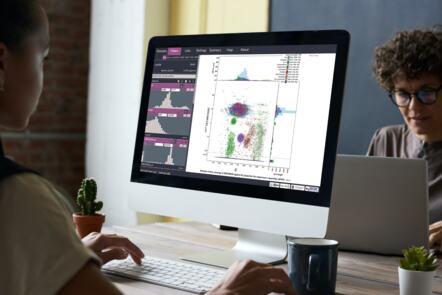
As you delve into BlobtoolKit, you’ll learn how to select an organism and interpret the blob plot to determine what it shows. Next, you’ll learn how to navigate the BlobToolKit viewer, including filtering and different settings.
With this knowledge, you’ll be able to interpret the visual representations of genomes from samples containing multiple organisms.

Learn how to clean a genome assembly
You’ll learn how to go further with BlobToolKit with techniques such as cleaning a genome assembly and assessing newly generated data.
You’ll also learn how to access genome assemblies from public databases and repositories and use the toolkit to assess their quality.

Develop practical skills in genome sequencing
Throughout the course, you’ll have the opportunity to put what you have learned into practice through different exercises. This includes a peer review course assignment to cement your knowledge.
Guided by the experts at Wellcome Connecting Science, you’ll finish the course with the skills to improve the quality of your genome work with BlobToolKit.

What topics will you cover?

  • Introduction to the BlobToolKit software for quality assessment of novel genomes, and background of why it is useful
  • Interpreting BlobToolkit visual representations of genomes from samples containing multiple organisms
  • Accessing genome assemblies from public databases and repositories in order to use BlobToolkit to assess their quality
  • Outline of advanced use of BlobToolkit to assess newly generated data, potentially including learners’ own genome assemblies.

What will you achieve?
By the end of the course, you‘ll be able to...

  • Use BlobToolKit to assess the quality of genome assemblies
  • Interpret different visual representations of genome assemblies
  • Describe how to set up and interpret a new genome assembly
  • Evaluate existing genome assemblies which have been shared by using the public BlobToolKit server
  • Identify organisms / symbionts / contaminants using GC-coverage plots

Who is the course for?
This course is designed for those working with genome assembly.
You may be a researcher or genome assembler or you could be working on other stages of genome sequencing pipelines wanting to understand the genome assembly assessment process.
Students and early career researchers who want to develop their skills in genome assembly and its analysis will also benefit from this course.

Go to Class
MOOC List is learner-supported. When you buy through links on our site, we may earn an affiliate commission.

Related Courses

Biochemistry: the Molecules of Life (FutureLearn) FutureLearn
University of East Anglia

Biochemistry: the Molecules of Life (FutureLearn)

Explore the impact of biochemistry on bioenergy and health, discovering why graduates are in demand; with the Biochemical Society. Biochemistry brings together all of the sciences to study the chemical and physical processes that occur in living organisms. It truly is the science of life. As a scientific discipline in its own right, biochemistry has a major impact on all areas of the life sciences and biochemists are in high demand among employers.

Self Paced
3 Weeks
Emergence of Life (Coursera) Coursera
University of Illinois at Urbana-Champaign

Emergence of Life (Coursera)

How did life emerge on Earth? How have life and Earth co-evolved through geological time? Is life elsewhere in the universe? Take a look through the 4-billion-year history of life on Earth through the lens of the modern Tree of Life. This course will evaluate the entire history of life on Earth within the context of our cutting-edge understanding of the Tree of Life. This includes the pioneering work of Professor Carl Woese on the University of Illinois Urbana-Champaign campus which revolutionized our understanding with a new "Tree of Life."

Oct 5th 2026
5-12 Weeks
Image Analysis Methods for Biologists (FutureLearn) FutureLearn
The University of Nottingham

Image Analysis Methods for Biologists (FutureLearn)

Get an introduction to image acquisition and analysis for biologists – from basic techniques to the future of image analysis. Improve your image analysis knowledge and ability to analyse your images. The use of automatic image analysis in the biological sciences has increased significantly in recent years, especially with automated image capture and the rise of phenotyping.

Available now
4 Weeks
Introduction to Forensic Science (Coursera) Coursera
Nanyang Technological University

Introduction to Forensic Science (Coursera)

We have all seen forensic scientists in TV shows, but how do they really work? What is the science behind their work? The course aims to explain the scientific principles and techniques behind the work of forensic scientists and will be illustrated with numerous case studies from Singapore and around the world.

Oct 19th 2026
5-12 Weeks
Small and Mighty: Introduction to Microbiology (FutureLearn) FutureLearn
University of Reading

Small and Mighty: Introduction to Microbiology (FutureLearn)

Understand the basics of microbiology and explore the diversity of microbial life in our world. Discover the fascinating world of microbes. Microbes may be invisible to the eye, but they dominate every environment on Earth – including you. Microbes are often associated with disease yet the majority of species help to keep us alive. How can you distinguish the good from the bad?

Self Paced
3 Weeks
So You Want to Study Life Science? (FutureLearn) FutureLearn
University of Glasgow

So You Want to Study Life Science? (FutureLearn)

Explore the exciting subjects within life sciences and the rewarding careers that studying life sciences at university lead to. This short, free online course will introduce you to studying life sciences at university level.We’ll take you on a whistle stop tour of the exciting world of life sciences, exploring the vast array of subjects within the discipline – from anatomy to zoology and everything in between, including immunology, cellular and molecular biology, genetics, physiology and parasitology.

Self Paced
2 Weeks
Foundations of Science for Undergraduate Degrees (FutureLearn) FutureLearn
The University of Nottingham

Foundations of Science for Undergraduate Degrees (FutureLearn)

Develop the right skills for study and assessment in higher education while refreshing your core science knowledge.Give yourself an advantage for starting a university degree. With interruptions to education occurring all the time, many school students intending to go to university in the coming years may not feel prepared.

Aug 23rd 2021
5-12 Weeks
Genome Sequencing (Bioinformatics II) (Coursera) Coursera
University of California, San Diego

Genome Sequencing (Bioinformatics II) (Coursera)

You may have heard a lot about genome sequencing and its potential to usher in an era of personalized medicine, but what does it mean to sequence a genome? Biologists still cannot read the nucleotides of an entire genome as you would read a book from beginning to end. However, they can read short pieces of DNA. In this course, we will see how graph theory can be used to assemble genomes from these short pieces. We will further learn about brute force algorithms and apply them to sequencing mini-proteins called antibiotics.

Oct 12th 2026
5-12 Weeks
Contemporary Biology (Coursera) Coursera
University of North Texas

Contemporary Biology (Coursera)

This course is an introduction to biology as it applies to our everyday life. Learners will explore the interplay between science and self through a personalized case study of themselves and their environment. By the end of the course, learners will be able to recognize the interactions among natural phenomena and the implications of the scientific principles behind the physical world and their experiences living in it.

Oct 12th 2026
4 Weeks