Citizen Science: Sensing the World (FutureLearn)

Citizen Science: Sensing the World (FutureLearn)

Learn about sensing, including how to use a soil sensor and how to monitor the changing climate, by joining the GROW Observatory. Improve your soil and monitor the changing climate as a citizen scientist. Did you know satellites are constantly monitoring soil moisture, even in your garden? Monitoring the moisture in soil can help predict floods, fires and droughts. On this course, you will learn about the ESA’s Sentinel-1 Missions, and how citizens can validate satellite data locally with sensors.

Class Deals by MOOC List - Click here and see FutureLearn's Active Discounts, Deals, and Promo Codes.

You’ll discover sensing, and become part of the GROW Citizen Observatory. You will collaborate with other growers and scientists to learn about soil sensors and make sense of the data to improve your growing practice.
Now is the time to make a difference! Join us and become a citizen scientist.

What topics will you cover?

  • Earth Observation
  • Citizen science
  • Climate monitoring
  • Climate and moisture
  • Satellites
  • Soil sensors
  • Remote sensing
  • The GROW Observatory

What will you achieve?
By the end of the course, you'll be able to...

  • Investigate the relationship between climate monitoring, remote sensing and Earth Observation
  • Explore how soil sensors can be used to improve your food growing and soil health
  • Discuss the potential of participatory culture, citizen sensing and citizen science
  • Identify the relationship between European Space Agency’s satellites and low cost soil sensors and how they can help us predict floods, droughts, fires and the changing climate’s impact on food production.
  • Engage with basic technical information about soil sensors, their limitations and their potential
Go to Class
MOOC List is learner-supported. When you buy through links on our site, we may earn an affiliate commission.

Related Courses

Deep Time: Discovering an Ancient Earth (Coursera) Coursera
University of Colorado Boulder

Deep Time: Discovering an Ancient Earth (Coursera)

Ever since our ancestors ventured onto the African savanna, human beings have searched, explored, and wondered about the world. Nowadays, and certainly for most, science is the vehicle that takes us along a path towards understanding nature. It can bring us from sub-atomic realms to the most distant galaxies. Largely through the discipline of geology, science allows us to push back the mists of time and peer into a past measured in billions of years, and aptly referred to as “Deep Time.” Climb on board!

Jun 8th 2026
4 Weeks
Citizen Science: From Data to Action (FutureLearn) FutureLearn
University of Dundee,Grow Observatory

Citizen Science: From Data to Action (FutureLearn)

Join us to discover how citizen-generated data on soils, food and a changing climate can create positive change in the world. How can citizen science create positive change in the world? Join this online course to discover soil and food growing data and results generated by citizen scientists like you who are collaborating with the GROW Observatory.

No sessions available
3 Weeks
Science & Religion 101 (Coursera) Coursera
University of Alberta

Science & Religion 101 (Coursera)

This course examines the nature of both science and religion and attempts to explore the possible relationships between them. The primary purpose is to dispel the popular myth that science and religion are entrenched in a never-ending conflict. As a result, this course argues that if the limits of both science and religion are respected, then their relationship can be complementary.

Jun 8th 2026
5-12 Weeks
Humphry Davy: Laughing Gas, Literature, and the Lamp (FutureLearn) FutureLearn
Lancaster University,Royal Institution - RI

Humphry Davy: Laughing Gas, Literature, and the Lamp (FutureLearn)

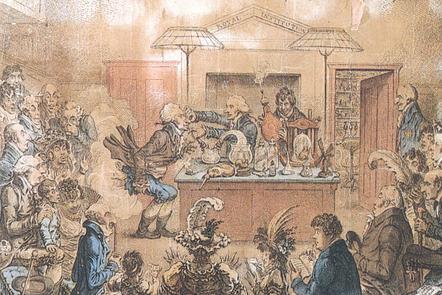
Discover Humphry Davy and his contribution to science and the arts. Before culture was divided into the sciences and the arts there was a chemist who was also a poet. Sir Humphry Davy (1778-1829) is one of the best known men of science of the nineteenth century: he was the first person to inhale nitrous oxide; he isolated nine chemical elements; and he invented the miners’ safety lamp known as the Davy lamp. This course will consider Davy’s life and career using manuscript sources held at the Royal Institution of Great Britain.

Oct 9th 2023
4 Weeks
Intellectual Humility: Theory (Coursera) Coursera
University of Edinburgh

Intellectual Humility: Theory (Coursera)

Faced with difficult questions people often tend to dismiss and marginalize dissent. Political and moral disagreements can be incredibly polarizing, and sometimes even dangerous. And whether it’s Christian fundamentalism, Islamic extremism, or militant atheism, religious dialogue remains tinted by arrogance, dogma, and ignorance. The world needs more people who are sensitive to reasons both for and against their beliefs, and are willing to consider the possibility that their political, religious and moral beliefs might be mistaken. The world needs more intellectual humility.

Jun 8th 2026
3 Weeks
Virtual Work Experience and Exploring the Veterinary Profession (FutureLearn) FutureLearn
The University of Nottingham

Virtual Work Experience and Exploring the Veterinary Profession (FutureLearn)

Learn what it takes to become a vet and explore the challenges of the vet profession to decide if it's the right career for you. Get virtual vet work experience before embarking on a veterinary degree. The COVID-19 pandemic means that many potential vet students cannot undertake animal handling work experience. On this course, you’ll get insight into the reality of life as a vet so that you can make an informed decision before embarking on a veterinary degree course.

Feb 1st 2021
2 Weeks
Getting a Grip on Mathematical Symbolism (FutureLearn) FutureLearn
Loughborough University

Getting a Grip on Mathematical Symbolism (FutureLearn)

Want to be an engineer or scientist? Lack mathematical confidence? Learn to think mathematically and explore essential concepts. This course is aimed at those who aspire to study science or engineering foundation courses at university level. It draws upon the experience of staff from the Mathematics Education Centre at Loughborough University - a centre that has specialised for many years in mathematics teaching and mathematics support for science and engineering students who find the transition to university mathematics particularly challenging.

No sessions available
3 Weeks
The Science Behind Forensic Science (FutureLearn) FutureLearn
King's College London

The Science Behind Forensic Science (FutureLearn)

Get an introduction to the science of forensic science and discover how it's applied in the real world. Discover the biology and chemistry behind forensic science. How does forensic science really work? How are scientific principles applied in crime scenes? Answer these questions and more with this course from the team who teach the longest-running forensic science programme of its type in England.

Jun 24th 2024
4 Weeks
The Scientific Revolution: Understanding the Roots of Modern Science (FutureLearn) FutureLearn
University of Groningen

The Scientific Revolution: Understanding the Roots of Modern Science (FutureLearn)

Learn about the seventeenth-century Scientific Revolution and its role in shaping the modern Western world. How did the science of today come about? What constitutes ‘modern’ science? How does science relate to religion? Answer these questions and more with this course that travels back in time to the seventeenth-century Scientific Revolution to explore the roots of modern science.

Nov 29th 2021
3 Weeks
Discovering Science: Atmospheric Chemistry (FutureLearn) FutureLearn
University of Leeds

Discovering Science: Atmospheric Chemistry (FutureLearn)

What can we learn about Earth, and other planets in and beyond our solar system, by studying their atmospheres? Learn about the role that radiation and greenhouse gases play in our understanding of atmospheric chemistry. As levels of CO2 in the atmosphere increase, you will discover the solutions scientists are exploring to reduce levels. And discover how missions to other planets and moons in our solar system are revealing extraordinarily diverse atmospheres.

Sep 23rd 2024
2 Weeks
Myths and Realities of Personalised Medicine: the Genetic Revolution (FutureLearn) FutureLearn
UNSW Sydney - University of New South Wales

Myths and Realities of Personalised Medicine: the Genetic Revolution (FutureLearn)

Learn about personalised medicine and the impact that our enhanced understanding of genetics has on modern medicine and society. Personalised medicine. Precision medicine. Individualised medicine. Customised medicine. Targeted medicine. All buzzwords of recent years that excite, confuse and infuriate the public, researchers and healthcare professionals. Broadly speaking, these terms all refer to the idea of tailoring treatment to individual patients based on their genetic code.

No sessions available
5-12 Weeks
Teaching in University Science Laboratories (Developing Best Practice) (Coursera) Coursera
University of Amsterdam

Teaching in University Science Laboratories (Developing Best Practice) (Coursera)

This course is developed to improve the effectiveness of laboratory classes in higher education. It aims to support teachers to improve their teaching skills for active learning in university science laboratory courses. It will show you how laboratory sessions can differ with respect to their aim and expected learning outcomes, how to engage students for learning and how to cope with their different levels of pre-knowledge and experience and probe their understanding. Last but not least it will show how you could assess students in laboratory courses.

Jun 8th 2026
5-12 Weeks