Through Engineers' Eyes: Engineering Mechanics by Experiment, Analysis and Design (FutureLearn)

Through Engineers' Eyes: Engineering Mechanics by Experiment, Analysis and Design (FutureLearn)

Learn the techniques of Engineering Mechanics, use them to interpret experiments and apply them to design. When you design anything, how do you know that the design will work? You need Engineering Mechanics - the science-based analysis that engineers use to predict how their designs will perform, so they can meet their responsibilities for performance and safety. It starts with physics - forces, equilibrium, acceleration, gravity - but then engineers adapt it to their own purposes.

Class Deals by MOOC List - Click here and see FutureLearn's Active Discounts, Deals, and Promo Codes.

In this free online course, you will learn analytical skills, use them to understand experiments, and apply them in design. You will be living in the engineer’s world.

An unusual approach to learning Engineering Mechanics
Each of the seven weeks of this course has:

  • an introduction to set the scene;
  • experiments to introduce physical reality;
  • analysis videos, paper and pencil tutorials and on-line Adaptive Tutorials to help you develop insights and skills;
  • a design activity to give you engineering context (except Week 1);
  • and a review process to consolidate your learning.

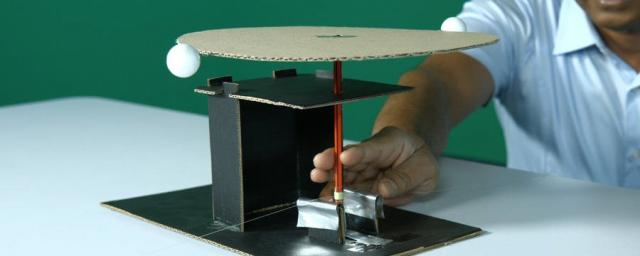
Experiments will be a special feature. You can do them yourself using common household items such as rubber bands, paper clips, string and cardboard, a toy vehicle. Videos and downloadable instructions will guide you. We hope you’ll do some of them, but if not, you can get what you need from watching the videos.
Adaptive Tutorials will be another special feature. They provide a personalised learning experience through virtual ‘learning by doing’ activities that adapt to your progress.
Here are two examples of typical weekly activities:
Week 3 - the experiments and analysis will present tools for finding forces by applying equilibrium, and for the design activity you will specify the size of a bolt that acts as a pin on a fold-out frame.
Week 6 - the experiments will explore various types of resistance to motion, the analysis will introduce concepts of work and energy, and for the design activity, you will estimate the power requirement and range of an electric car.

A life-changing experience
On completing this course you will have:

  • learnt how to manipulate forces as vectors;
  • learnt techniques and skills in using free body diagrams and equilibrium to analyse and predict forces;
  • understood centres of gravity, friction and various types of resistance;
  • and applied these capabilities to design.

And by living in the world of the engineer, you will see how they operate effectively and safely. You will have begun to develop “Engineers’ Eyes”.


Go to Class
MOOC List is learner-supported. When you buy through links on our site, we may earn an affiliate commission.

Related Courses

Data – What It Is, What We Can Do With It (Coursera) Coursera
Johns Hopkins University

Data – What It Is, What We Can Do With It (Coursera)

This course introduces students to data and statistics. By the end of the course, students should be able to interpret descriptive statistics, causal analyses and visualizations to draw meaningful insights. The course first introduces a framework for thinking about the various purposes of statistical analysis. We’ll talk about how analysts use data for descriptive, causal and predictive inference. We’ll then cover how to develop a research study for causal analysis, compute and interpret descriptive statistics and design effective visualizations. The course will help you to become a thoughtful and critical consumer of analytics.

Jun 1st 2026
4 Weeks
Introduction to Thermodynamics (FutureLearn) FutureLearn
University of Hull

Introduction to Thermodynamics (FutureLearn)

Discover the laws of thermodynamics as you learn how to calculate chemical properties and predict chemical reactions. Get an introduction to thermodynamic properties and systems. Curious about thermodynamics or thinking about studying it at university? This short course from the University of Hull offers a short introduction to the fundamentals of thermodynamics – the branch of physics that deals with heat and its relation to energy.

Available now
3 Weeks
Through Engineers' Eyes: Engineering Mechanics by Experiment, Analysis and Design (FutureLearn) FutureLearn
UNSW Sydney - University of New South Wales

Through Engineers' Eyes: Engineering Mechanics by Experiment, Analysis and Design (FutureLearn)

Learn the techniques of Engineering Mechanics, use them to interpret experiments and apply them to design. When you design anything, how do you know that the design will work? You need Engineering Mechanics - the science-based analysis that engineers use to predict how their designs will perform, so they can meet their responsibilities for performance and safety.

No sessions available
5-12 Weeks
Density Functional Theory (Coursera) Coursera
École Polytechnique

Density Functional Theory (Coursera)

The aim of this course is to give a thorough introduction to Density Functional Theory (DFT). DFT is today the most widely used method to study interacting electrons, and its applicability ranges from atoms to solid systems, from nuclei to quantum fluids. In this course, we introduce the most important concepts underlying DFT, its foundation, and basic ideas. We will in particular stress the features and reasons that lead DFT to become the dominant method for simulating quantum mechanical systems.

Jun 1st 2026
3 Weeks
The Diversity of Exoplanets (Coursera) Coursera
University of Geneva

The Diversity of Exoplanets (Coursera)

In this MOOC, you will have the opportunity to practice several methods of detection and characterisation of exoplanets. You will discover their statistical properties and the current state of knowledge we have in this very recent field of research. You will also understand the limitations and biases of the different detection techniques.

Jun 1st 2026
5-12 Weeks
Les deux infinis et nous (Coursera) Coursera
École Polytechnique

Les deux infinis et nous (Coursera)

Partez à la découverte de l'infiniment grand et de l'infiniment petit dans leurs aspects les plus proches de notre quotidien, en compagnie de physiciens et de physiciennes qui vont vous faire découvrir leur présence insoupçonnée dans notre vie de tous les jours. Vous vous initierez à la vie et aux métiers d'une grande collaboration en physique de l'infiniment petit et de l'infiniment grand, vous découvrirez comment les outils développés dans ces domaines ont trouvé des applications inattendues, comment la physique nucléaire a profondément modifié les domaines de l'énergie et de la santé, et comment les propriétés de certaines particules aident à présent d'autres disciplines à sonder la matière d'une manière totalement différente.

Jun 1st 2026
4 Weeks
Physics 101 - Forces and Kinematics (Coursera) Coursera
Rice University

Physics 101 - Forces and Kinematics (Coursera)

This course serves as an introduction to the physics of force and motion. Upon completion, learners will have an understanding of how mathematical laws and conservation principles describe the motions and interactions of objects all around us. They will gain experience in solving physics problems with tools such as graphical analysis, algebra, vector analysis, and calculus.

Jun 1st 2026
4 Weeks
Investment Strategies and Portfolio Analysis (Coursera) Coursera
Rice University

Investment Strategies and Portfolio Analysis (Coursera)

In this course, you will learn about latest investment strategies and performance evaluation. You will start by learning portfolio performance measures and discuss best practices in portfolio performance evaluation. You will explore different evaluation techniques such as style analysis and attribution analysis and apply them to evaluate different investment strategies. Special emphasis will be given to recent financial market innovations and current investment trends.

Jun 1st 2026
3 Weeks
The Control Phase for the 6 σ Black Belt (Coursera) Coursera
University System of Georgia

The Control Phase for the 6 σ Black Belt (Coursera)

This course is designed for professionals interested in learning the principles of Lean Sigma, the DMAIC process and DFSS. This course is number 7 of 8 in this specialization dealing with topics in the Control Phase of Six Sigma. Professionals with some completed coursework in statistics and a desire to drive continuous improvement within their organizations would find this course and the others in this specialization appealing. Method of assessment consists of several formative and summative quizzes and a multi-part peer reviewed project completion regiment.

Jun 1st 2026
5-12 Weeks