Moons (FutureLearn)

Offered by The Open University,
Moons (FutureLearn)

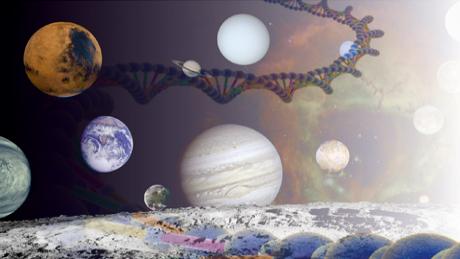
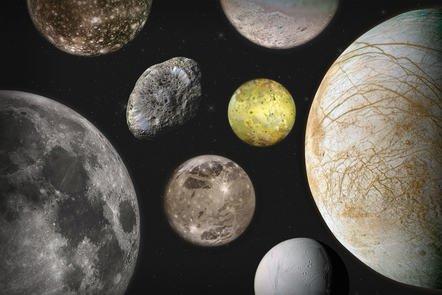
Explore the many moons of our Solar System. Find out what makes them special and ask whether we send humans to our Moon again. Discover the amazing diversity of moons in our Solar System. There are lots of moons in our Solar System. The Earth is the only planet with just a single moon. Some are bigger than ours. Many are much smaller. Some moons have ongoing volcanic eruptions. Others have rivers of liquid methane. A small handful may even be home to primitive life. This online course will allow you to explore the rich diversity of moons in our Solar System.

Class Deals by MOOC List - Click here and see FutureLearn's Active Discounts, Deals, and Promo Codes.

With experts from The Open University, you’ll explore the fundamental processes that have shaped them, and the relationship between our Moon and the Earth.
The course was produced with the kind support of Dangoor Education.

Syllabus
Week 1: What are moons?
Week 2: Moons and what they are made of; craters and cratering
Week 3: Volcanism on moons, Europa, small moons
Week 4: Our Moon and how it has been explored
Week 5: What we have learned from the Moon
Week 6: Water on the Moon, and the future of lunar exploration
Week 7: Exploring other moons:
Week 8: Moons and the future; how many of them host life?

What will you achieve?
By the end of the course, you'll be able to...

  • Develop an awareness of the nature and diversity of moons in our Solar System, and their significance.
  • Explain and understand the general nature of moons’ orbits and the effects of tides.
  • Describe some of the possible origins of moons.
  • Describe the compositions and nature of the surfaces and interiors of moons.
  • Calculate and understand how impact craters are formed and recognise their significance for dating surfaces.
  • Describe the nature and history of volcanic activity on several moons.
  • Assess and be aware of which moons may have subsurface oceans, and the implications for hosting native life.
  • Classify and become aware of the history of manned and unmanned lunar exploration, and of some of the major discoveries.
  • Identify and recognise aspects of lunar samples seen under the microscope.
  • Describe the different settings in which ‘water’ has been found on the Moon.
  • Describe and be aware of the history of discovery and exploration of moons, and of future prospects.
  • Reflect and suggest ways in which resources from the Moon may help future space exploration.
Go to Class
MOOC List is learner-supported. When you buy through links on our site, we may earn an affiliate commission.

Related Courses

Extinctions: Past and Present (FutureLearn) FutureLearn
University of Cape Town

Extinctions: Past and Present (FutureLearn)

Discover the diversity of life on earth, the impacts of five past mass extinctions and the prospect of a sixth extinction today. This free online course explores how life on earth has been shaped by five mass extinction events in the distant past. At present, biodiversity is facing a crisis, with the prospect of a sixth extinction event today.

Jul 25th 2022
5-12 Weeks
Climate Change: Challenges and Solutions (FutureLearn) FutureLearn
University of Exeter

Climate Change: Challenges and Solutions (FutureLearn)

This course aims to explain the science of climate change, the risks it poses, and the solutions available to reduce those risks. The course is aimed at the level of students entering university, and seeks to provide an inter-disciplinary introduction to what is a broad field. It engages a number of experts from the University of Exeter and a number of partner organisations.

No sessions available
5-12 Weeks
Fundamentals of Fluid-Solid Interactions (Coursera) Coursera
École Polytechnique

Fundamentals of Fluid-Solid Interactions (Coursera)

What is fluid-solid interactions ? It is what happens when the motions of a fluid and of a solid are somehow coupled. This happens all the time, around you when leaves flutter in the wind, inside you when your heart beats, above you when wings of a plane vibrate, under the sea... The idea behind this MOOC is to give you the basic tools to be able to predict and eventually mitigate things called flutter, galloping, sloshing, vortex-induced vibrations, added mass, to cite a few. We are going to consider any possible domains of applications such as civil engineering, aerospace engineering, nuclear engineering , ocean engineering, biomechanics and even food processing !

Aug 10th 2026
5-12 Weeks
Emergence of Life (Coursera) Coursera
University of Illinois at Urbana-Champaign

Emergence of Life (Coursera)

How did life emerge on Earth? How have life and Earth co-evolved through geological time? Is life elsewhere in the universe? Take a look through the 4-billion-year history of life on Earth through the lens of the modern Tree of Life. This course will evaluate the entire history of life on Earth within the context of our cutting-edge understanding of the Tree of Life. This includes the pioneering work of Professor Carl Woese on the University of Illinois Urbana-Champaign campus which revolutionized our understanding with a new "Tree of Life."

Aug 10th 2026
5-12 Weeks
Understanding Quantum Computers (FutureLearn) FutureLearn
Keio University

Understanding Quantum Computers (FutureLearn)

Explore the key concepts of quantum computing and find out how it’s changing computer science with this introductory course. In this course, we will discuss the motivation for building quantum computers, cover the important principles in quantum computing, and take a look at some of the important quantum computing algorithms.

Self Paced
3 Weeks
Understanding Einstein: The Special Theory of Relativity (Coursera) Coursera
Stanford University

Understanding Einstein: The Special Theory of Relativity (Coursera)

In this course we will seek to “understand Einstein,” especially focusing on the special theory of relativity that Albert Einstein, as a twenty-six year old patent clerk, introduced in his “miracle year” of 1905. Our goal will be to go behind the myth-making and beyond the popularized presentations of relativity in order to gain a deeper understanding of both Einstein the person and the concepts, predictions, and strange paradoxes of his theory.

Aug 10th 2026
5-12 Weeks
Mysteries Of The Universe (FutureLearn) FutureLearn
National Tsing Hua University

Mysteries Of The Universe (FutureLearn)

Discover how more than ninety per cent of the universe is a mystery, and expand your knowledge of cosmology and astronomy. Investigate the most mysterious and fascinating aspects of the universe The more we learn about how the universe works, the more we realise how much we don’t know. What is a black hole? What is dark energy? Will the universe eventually collapse in on itself? And how does the Earth fit into all this?

Self Paced
5-12 Weeks
Earth Observation from Space: the Optical View (FutureLearn) FutureLearn
European Space Agency

Earth Observation from Space: the Optical View (FutureLearn)

Discover how optical Earth observation data is gathered and used in this free online course from the European Space Agency (ESA). Earth observation (EO) encompasses a series of techniques that use remote sensing to monitor changes to our climate, and natural and built environment.

No sessions available
5-12 Weeks
From the Big Bang to Dark Energy (Coursera) Coursera
The University of Tokyo

From the Big Bang to Dark Energy (Coursera)

We have learned a lot recently about how the Universe evolved in 13.7 billion years since the Big Bang. More than 80% of matter in the Universe is mysterious Dark Matter, which made stars and galaxies to form. The newly discovered Higgs-boson became frozen into the Universe a trillionth of a second after the Big Bang and brought order to the Universe.

Aug 10th 2026
4 Weeks
Through Engineers' Eyes: Engineering Mechanics by Experiment, Analysis and Design (FutureLearn) FutureLearn
UNSW Sydney - University of New South Wales

Through Engineers' Eyes: Engineering Mechanics by Experiment, Analysis and Design (FutureLearn)

Learn the techniques of Engineering Mechanics, use them to interpret experiments and apply them to design. When you design anything, how do you know that the design will work? You need Engineering Mechanics - the science-based analysis that engineers use to predict how their designs will perform, so they can meet their responsibilities for performance and safety.

No sessions available
5-12 Weeks