Introduction to Particle Accelerators (NPAP MOOC) (Coursera)

Offered by Lund University,
Introduction to Particle Accelerators (NPAP MOOC) (Coursera)

Welcome to the Nordic Particle Accelerator Program's (NPAP) Massive Open Online Courses and to the fascinating world of particle accelerators! Did you know that in the year of 2000 there were more than 15 000 particle accelerators in the world? Yet, today it has grown to more than 30 000 of them! A third of the particle accelerators are dedicated to medical applications, such as radio therapy, and a half are used for ion implantation in semiconductor devices.

Class Deals by MOOC List - Click here and see Coursera's Active Discounts, Deals, and Promo Codes.

Also numerous particle accelerators are used for sterilizing food. Despite these everyday life examples of small particle accelerators, it is the large accelerators, like the Large Hadron Collider at CERN, that most people associate with particle accelerators. There will be many new applications for particle accelerators in the future and by that there is a need for MOOCs that describe the techniques and applications of these machines.
The NPAP series of MOOCs consists of three MOOCs designed to disseminate knowledge about particle accelerator technology to impacted fields. The courses have been made possible thanks to the support of the Erasmus Plus, Strategic Partnership funding of the European Commission and thanks to the dedicated lecturers from the universities of Lund, Uppsala, Arhus, Oslo and Jyväskylä, and by experts from the MAX IV Laboratory and European Spallation Source (ESS), both in Lund, Sweden.
In many of the lectures we detail the MAX IV Laboratory and ESS - currently hosting the most powerful synchrotron light source and neutron source in the world. In the MAX IV Laboratory intense X-ray beams are produced by electrons that are first accelerated to almost the speed of light, and at ESS protons will be accelerated and, by a process called spallation, generate intense beams of neutron. The X-ray and neutron beams are used for looking into matter, down to the atomic level. The MAX IV Laboratory and ESS form a unique European center of excellence for thousands of scientists that together build the world of tomorrow. We also take a closer look at the Large Hadron Collider, at CERN, in Geneva. This powerful machine has already had an immense impact on theoretical physics and will continue to contribute to our knowledge of nature for quite some time.
The first course in our NPAP series is the Introduction to Particle Accelerators. It explains how a particle accelerator can generate light of wavelengths down to one Angstrom. It also explains how the ESS facility can create a massive flux of neutrons by accelerating protons and let them smash into a disk of tungsten. The initial modules provide the basic knowledge about linear and circular accelerators that is required to understand other types of accelerators, like the Large Hadron Collider (LHC), at CERN in Geneva. We describe LHC and give an introduction to the elementary particle physics it is used for. We continue by describing some new concepts for future particle accelerators, like plasma driven accelerators.
The second MOOC in the series is called "Fundamentals of Particle Accelerator Technology (NPAP MOOC)" and offers four modules: The Radio Frequency (RF) System of Accelerators; Magnet technology for accelerator; Beam Diagnostics; Basics of Vacuum techniques. The third MOOC is - Medical Applications of Particle Accelerators, which offers the four modules: Introduction to the course and radiotherapy; Linear electron accelerators for radiotherapy; Proton therapy part I; Proton therapy part II and the production of medical radionuclides.
The three MOOCs can be taken either separately or as a package. For students that intend to take all three courses we recommend that they are taken in order.
Get started and join us on this journey through the world of particle accelerators and be amazed by their importance for our lives and societies!

What You Will Learn

  • You will learn how electrons can create light
  • You will learn the basic principles of synchrotron light sources and MAX-IV
  • You will learn how protons can be accelerated in a linear accelerator and how they can produce neutrons by spallation at the ESS
  • You will learn what particle colliders are and what they can be used for

Syllabus

WEEK 1
Accelerators for Synchrotron Light
This module is about photon light sources. In particular it describes how electromagnetic radiation is produced in particle accelerators. The wavelengths of the radiation that is created in accelerators range from several meters down to a few angstrom. These electromagnetic waves help us to develop new materials and drugs, and also to reveal the inner structures of objects.

WEEK 2
Photon light sources and MAX IV
This module explains how electromagnetic radiation can be created by accelerating particles and the different characteristics inherited. After a brief history of the discovery of synchrotron radiation the module focuses on the characteristics of synchrotron radiation and its features. The second part describes the magnetic devices that make electrons radiate light, while the third and last part is about Free Electron Lasers, a new type of light source that generates very coherent radiation.

WEEK 3
Spallation sources and ESS
This module is about particle accelerators that create neutrons. It first describes how protons, or heavy ions, with large kinetic energies create neutrons as they are smashed into the nucleuses of heavy atoms, a process called spallation. It then discusses how the neutrons created in the spallation process can be used to reveal the atomic structures of materials and the inner structures of objects. The second part of the module gives a detailed description the European Spallation Source (ESS), located in Lund, Sweden. In particular it describes the different parts of the 600 meter long linear accelerator of ESS that accelerates protons to large kinetic energies.

WEEK 4
Particle Colliders
This module describes particle colliders and explains why we need them. After a brief history of colliders it focuses on the Large Hadron Collider (LHC), which is the world’s largest collider. This is followed by two lectures on linear colliders, exemplified by two proposed electron-positron colliders, CLIC and ILC. Finally the module discusses different options for the next generation of circular colliders.

WEEK 5
Stay tuned for upcoming resources
We are constantly working on sharing more knowledge and fun resources with all of you! As such, we have created this module as a platform for more exciting new knowledge and materials that will be added to this course in the future as fun extra curricular activity! Notifications will be sent out to registered learners when we launch these updates, so stay tuned and keep an eye out for these updates in the future!

WEEK 6
Well done! You have now successfully finalized the course!
Go to Class
MOOC List is learner-supported. When you buy through links on our site, we may earn an affiliate commission.

Related Courses

Oscillators and Waves (Coursera) Coursera
Rice University

Oscillators and Waves (Coursera)

This first course serves as an introduction to the physics of waves and light. Upon completion, learners will understand how mathematical laws and conservation principles describe wave propagation and light in the context of both geometrical and physical optics. Learners will gain experience in solving physics problems with tools such as graphical analysis, algebra, vector analysis, and calculus.

Jun 8th 2026
4 Weeks
Physics 102 - Electric Potential and DC Circuits (Coursera) Coursera
Rice University

Physics 102 - Electric Potential and DC Circuits (Coursera)

This course serves as an introduction to the physics of electricity and magnetism. Upon completion, learners will have an understanding of how the forces between electric charges are described by fields, and how these fields are related to electrical circuits. They will gain experience in solving physics problems with tools such as graphical analysis, algebra, vector analysis, and calculus.

Jun 8th 2026
3 Weeks
The Discovery of the Higgs Boson (Coursera) Coursera
University of Edinburgh

The Discovery of the Higgs Boson (Coursera)

The discovery of a new fundamental particle at the Large Hadron Collider (LHC), CERN is the latest step in a long quest seeking to answer one of physics’ most enduring questions: why do particles have mass? The experiments’ much anticipated success confirms predictions made decades earlier by Peter Higgs and others, and offers a glimpse into a universe of physics beyond the Standard Model.

Jun 8th 2026
5-12 Weeks
Tesoros de la Física y sus Descubridores I (Coursera) Coursera
Universidad de los Andes

Tesoros de la Física y sus Descubridores I (Coursera)

¿Sabes cómo vuelan los aviones, tan pesados y no se caen mientras vuelan? ¿Sabes que viajamos por el espacio sobre el planeta Tierra que se traslada y gira muy rápido y no lo percibimos? ¿O acaso, notas efectos de su movimiento? ¿Cuál es nuestro lugar en el universo? ¿Podemos viajar en el tiempo? ¡Preguntas, muchas preguntas! Con espíritu de descubridores nuestra curiosidad nos motiva a buscar respuestas, a explorar nuestro entorno, a entrar a lo desconocido y hallar nuevo conocimiento.

Jun 8th 2026
5-12 Weeks
Physics 102 - Electric Charges and Fields (Coursera) Coursera
Rice University

Physics 102 - Electric Charges and Fields (Coursera)

This course serves as an introduction to the physics of electricity and magnetism. Upon completion, learners will have an understanding of how the forces between electric charges are described by fields, and how these fields are related to electrical circuits. They will gain experience in solving physics problems with tools such as graphical analysis, algebra, vector analysis, and calculus. The course follows the typical progression of topics of a first-semester university physics course: charges, electric forces, electric fields potential, magnetic fields, currents, magnetic moments, electromagnetic induction, and circuits.

Jun 8th 2026
4 Weeks
Physics 102 - Magnetic Fields and Faraday's Law (Coursera) Coursera
Rice University

Physics 102 - Magnetic Fields and Faraday's Law (Coursera)

This course serves as an introduction to the physics of electricity and magnetism. Upon completion, learners will have an understanding of how the forces between electric charges are described by fields, and how these fields are related to electrical circuits. They will gain experience in solving physics problems with tools such as graphical analysis, algebra, vector analysis, and calculus. The course follows the typical progression of topics of a first-semester university physics course: charges, electric forces, electric fields potential, magnetic fields, currents, magnetic moments, electromagnetic induction, and circuits.

Jun 8th 2026
4 Weeks
Introduction to Thermodynamics: Transferring Energy from Here to There (Coursera) Coursera
University of Michigan

Introduction to Thermodynamics: Transferring Energy from Here to There (Coursera)

This course provides an introduction to the most powerful engineering principles you will ever learn - Thermodynamics: the science of transferring energy from one place or form to another place or form. We will introduce the tools you need to analyze energy systems from solar panels, to engines, to insulated coffee mugs. More specifically, we will cover the topics of mass and energy conservation principles; first law analysis of control mass and control volume systems; properties and behavior of pure substances; and applications to thermodynamic systems operating at steady state conditions.

Jun 1st 2026
5-12 Weeks
Understanding Modern Physics II: Quantum Mechanics and Atoms (Coursera) Coursera
The Hong Kong University of Science and Technology - HKUST

Understanding Modern Physics II: Quantum Mechanics and Atoms (Coursera)

The 20th century was known as the century of physics. In the past 120 years, concepts such as space, time, energy, entropy and particles were understood to much deeper levels. New paradigms of thinking such as relativity and quantum mechanics emerged. This course is the second course in the Understanding Modern Physics series, which covers an introduction to quantum mechanics, atomic physics and quantum information.

Jun 8th 2026
4 Weeks
The Sun and the Total Eclipse of August 2017 (Coursera) Coursera
University of Colorado Boulder

The Sun and the Total Eclipse of August 2017 (Coursera)

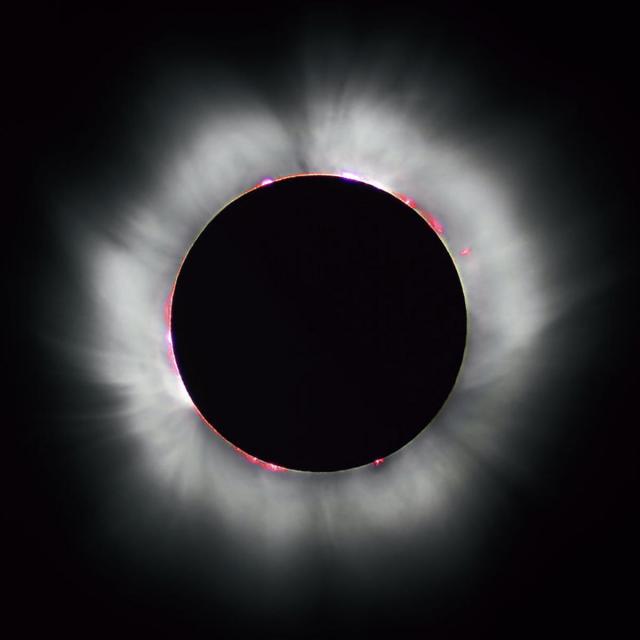
A total eclipse is one of the most spectacular sights you can ever see! It looks like the end of the world may be at hand. There is a black hole in the sky where the sun should be. Pink flames of solar prominences and long silver streamers of the sun's corona stretch across the sky. It gets cold, and animals do strange things. People scream and shout and cheer, and remember the experience their whole life. But total eclipses are important scientifically as well.

Jun 8th 2026
5-12 Weeks
The Diversity of Exoplanets (Coursera) Coursera
University of Geneva

The Diversity of Exoplanets (Coursera)

In this MOOC, you will have the opportunity to practice several methods of detection and characterisation of exoplanets. You will discover their statistical properties and the current state of knowledge we have in this very recent field of research. You will also understand the limitations and biases of the different detection techniques.

Jun 1st 2026
5-12 Weeks
Medical Applications of Particle Accelerators (NPAP MOOC) (Coursera) Coursera
Lund University

Medical Applications of Particle Accelerators (NPAP MOOC) (Coursera)

The NPAP - Medical Applications of Accelerators is one out of three courses in the Nordic Particle Accelerator Program (NPAP). Here you will be taken on a tour focusing on the medical applications of particle accelerators. You will see that there are two very important, but different, applications of accelerators in hospitals. The first application concerns radiotherapy of tumours and the other concerns the production of medical nuclides for diagnosis and treatment. Both will be included in this course and described through four modules.

Jun 1st 2026
4 Weeks
Analyzing the Universe (Coursera) Coursera
Rutgers University

Analyzing the Universe (Coursera)

Using publicly available data from NASA of actual satellite observations of astronomical x-ray sources, we explore some of the mysteries of the cosmos, including neutron stars, black holes, quasars and supernovae. We will analyze energy spectra and time series data to understand how these incredible objects work. We utilize an imaging tool called DS9 to explore the amazing diversity of astronomical observations that have made x-ray astronomy one of the most active and exciting fields of scientific investigation in the past 50 years.

Jun 8th 2026
5-12 Weeks