Physics 101 - Energy and Momentum (Coursera)

Offered by Rice University,
Physics 101 - Energy and Momentum (Coursera)

This course serves as an introduction to the physics of energy and momentum. Upon completion, learners will have an understanding of how mathematical laws and conservation principles describe the motions and interactions of objects all around us. They will gain experience in solving physics problems with tools such as graphical analysis, algebra, vector analysis, and calculus.

Class Deals by MOOC List - Click here and see Coursera's Active Discounts, Deals, and Promo Codes.

The course follows the typical progression of topics of a first-semester university physics course: Kinematics, Newton’s Laws, Energy, and Momentum. Each of five modules contains reading links to a free textbook, complete video lectures, conceptual quizzes, and a set of homework problems. Once the modules are completed, the course ends with an exam. With 100 brief lectures and over 100 problems, this comprehensive course is similar in detail and rigor to those taught on-campus. It will thoroughly prepare learners for their upcoming introductory physics courses, or more advanced courses in physics.
What You Will Learn

  • Learners will be prepared to critically evaluate real-world data and information regarding energy and motion.
  • Learners can apply mathematical laws to the motions of objects under a variety of physical circumstances.
  • Learners will be prepared for more advanced courses in physics.

Course 2 of 3 in the Introduction to Mechanics Specialization.

Syllabus

WEEK 1: Energy
A new approach mechanics: tracking a quantity that describes the ability to do work.
WEEK 2: Momentum and Collisions
WEEK 3: Statics and Elasticity
WEEK 4:Energy and Momentum EXAM
Go to Class
MOOC List is learner-supported. When you buy through links on our site, we may earn an affiliate commission.

Related Courses

Calculus: Single Variable Part 2 - Differentiation (Coursera) Coursera
University of Pennsylvania

Calculus: Single Variable Part 2 - Differentiation (Coursera)

Calculus is one of the grandest achievements of human thought, explaining everything from planetary orbits to the optimal size of a city to the periodicity of a heartbeat. This brisk course covers the core ideas of single-variable Calculus with emphases on conceptual understanding and applications. The course is ideal for students beginning in the engineering, physical, and social sciences.

Jun 8th 2026
3 Weeks
Oscillators and Waves (Coursera) Coursera
Rice University

Oscillators and Waves (Coursera)

This first course serves as an introduction to the physics of waves and light. Upon completion, learners will understand how mathematical laws and conservation principles describe wave propagation and light in the context of both geometrical and physical optics. Learners will gain experience in solving physics problems with tools such as graphical analysis, algebra, vector analysis, and calculus.

Jun 8th 2026
4 Weeks
The Discovery of the Higgs Boson (Coursera) Coursera
University of Edinburgh

The Discovery of the Higgs Boson (Coursera)

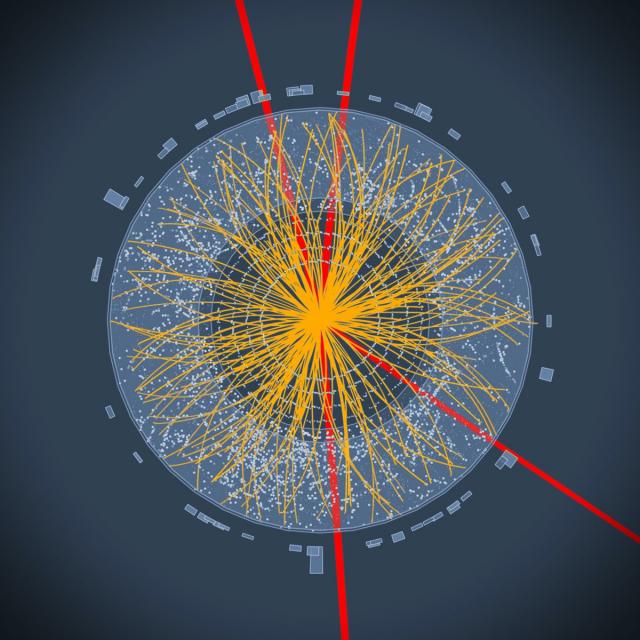
The discovery of a new fundamental particle at the Large Hadron Collider (LHC), CERN is the latest step in a long quest seeking to answer one of physics’ most enduring questions: why do particles have mass? The experiments’ much anticipated success confirms predictions made decades earlier by Peter Higgs and others, and offers a glimpse into a universe of physics beyond the Standard Model.

Jun 8th 2026
5-12 Weeks
Understanding Modern Physics I: Relativity and Cosmology (Coursera) Coursera
The Hong Kong University of Science and Technology - HKUST

Understanding Modern Physics I: Relativity and Cosmology (Coursera)

The 20th century was known as the century of physics. In the past 120 years, concepts such as space, time, energy, entropy and particles were understood to much deeper levels. New paradigms of thinking such as relativity and quantum mechanics emerged. This course is the first course in the Understanding Modern Physics series, which covers an introduction to special relativity, general relativity and cosmology.

Jun 8th 2026
5-12 Weeks
Greening the Economy: Sustainable Cities (Coursera) Coursera
Lund University

Greening the Economy: Sustainable Cities (Coursera)

How can we shape urban development towards sustainable and prosperous futures? This course will explore sustainable cities as engines for greening the economy. We place cities in the context of sustainable urban transformation and climate change. Sustainable urban transformation refers to structural transformation processes – multi-dimensional and radical change – that can effectively direct urban development towards ambitious sustainability and climate goals. We will connect the key trends of urbanization, decarbonisation and sustainability.

Jun 8th 2026
5-12 Weeks
Energy and Environment (Coursera) Coursera
Dartmouth College

Energy and Environment (Coursera)

This course deals with both renewable and non-renewable energy. By applying scientific principles and considering real-world examples, you will examine: 1. Non-renewable fossil fuels with a focus on coal, petroleum and natural gas and the benefits and consequences of using each. 2. Renewable fuels such as wind and solar and identify that even renewable “green” energy sources have impacts as well as benefits. 3. Biodiversity and global change, which are the integrating units of environmental science.

Jun 8th 2026
4 Weeks
Attitude Control with Momentum Exchange Devices (Coursera) Coursera
University of Colorado Boulder

Attitude Control with Momentum Exchange Devices (Coursera)

This course is part 1 of the specialization Advanced Spacecraft Dynamics and Control. It is a direct continuation of the Coursera specialization Spacecraft Dynamics and Control. This first course focuses on nonlinear attitude feedback control using a range of angular momentum devices. The course provides a comprehensive review of prerequisite material. Next it develops equations of motion of a spacecraft with momentum exchange devices such as reaction wheels (RWs), control momentum gyroscopes (CMGs) and variable speed control moment gyroscopes (VSCMGs).

Jun 8th 2026
5-12 Weeks
Analyzing the Universe (Coursera) Coursera
Rutgers University

Analyzing the Universe (Coursera)

Using publicly available data from NASA of actual satellite observations of astronomical x-ray sources, we explore some of the mysteries of the cosmos, including neutron stars, black holes, quasars and supernovae. We will analyze energy spectra and time series data to understand how these incredible objects work. We utilize an imaging tool called DS9 to explore the amazing diversity of astronomical observations that have made x-ray astronomy one of the most active and exciting fields of scientific investigation in the past 50 years.

Jun 8th 2026
5-12 Weeks