Vers l'infiniment grand (Coursera)

Offered by École Polytechnique,
Vers l'infiniment grand (Coursera)

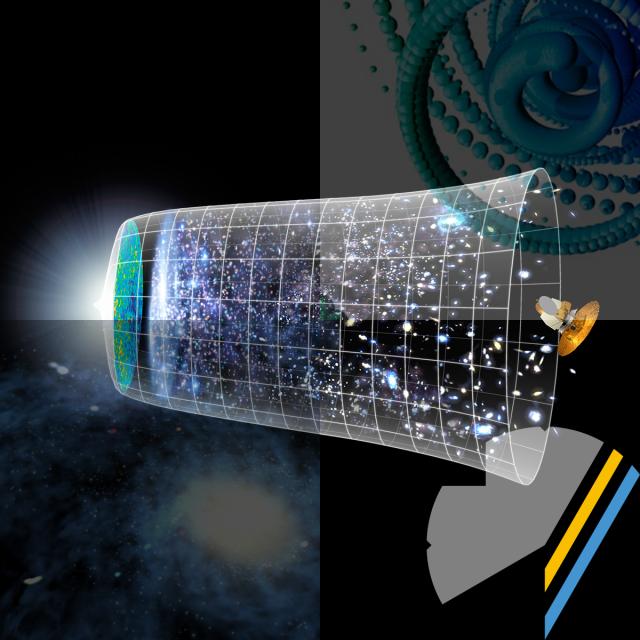
Partez à la découverte de l'infiniment grand, en compagnie de physiciens et de physiciennes qui vont vous faire découvrir l'Univers aux distances les plus grandes connues à ce jour et les outils scientifiques utilisés pour l'étudier. Vous comprendrez ce que les scientifiques ont pu apprendre sur l'histoire et la structure de l'Univers, ses composantes, et comment ils ont pu accumuler ces observations sur les étoiles, les galaxies, les amas de galaxies, et l'Univers dans son ensemble.

Class Deals by MOOC List - Click here and see Coursera's Active Discounts, Deals, and Promo Codes.

Ce cours en français fait partie du MOOC "Voyages de l'infiniment grand à l'infiniment petit", conçus par des physiciens et des physiciennes du Labex P2IO (Physique des 2 Infinis et des Origines, IPP et Université Paris-Saclay) regroupant des laboratoires de physique de l'infiniment grand et de l'infiniment petit situés à Orsay et Saclay.

Course 1 of 4 in the Voyages de l'infiniment grand à l'infiniment petit Specialization

Syllabus

WEEK 1
Les notions de base
Ce module présente les grands concepts liés à notre compréhension actuelle de l'Univers, de sa structure et de son évolution. Il aborde également les différents messagers qui nous fournissent des informations sur l'infiniment grand. Il discute aussi les "briques de base" des structures de l'infiniment grand : les étoiles.

WEEK 2
Les forces fondamentales
Ce module s'intéresse aux deux grandes forces fondamentales nécessaires pour décrire notre Univers sur de grandes échelles, à savoir la gravitation et l'interaction électromagnétique. Il se focalise en particulier sur la description contemporaine de la gravitation, à savoir la théorie de la relativité générale, et les différents tests qu'elle a subis.

WEEK 3
L'Univers aux échelles les plus grandes
Ce module s'intéresse aux grandes structures du cosmos : comment les étudie-t-on ? comment sont-elles nées à partir de l'Univers primordial ? que pouvons-nous apprendre sur la composition de l'Univers en les étudiant ? Nous savons ainsi décrire notre Univers de façon remarquablement précise, à condition d'introduire des composantes inattendues, l'énergie sombre et la matière sombre.

WEEK 4
L'observation de l'Univers
Ce module s'intéresse aux projets actuels et à venir pour mieux observer le ciel. D'une part, les satellites d'observation ont ajouté des informations précieuses sur notre Univers, impossible à obtenir autrement. D'autre part, des campagnes d'observation, sur terre ou dans l'espace, sont en préparation pour améliorer notre connaissance de l'infiniment grand.
Go to Class
MOOC List is learner-supported. When you buy through links on our site, we may earn an affiliate commission.

Related Courses

Origens da Vida no Contexto Cósmico (Coursera) Coursera
Universidade de São Paulo, Brasil

Origens da Vida no Contexto Cósmico (Coursera)

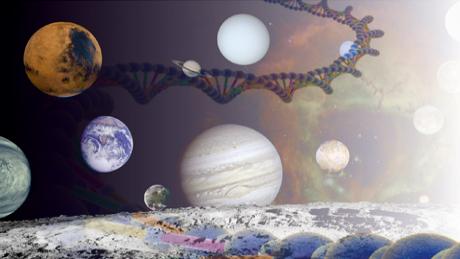
Origens da vida no contexto cósmico é um curso desenvolvido no Instituto de Astronomia, Geofísica e Ciências Atmosféricas da Universidade de São Paulo, com o objetivo de apresentar os mais recentes avanços científicos na compreensão deste intrigante assunto. É um curso com formato multidisciplinar que o levará a compreender melhor os aspectos envolvidos no surgimento de vida na Terra e no possível surgimento de vida em outros planetas.

Jun 8th 2026
4 Weeks
Control of Nonlinear Spacecraft Attitude Motion (Coursera) Coursera
University of Colorado Boulder

Control of Nonlinear Spacecraft Attitude Motion (Coursera)

This course trains you in the skills needed to program specific orientation and achieve precise aiming goals for spacecraft moving through three dimensional space. First, we cover stability definitions of nonlinear dynamical systems, covering the difference between local and global stability. We then analyze and apply Lyapunov's Direct Method to prove these stability properties, and develop a nonlinear 3-axis attitude pointing control law using Lyapunov theory. Finally, we look at alternate feedback control laws and closed loop dynamics.

Jun 8th 2026
4 Weeks
Kinetics: Studying Spacecraft Motion (Coursera) Coursera
University of Colorado Boulder

Kinetics: Studying Spacecraft Motion (Coursera)

As they tumble through space, objects like spacecraft move in dynamical ways. Understanding and predicting the equations that represent that motion is critical to the safety and efficacy of spacecraft mission development. Kinetics: Modeling the Motions of Spacecraft trains your skills in topics like rigid body angular momentum and kinetic energy expression shown in a coordinate frame agnostic manner, single and dual rigid body systems tumbling without the forces of external torque, how differential gravity across a rigid body is approximated to the first order to study disturbances in both the attitude and orbital motion, and how these systems change when general momentum exchange devices are introduced.

Jun 8th 2026
4 Weeks
Geometrical and Physical Optics (Coursera) Coursera
Rice University

Geometrical and Physical Optics (Coursera)

This third course serves as an introduction to the physics of waves and light. Upon completion, learners will understand how mathematical laws and conservation principles describe wave propagation and light in the context of both geometrical and physical optics. Learners will gain experience in solving physics problems with tools such as graphical analysis, algebra, vector analysis, and calculus.

Jun 8th 2026
4 Weeks
Astrobiology: Exploring Other Worlds (Coursera) Coursera
University of Arizona

Astrobiology: Exploring Other Worlds (Coursera)

How are astronomers approaching their search for life in the universe? What have we learned from the surge of exoplanets discoveries? How likely is it that Earth does not host the only life in the Universe? In this course we explore the field of astrobiology, an emerging multidisciplinary field. Progress in astrobiology is driven by telescopes on the ground and in space, and by new insights on how life emerged on Earth and its diversity.

Jun 1st 2026
5-12 Weeks
Science & Religion 101 (Coursera) Coursera
University of Alberta

Science & Religion 101 (Coursera)

This course examines the nature of both science and religion and attempts to explore the possible relationships between them. The primary purpose is to dispel the popular myth that science and religion are entrenched in a never-ending conflict. As a result, this course argues that if the limits of both science and religion are respected, then their relationship can be complementary.

Jun 8th 2026
5-12 Weeks
Understanding Modern Physics I: Relativity and Cosmology (Coursera) Coursera
The Hong Kong University of Science and Technology - HKUST

Understanding Modern Physics I: Relativity and Cosmology (Coursera)

The 20th century was known as the century of physics. In the past 120 years, concepts such as space, time, energy, entropy and particles were understood to much deeper levels. New paradigms of thinking such as relativity and quantum mechanics emerged. This course is the first course in the Understanding Modern Physics series, which covers an introduction to special relativity, general relativity and cosmology.

Jun 8th 2026
5-12 Weeks
AstroTech: The Science and Technology behind Astronomical Discovery (Coursera) Coursera
University of Edinburgh

AstroTech: The Science and Technology behind Astronomical Discovery (Coursera)

Modern astronomy has made some astonishing discoveries - how stars burn and how black holes form; galaxies from the edge of the universe and killer rocks right next door; where the elements come from and how the expanding universe is accelerating. But how do we know all that? The truth is that astronomy would be impossible without technology, and every advance in astronomy is really an advance in technology. But the technology by itself is not enough. We have to apply it critically with a knowledge of physics to unlock the secrets of the Universe.

Jun 1st 2026
5-12 Weeks
Physics 102 - Magnetic Fields and Faraday's Law (Coursera) Coursera
Rice University

Physics 102 - Magnetic Fields and Faraday's Law (Coursera)

This course serves as an introduction to the physics of electricity and magnetism. Upon completion, learners will have an understanding of how the forces between electric charges are described by fields, and how these fields are related to electrical circuits. They will gain experience in solving physics problems with tools such as graphical analysis, algebra, vector analysis, and calculus. The course follows the typical progression of topics of a first-semester university physics course: charges, electric forces, electric fields potential, magnetic fields, currents, magnetic moments, electromagnetic induction, and circuits.

Jun 8th 2026
4 Weeks