Guitar for Beginners (Coursera)

Guitar for Beginners (Coursera)

Grasp the essentials needed to begin playing acoustic or electric guitar. You'll learn an easy approach to get you playing quickly, through a combination of exploring the instrument, performance technique, and basic music theory. For students who have long thought about picking up the acoustic or electric guitar, this course will provide an easy-access foundation that will get you playing.

Class Deals by MOOC List - Click here and see Coursera's Active Discounts, Deals, and Promo Codes.

When first learning guitar, it is important to have the material presented in stages, in an enjoyable way that allows you to grasp the basics of the instrument and music. The course begins simply with the parts of the guitar, the names of the strings, tuning, and technique—whether finger-style or pick. It then explores the basics of music theory with such topics as scales, triads, power chords, and fingering and shapes.
At the end of this course, students will understand the structure, parts, and accessories of the instrument, in addition to an understanding of its basic maintenance. Electric guitar players will learn the operation of their instrument along with basic options for amplification, effect pedals, and sounds. Students will also learn to develop correct technique and apply theory concepts to their playing. They will have the foundational knowledge necessary to pursue most intermediate guitar courses.
This course is part of multiple programs:
This course can be applied to multiple Specializations or Professional Certificates programs. Completing this course will count towards your learning in any of the following programs:

What You Will Learn

  • Identify string names and numbers and read music notation, tablature, chord block diagrams, and fretboard maps
  • Practice picking, finger picking, and strumming patterns
  • Play various chords including major and minor triads, open, barre, and pose chords

-Read and play a lead sheet

Syllabus

WEEK 1
Welcome to Introduction to Guitar
Welcome to Guitar for Beginners! Before you begin the course, we will cover all the details about the course and what you'll need to know to get the most out of your Berklee massive online course.
Acoustic / Electric Guitar and the Basics
In this first lesson, we will take things slow. We will focus on how to choose the right guitar for you and what accessories are essential for any guitar player. We'll also learn the parts of the guitar and get you comfortable with your instrument.

WEEK 2
Getting Started: Fundamental Guitar Skills
In this lesson, you will learn how to tune and you will start playing your instrument from the ground up! Be patient and remember: focus on being accurate and play in consistent time with your metronome. These things are far more important than playing with speed.

WEEK 3
The Twelve Half Steps and Basic Notation
While you don’t need to be an expert on music theory to play guitar, it is important to know the basic building blocks of music. With this understanding, music will no longer be shrouded in mystery or complexity. This lesson presents fundamental musical ideas in a fun, non-intimidating way.

WEEK 4
Scales: Construction and Fingerings
In this lesson, you will dig into scales. Don’t be intimidated. Some of you may have heard of, or practiced, scales. It might have been during piano lessons. Most likely it wasn’t very exciting for you. Hopefully you'll find the approach to scales in lesson 4 much easier and even fun.

WEEK 5
Chords: Building Easy Triads and Power Chords
In this lesson, you will use all of the skills you’ve gained from the previous lessons to build the foundation of harmony. You will play certain scale notes at the same time to create chords. Let's look at why chords sound like they do, how to build them, how to easily play chords in open position, and how to play chords that you can move all around the neck.

WEEK 6
Putting it All Together: The Pentatonic Scale and Songs
Now that you have the "science" of the guitar in your fingers, you will learn a couple of songs. You will do this by using melody (from the scales) and harmony (from the chords) we have learned. You will also learn an essential scale for playing melodies and soloing.
Go to Class
MOOC List is learner-supported. When you buy through links on our site, we may earn an affiliate commission.

Related Courses

Guitar Performance Techniques (Coursera) Coursera
Berklee College of Music

Guitar Performance Techniques (Coursera)

Your favorite guitarist didn't become your favorite guitarist without the support of other musicians. The most important skill for a guitarist to learn is the exact same skill that was so important in kindergarten: playing well with others. Guitar Performance Techniques gives guitarists the essential and practical skills to play well with others in any ensemble situation.

Jun 8th 2026
4 Weeks
Fundamentals of Music Theory (Coursera) Coursera
University of Edinburgh

Fundamentals of Music Theory (Coursera)

This course will introduce students to the theory of music, providing them with the skills needed to read and write Western music notation, as well as to understand, analyse, and listen informedly. It will cover material such as pitEli Appleby-Donaldches and scales, intervals, clefs, rhythm, form, meter, phrases and cadences, and basic harmony.

Jun 8th 2026
5-12 Weeks
Teaching the Violin and Viola: Creating a Healthy Foundation (Coursera) Coursera
Northwestern University

Teaching the Violin and Viola: Creating a Healthy Foundation (Coursera)

Join us as we explore the fundamental principles and early stages of teaching violin and viola through a series of engaging video lectures and lesson demonstrations, including: 1) Master classes with some of the world’s top string pedagogues, 2) Individual lesson demos of teaching violin/viola set up, left and right hand technique and pieces from the early violin/viola repertoire, 3) Group lesson demos of teaching music theory, ear training and fun activities that encourage good playing habits, and 4) A “field trip” to the violin shop, where we will outfit a new beginning student with a proper instrument and bow.

Jun 8th 2026
5-12 Weeks
History of Rock, Part Two (Coursera) Coursera
University of Rochester

History of Rock, Part Two (Coursera)

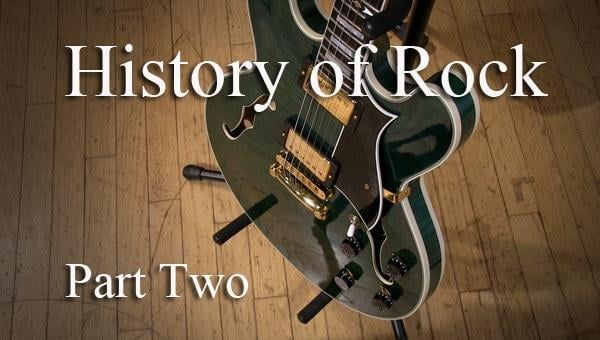
This course, part 2 of a 2-course sequence, examines the history of rock, primarily as it unfolded in the United States, from the early 1970s to the early 1990s. This course covers the music of Led Zeppelin, the Allman Brothers, Carole King, Bob Marley, the Sex Pistols, Donna Summer, Michael Jackson, Madonna, Prince, Metallica, Run-DMC, and Nirvana, and many more artists, with an emphasis both on cultural context and on the music itself. We will also explore how developments in the music business and in technology helped shape the ways in which styles developed.

Jun 8th 2026
5-12 Weeks
Introduction to Italian Opera (Coursera) Coursera
Dartmouth College

Introduction to Italian Opera (Coursera)

This course gives us an introduction to Italian Opera right from its very beginning in Florence, Italy. You will understand how Mozart’s opera is the midpoint of opera. It explores how music tells the audience about the characters' thoughts through musical gestures. It also sheds light on the importance of close listening to understand opera thoroughly.

Jun 8th 2026
5-12 Weeks
The Art of Music Production (Coursera) Coursera
Berklee College of Music

The Art of Music Production (Coursera)

Explore the art of record production and how to make recordings that other people will love listening to. This course will teach you how to make emotionally moving recordings on almost any recording equipment, including your phone or laptop. The emphasis is on mastering tangible artistic concepts; the gear you use is up to you. You will learn to develop the most important tool in the recording studio: your ears. You will learn to enhance every aspect of your own productions, both sonically and musically, by employing deeper listening skills.

Jun 1st 2026
4 Weeks
Fundamentals of Audio and Music Engineering: Part 1 Musical Sound & Electronics (Coursera) Coursera
University of Rochester

Fundamentals of Audio and Music Engineering: Part 1 Musical Sound & Electronics (Coursera)

In this course students learn the basic concepts of acoustics and electronics and how they can applied to understand musical sound and make music with electronic instruments. Topics include: sound waves, musical sound, basic electronics, and applications of these basic principles in amplifiers and speaker design.

Jun 8th 2026
5-12 Weeks
Richard Schechner's Introduction to Performance Studies (Coursera) Coursera
New York University

Richard Schechner's Introduction to Performance Studies (Coursera)

Performance Studies: An Introduction explores the wide world of performance--from theatre, dance, and music to ritual, play, political campaigns, social media, and the performances of everyday life. Performance studies also ranges across cultures--Asia, Africa, the Caribbean, Europe, the Americas. And it spans historical periods from the art of the paleolithic caves to YouTube and the avantgarde. This course is devised by Richard Schechner, one of the pioneers of performance studies, in dialogue with more than a dozen expert scholars and artists.

Jun 8th 2026
13-24 Weeks
Introduction to Ableton Live (Coursera) Coursera
Berklee College of Music

Introduction to Ableton Live (Coursera)

In the past, Digital Audio Workstations (DAWs) were programs used only by audio engineers with a highly specific knowledge base, on machines inaccessible to most people. But over the past 10-15 years, DAWs and the act of recording music have evolved from being a luxury of the few to being available to the masses.

Jun 1st 2026
3 Weeks
Music as Biology: What We Like to Hear and Why (Coursera) Coursera
Duke University

Music as Biology: What We Like to Hear and Why (Coursera)

The course will explore the tone combinations that humans consider consonant or dissonant, the scales we use, and the emotions music elicits, all of which provide a rich set of data for exploring music and auditory aesthetics in a biological framework. Analyses of speech and musical databases are consistent with the idea that the chromatic scale (the set of tones used by humans to create music), consonance and dissonance, worldwide preferences for a few dozen scales from the billions that are possible, and the emotions elicited by music in different cultures all stem from the relative similarity of musical tonalities and the characteristics of voiced (tonal) speech.

Jun 1st 2026
5-12 Weeks
Today’s Music Industry (Coursera) Coursera
West Virginia University

Today’s Music Industry (Coursera)

This course provides an engaging and methodical insight into the past and present cultural and commercial music industry developments, directions, and trends. It will equip the students with the knowledge and skills necessary to appreciate, understand and more productively participate in today’s music industry field.

Jun 8th 2026
5-12 Weeks