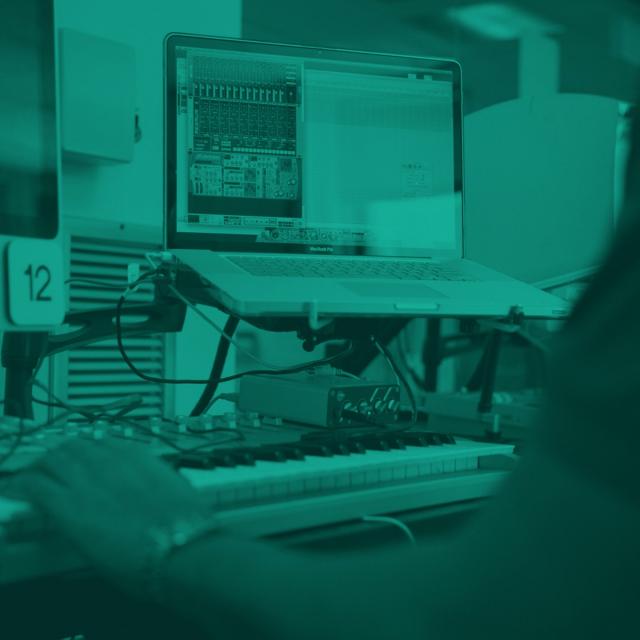
Produção final do músico moderno (Coursera)

Produção final do músico moderno (Coursera)

A indústria musical está passando por enormes mudanças e, por causa disso, os músicos precisam cada vez mais de habilidades em várias e diferentes áreas para ter sucesso. O objetivo da Especialização do Músico Moderno é oferecer aos alunos noções básicas sobre teoria e produção musical e composição e disponibilizar as ferramentas necessárias para escrever e produzir canções originais.

Class Deals by MOOC List - Click here and see Coursera's Active Discounts, Deals, and Promo Codes.

Seguida da conclusão dos três cursos anteriores da Especialização do Músico Moderno, a experiência da produção final é sua chance de usar seu talento e conhecimento acumulado para criar e enviar uma canção acabada, totalmente produzida. Conforme você avançar no módulo, você desenvolverá uma canção e uma ideia para o produto acabado. Depois disso, você planejará e executará a produção, que inclui a gravação, a edição, a mixagem e a publicação do produto acabado. Durante todo o trajeto, você terá um retorno do processo de revisão de pares, permitindo que você faça ajustes e refine sua canção acabada.

Course 4 of 4 in the O Músico Contemporâneo Specialization

Syllabus

WEEK 1
Bem-vindo
Seja bem-vindo ao curso! Aqui exploraremos todos os detalhes sobre o curso e o que você precisará saber para tirar o melhor proveito da sua experiência.
Desenvolvimento da canção e gravação simples
Bem-vindo à Semana 1 do projeto Produção final do músico moderno. Nesta semana, seu foco será na escrita da música em que você trabalhará nas próximas 4 semanas.

WEEK 2
Criar um plano de produção
Agora que você escreveu a canção, a próxima etapa é preparar-se para converter sua ideia em uma gravação. Como você vai executar sua ideia na fase de produção? A melhor forma de proceder é criar um plano de produção detalhado em três partes e um cronograma.

WEEK 3
Criar o esboço de uma batida
Nesta semana, você concluirá a execução do plano de produção com a criação de um esboço inicial da batida. Lembre-se, à medida que avançar neste processo, de que um recurso maravilhoso dos programas de software de produção atuais é a capacidade de mudar sua mente.

WEEK 4
Mixagem e masterização
Essa é a última etapa do projeto de Produção final. Você procederá para quaisquer últimas alterações em seu arranjo em resposta à revisão construtiva dos especialistas e pares de sua última tarefa, depois vai fazer uma mixagem final e publicar o resultado.

Go to Class
MOOC List is learner-supported. When you buy through links on our site, we may earn an affiliate commission.

Related Courses

Understanding the Music Business: What is Music Worth? (Coursera) Coursera
Vanderbilt University

Understanding the Music Business: What is Music Worth? (Coursera)

This course will examine the music industry in the United States, with the unique perspective gained by Vanderbilt University’s location in Nashville, TN. Nashville is a major center of music in the United States, and the music created here has a global reach, particularly in the country, rock, pop, singer-songwriter, and Americana genres. However, students will learn that the basic principles of recording, marketing, copyright, licensing, and live performance are the same, regardless of musical style or genre.

Nov 9th 2026
5-12 Weeks
Guitar Scales and Chord Progressions (Coursera) Coursera
Berklee College of Music

Guitar Scales and Chord Progressions (Coursera)

You’ve got the guitar basics down: You can strum your guitar and play a few of your favorite songs, but you’re ready to take the tunes to the next level. In Guitar Scales and Chord Progressions you’ll expand your knowledge of scales, chord fingerings, and common chord progressions. You’ll also learn important skills for soloing, creating melodies, and adding depth and dimension to your guitar playing. This course is not only for the aspiring guitarist who has taken Berklee’s Guitar for Beginners, but also for guitarists who have let their six-string gather dust for too long, and want to brush up on techniques.

Nov 9th 2026
4 Weeks
Piano Scales for Modern Music (Coursera) Coursera
Berklee College of Music

Piano Scales for Modern Music (Coursera)

Scales are an essential part of musical study and are a vital part of an effective practice routine. But as you develop your musicianship, scales can also lead to better improvisation and understanding of melodic structure. This course will provide you with a new look at practicing and using scales to guide your musical creativity. You will start by learning standard and non-standard fingering for scales commonly used in popular music, before using these scales to create new melodies. In addition to the examples covered in the course, you will also be given extra exercises and backing tracks to help you improve your playing and improvising.

Nov 16th 2026
4 Weeks
Music as Biology: What We Like to Hear and Why (Coursera) Coursera
Duke University

Music as Biology: What We Like to Hear and Why (Coursera)

The course will explore the tone combinations that humans consider consonant or dissonant, the scales we use, and the emotions music elicits, all of which provide a rich set of data for exploring music and auditory aesthetics in a biological framework. Analyses of speech and musical databases are consistent with the idea that the chromatic scale (the set of tones used by humans to create music), consonance and dissonance, worldwide preferences for a few dozen scales from the billions that are possible, and the emotions elicited by music in different cultures all stem from the relative similarity of musical tonalities and the characteristics of voiced (tonal) speech.

Nov 16th 2026
5-12 Weeks
20世纪西方音乐 Western Music in the 20th Century (Coursera) Coursera
Peking University

20世纪西方音乐 Western Music in the 20th Century (Coursera)

课程所涉不仅涵盖古典音乐如新古典主义、表现主义、民族主义等流派,也对爵士乐、摇滚乐与流行音乐在20世纪的风格情状投以深切关注;在将包括中国音乐在内的世界各国民族民间音乐纳入20世纪大背景予以研究探索之同时,关于大型综合艺术品例如歌剧、音乐剧、电影音乐的考察与分析,也设为专题,绝无偏废。

Nov 16th 2026
5-12 Weeks
Pro Tools Basics (Coursera) Coursera
Berklee College of Music

Pro Tools Basics (Coursera)

Producing music is an incredibly creative process, and knowing the tools of the trade is essential in order to transmit the musical ideas in your head into the DAW in a creative and uninhibited way. Whether you have used a computer to create music before, or you have been curious about production for years, this 4-week course will give you an introductory look into the world of Avid Pro Tools and Pro Tools First.

Nov 9th 2026
4 Weeks
The Art of Vocal Production (Coursera) Coursera
Berklee College of Music

The Art of Vocal Production (Coursera)

This course addresses recorded vocal performances and the technologies used to highlight and support them in modern record production and mixes. Most of us know that vocals serve as the focal point of modern recordings but many do not know the tools used or when the tools are used best in modern record production. The course begins with simple vocal placement in a mix, where you will also learn the fundamentals of compression and equalization. You’ll further study delays and reverbs before moving to advanced concepts in audio editing, synthetic processing, automatic & graphic pitch correction, time compression, time expansion, flex and elastic audio.

Nov 9th 2026
4 Weeks
Copyright for Multimedia (Coursera) Coursera
Duke University,Emory University,University of North Carolina

Copyright for Multimedia (Coursera)

Copyright questions about different formats (data, images, music and video) can be especially difficult. Sometimes the law specifically distinguishes between these different formats, and in most cases there are media-specific considerations that impact a copyright analysis. In this course we will look at four different media, paying special attention to the unique issues for each one and the kinds of information that is important when making copyright decisions for each type of material.

Nov 9th 2026
4 Weeks
Music and Social Action (Coursera) Coursera
Yale University

Music and Social Action (Coursera)

What is a musician’s response to the condition of the world? Do musicians have an obligation and an opportunity to serve the needs of the world with their musicianship? At a time of crisis for the classical music profession, with a changing commercial landscape, a shrinking audience base, and a contraction in the number of professional orchestras, how does a young musician construct a career today? Are we looking at a dying art form or a moment of reinvigoration?

Nov 2nd 2026
5-12 Weeks