Music as Biology: What We Like to Hear and Why (Coursera)

Offered by Duke University,
Music as Biology: What We Like to Hear and Why (Coursera)

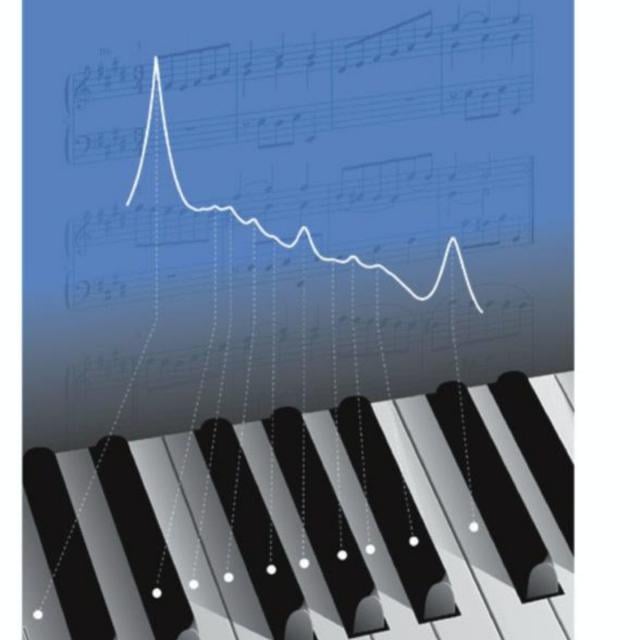
The course will explore the tone combinations that humans consider consonant or dissonant, the scales we use, and the emotions music elicits, all of which provide a rich set of data for exploring music and auditory aesthetics in a biological framework. Analyses of speech and musical databases are consistent with the idea that the chromatic scale (the set of tones used by humans to create music), consonance and dissonance, worldwide preferences for a few dozen scales from the billions that are possible, and the emotions elicited by music in different cultures all stem from the relative similarity of musical tonalities and the characteristics of voiced (tonal) speech.

Class Deals by MOOC List - Click here and see Coursera's Active Discounts, Deals, and Promo Codes.

Like the phenomenology of visual perception, these aspects of auditory perception appear to have arisen from the need to contend with sensory stimuli that are inherently unable to specify their physical sources, leading to the evolution of a common strategy to deal with this fundamental challenge.

Syllabus

WEEK 1
Course Introduction
Introduction to Music as Biology
Sound Signals, Sound Stimuli, and the Human Auditory System
An overview of the organization of the human auditory system, and how sound signals are transformed into sound stimuli.

WEEK 2
The Perception of Sound Stimuli
An introduction to the sound qualities we perceive, and how and why these qualities differ from the information in sound signals.

WEEK 3
Vocalization and Vocal Tones
A discussion of the nature of vocal sound signals, their biological importance and their role in understanding music.

WEEK 4
Defining Music and Exploring Why We Like It
The tonal phenomena that need to be explained in any theory of music, and different approaches that have been take to provide answers.

WEEK 5
Musical Scales
Why a small number of basic scales are used in music worldwide, and how a biological framework explains this and related puzzles.

WEEK 6
Music, Emotion, and Cultural Differences
How emotion is conveyed by vocal similarity in music across cultures, and how the speech of a culture and its music are related. A summing up of the major points in the course follows.
Additional Resources
Additional demonstrations and commentaries by Ruby Froom on some of the musical issues considered in the course, as well as a glossary of terms and bibliography for references.


Go to Class
MOOC List is learner-supported. When you buy through links on our site, we may earn an affiliate commission.

Related Courses

Intellectual Humility: Science (Coursera) Coursera
University of Edinburgh

Intellectual Humility: Science (Coursera)

It’s clear that the world needs more intellectual humility. But how do we develop this virtue? And why do so many people still end up so arrogant? Do our own biases hold us back from becoming as intellectually humble as we could be—and are there some biases that actually make us more likely to be humble? Which cognitive dispositions and personality traits give people an edge at being more intellectually humble - and are they stable from birth, learned habits, or something in between? And what can contemporary research on the emotions tell us about encouraging intellectual humility in ourselves and others?

Aug 17th 2026
4 Weeks
Music and Social Action (Coursera) Coursera
Yale University

Music and Social Action (Coursera)

What is a musician’s response to the condition of the world? Do musicians have an obligation and an opportunity to serve the needs of the world with their musicianship? At a time of crisis for the classical music profession, with a changing commercial landscape, a shrinking audience base, and a contraction in the number of professional orchestras, how does a young musician construct a career today? Are we looking at a dying art form or a moment of reinvigoration?

Aug 10th 2026
5-12 Weeks
Arts and Heritage Management (Coursera) Coursera
Università Bocconi

Arts and Heritage Management (Coursera)

Today cultural institutions are facing important dilemmas in many aspects of their management. Over the past decades, a new figure has emerged that of the art manager. Imagine you went to work every day to connect artists with audiences, vision with reality, and money with a mission. That is what managers in the arts do, they play an essential role in transforming the minds, lives, and communities through creative expression. This course has been conceptualized to address the need of skills and techniques to help professionals and managers in running art and cultural institutions.

Aug 10th 2026
5-12 Weeks
The Brain and Space (Coursera) Coursera
Duke University

The Brain and Space (Coursera)

This course is about how the brain creates our sense of spatial location from a variety of sensory and motor sources, and how this spatial sense in turn shapes our cognitive abilities. Knowing where things are is effortless. But “under the hood,” your brain must figure out even the simplest of details about the world around you and your position in it.

Aug 17th 2026
5-12 Weeks
Emotional Intelligence (Coursera) Coursera
Arizona State University

Emotional Intelligence (Coursera)

Whether you are an aspiring or established leader, emotional intelligence is critical in the workplace. In this course, you'll learn about the core human emotions, how to effectively read and respond to emotional situations, and applying emotional reasoning in professional settings. Complete with interactive exercise, job aids, and other resources, this course will prepare you to navigate challenging emotional situations with confidence.

Aug 17th 2026
5-12 Weeks
Music for Wellness (Coursera) Coursera
Berklee College of Music

Music for Wellness (Coursera)

You love music. You listen to music all the time. Maybe you sing, play an instrument, or compose music. You don’t need to have musical talent to use music to enhance your well being, and even your health. Learn simple techniques to enrich your mind, body, and spirit through music. The methods can be applied in your daily life, particularly when you are feeling down or stressed out.

Aug 17th 2026
4 Weeks
Jazz Improvisation (Coursera) Coursera
Berklee College of Music

Jazz Improvisation (Coursera)

Learn the basic concepts of improvisation from Gary Burton, one of the most renowned improvisers in the jazz world, including the mental, melodic, and harmonic processes that contribute to the instinctive skills that an improviser puts to use when taking a solo. While many people are fans of jazz and understand that musicians are often “making up” the notes they are playing during a performance, most people—often including musicians, themselves, who are beginning to learn improvising—aren’t clear about what exact processes take place to enable this to happen. The purpose of this course is to introduce the basic concepts of modern improvisation and how to go about mastering the different musical and mental skills involved.

Aug 10th 2026
5-12 Weeks
Managing Emotions in Times of Uncertainty & Stress (Coursera) Coursera
Yale University

Managing Emotions in Times of Uncertainty & Stress (Coursera)

Developed by the Yale Center for Emotional Intelligence, Managing Emotions in Times of Uncertainty & Stress will provide participants with the knowledge, skills, and strategies to understand and manage their emotions and those of their students. The 10-hour online course is designed for school staff, including teachers, paraprofessionals, counselors, principals, and non-teaching staff in preK-12 schools.

Aug 10th 2026
5-12 Weeks