Introduction to German Opera (Coursera)

Offered by Dartmouth College,
Introduction to German Opera (Coursera)

This course gives us an introduction to German Opera and the evolution of opera as well. It explores the concept of how music conveys the drama throughout the course. You will understand how Wagner conveys the meaning of the opera through motives. It further explores musical gestures and how it helped various composers develop their style in opera as well. You will understand in detail the importance of orchestra in German Opera.

Class Deals by MOOC List - Click here and see Coursera's Active Discounts, Deals, and Promo Codes.

Syllabus

Unit 1: Das Rheingold
This module introduces you to how Das Rheingold uses motives as an essential factor in conveying the drama. You will also learn the importance of the orchestra in German opera.

Unit 2: Mozart, Beethoven, Weber
This module explores the role of orchestra in German opera. It also focuses on some of the most prominent works of Carl Maria Von Weber.

Unit 3: Wagner
This module explores Wagner’s contribution to German opera and his distinctiveness in style and conveying the drama.

Unit 4: Twentieth-century German opera
This module explores Richard Strauss’ development and influences as a composer. You will also understand how music unfolds the drama in his work reiterating the importance of orchestra in German opera.

Go to Class
MOOC List is learner-supported. When you buy through links on our site, we may earn an affiliate commission.

Related Courses

Introduction to Ableton Live (Coursera) Coursera
Berklee College of Music

Introduction to Ableton Live (Coursera)

In the past, Digital Audio Workstations (DAWs) were programs used only by audio engineers with a highly specific knowledge base, on machines inaccessible to most people. But over the past 10-15 years, DAWs and the act of recording music have evolved from being a luxury of the few to being available to the masses.

Nov 16th 2026
3 Weeks
Richard Schechner's Introduction to Performance Studies (Coursera) Coursera
New York University

Richard Schechner's Introduction to Performance Studies (Coursera)

Performance Studies: An Introduction explores the wide world of performance--from theatre, dance, and music to ritual, play, political campaigns, social media, and the performances of everyday life. Performance studies also ranges across cultures--Asia, Africa, the Caribbean, Europe, the Americas. And it spans historical periods from the art of the paleolithic caves to YouTube and the avantgarde. This course is devised by Richard Schechner, one of the pioneers of performance studies, in dialogue with more than a dozen expert scholars and artists.

Nov 23rd 2026
13-24 Weeks
Piano Scales for Modern Music (Coursera) Coursera
Berklee College of Music

Piano Scales for Modern Music (Coursera)

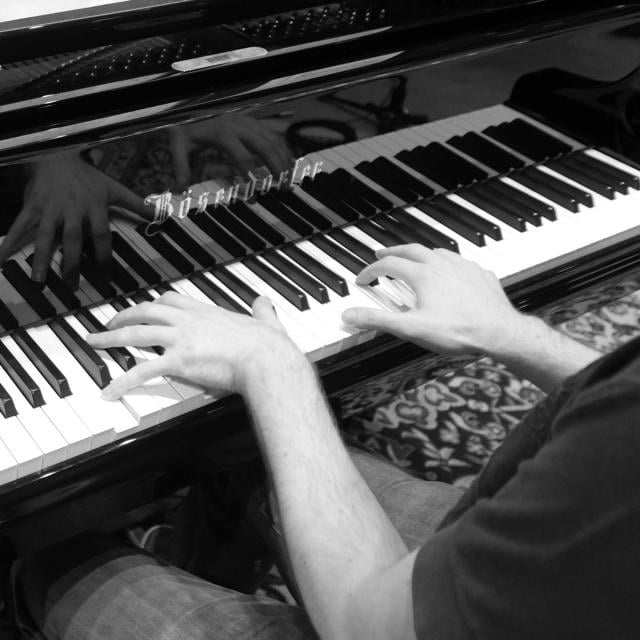
Scales are an essential part of musical study and are a vital part of an effective practice routine. But as you develop your musicianship, scales can also lead to better improvisation and understanding of melodic structure. This course will provide you with a new look at practicing and using scales to guide your musical creativity. You will start by learning standard and non-standard fingering for scales commonly used in popular music, before using these scales to create new melodies. In addition to the examples covered in the course, you will also be given extra exercises and backing tracks to help you improve your playing and improvising.

Nov 16th 2026
4 Weeks
So You Think You Know Tango? (Coursera) Coursera
Emory University

So You Think You Know Tango? (Coursera)

How well do you think you know tango? This two-week mini-course is designed for music lovers, musicians, and dancers who are interested in learning more about the Argentine Tango. It will explore the many dimensions of the Argentine Tango music, including its origins, popularization during the Golden Age, dissemination abroad, evolution into an artistic music-dance form, and adoption by Argentine and international art-music composers to date.

Nov 23rd 2026
2 Weeks
Exploring Beethoven's Piano Sonatas (Coursera) Coursera
Curtis Institute of Music

Exploring Beethoven's Piano Sonatas (Coursera)

Our relationship to Beethoven is a deep and paradoxical one. For many musicians, he represents a kind of holy grail: His music has an intensity, rigor, and profundity which keep us in its thrall, and it is perhaps unequalled in the interpretive, technical, and even spiritual challenges it poses to performers. At the same time, Beethoven’s music is casually familiar to millions of people who do not attend concerts or consider themselves musically inclined. Two hundred years after his death, he is everywhere in the culture, yet still represents its summit. This course takes an inside-out look at the 32 piano sonatas from the point of view of a performer.

Nov 23rd 2026
5-12 Weeks
Music Business Foundations (Coursera) Coursera
Berklee College of Music

Music Business Foundations (Coursera)

This course has been developed to provide students with the latest instruction on the best way for creators, consumers, and facilitators to navigate the resurgence of one of the world’s most exciting industries: the music business. Three things are clear about today’s music industry: The consumption of music is expanding at the greatest rate in history and from the most portals ever imagined, the cost of producing music is decreasing, and the number of artists creating and seeking to expose their work and develop careers through the Internet has increased dramatically.

Nov 16th 2026
4 Weeks
Guitar Performance Techniques (Coursera) Coursera
Berklee College of Music

Guitar Performance Techniques (Coursera)

Your favorite guitarist didn't become your favorite guitarist without the support of other musicians. The most important skill for a guitarist to learn is the exact same skill that was so important in kindergarten: playing well with others. Guitar Performance Techniques gives guitarists the essential and practical skills to play well with others in any ensemble situation.

Nov 23rd 2026
4 Weeks
Electronic Music Performance Techniques (Coursera) Coursera
Berklee College of Music

Electronic Music Performance Techniques (Coursera)

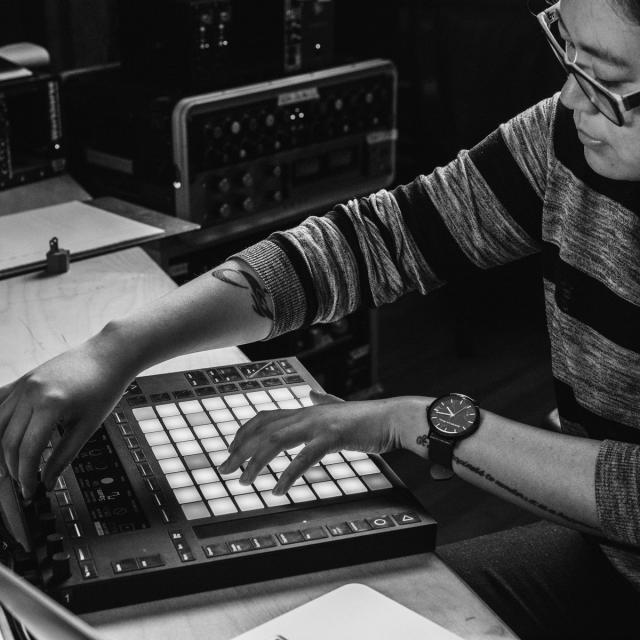
From the Moog analog synthesizers in the 1960s to the contemporary usage of computers, performance controllers, and mobile devices, Electronic Digital Instruments (EDIs) have long been capable of offering artists a new range of musical expression. In this one-of-a-kind course, you'll learn the essential skills you need to perform on an EDI.

Nov 23rd 2026
4 Weeks
Fundamentals of Music Theory (Coursera) Coursera
University of Edinburgh

Fundamentals of Music Theory (Coursera)

This course will introduce students to the theory of music, providing them with the skills needed to read and write Western music notation, as well as to understand, analyse, and listen informedly. It will cover material such as pitEli Appleby-Donaldches and scales, intervals, clefs, rhythm, form, meter, phrases and cadences, and basic harmony.

Nov 23rd 2026
5-12 Weeks
Explore Management Concepts through Metaphor and Music (Coursera) Coursera
University of London

Explore Management Concepts through Metaphor and Music (Coursera)

How can exploring and analysing music and metaphors help us to better understand management, work organisations, working lives, and ultimately ourselves too? As you set out on your journey through this innovative course, the answers to these questions will be revealed. Through the lens of metaphor and music, you will be introduced to core managerial and organisational concepts and theories. You will explore issues related to, for example: organisational and work design; motivation and productivity; employee voice; careers; and management and leadership styles.

Nov 16th 2026
3 Weeks
Music as Biology: What We Like to Hear and Why (Coursera) Coursera
Duke University

Music as Biology: What We Like to Hear and Why (Coursera)

The course will explore the tone combinations that humans consider consonant or dissonant, the scales we use, and the emotions music elicits, all of which provide a rich set of data for exploring music and auditory aesthetics in a biological framework. Analyses of speech and musical databases are consistent with the idea that the chromatic scale (the set of tones used by humans to create music), consonance and dissonance, worldwide preferences for a few dozen scales from the billions that are possible, and the emotions elicited by music in different cultures all stem from the relative similarity of musical tonalities and the characteristics of voiced (tonal) speech.

Nov 16th 2026
5-12 Weeks