Introduction to Ableton Live (Coursera)

Introduction to Ableton Live (Coursera)

In the past, Digital Audio Workstations (DAWs) were programs used only by audio engineers with a highly specific knowledge base, on machines inaccessible to most people. But over the past 10-15 years, DAWs and the act of recording music have evolved from being a luxury of the few to being available to the masses.

Class Deals by MOOC List - Click here and see Coursera's Active Discounts, Deals, and Promo Codes.

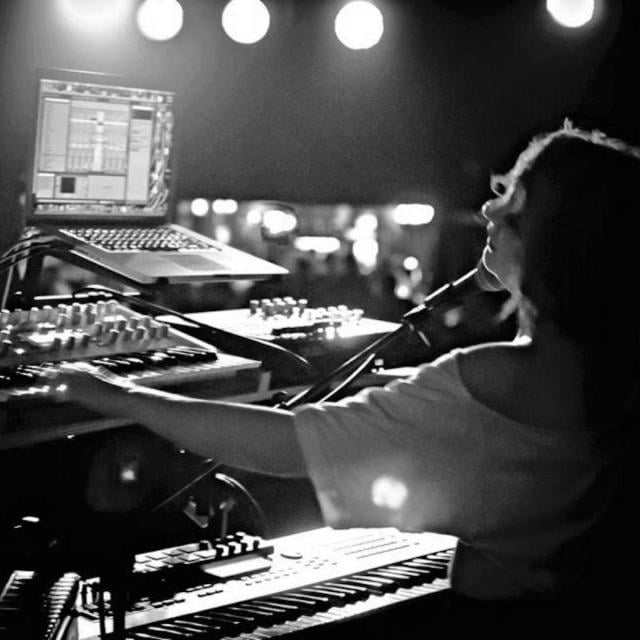
Ableton Live is one such application. Used by an extremely broad range of music creators, Ableton Live not only facilitates the work of engineers, producers, and writers in professional, home, and mobile studio settings, but it is also a powerful platform for musicians on stage, in the DJ booth, and elsewhere.
In this Ableton Certified Training Center course developed by Berklee Online, you will explore some of Live’s most powerful and useful functionality: MIDI programming, audio recording, warping and processing, looping editing, mixing, performing, file management, and troubleshooting. Meant to be a springboard for those who are new to Ableton Live and/or DAWs in general, this three-week course will provide you with a strong knowledge base for using Live to take your musical ideas from conception to final recording. The course breaks down the many barriers of entry into music technology and encourages all those who wish, to create fearlessly.
Completing this course will count towards your learning in any of the following programs:

What You Will Learn

  • Navigate Ableton Live
  • Program MIDI drums and instruments
  • Record and edit audio, including working with preexisting audio loops
  • Create a piece of music using MIDI and audio within Ableton Live

Syllabus

WEEK 1
Welcome to Introduction to Ableton Live
Welcome to the course! Here we will cover all the details about the course and what you'll need to know to get the most out of your experience.
Getting Our Hands Dirty
In this lesson, I'm going to demonstrate how to get set up in Live, whether you have an audio interface or just your computer. We'll also look at saving and submitting your sessions, devices, MIDI drums, and MIDI synths.

WEEK 2
Polishing the Sound
In this lesson, we'll be moving from MIDI to audio and implementing effects, which will give your sessions even more personality and depth. We'll also be diving into Audio Warping, which is one of Ableton's most powerful functionalities and is the cornerstone of remixing.

WEEK 3
The Endless Possibilities
In this final lesson, we're going to dive into some more advanced production techniques, the very basics of mixing, and I'll get into some valuable information regarding file management and troubleshooting. Hopefully with this new information you'll be able to tie together a lot of what we've learned in the past two weeks and bring your music to the next level.
Go to Class
MOOC List is learner-supported. When you buy through links on our site, we may earn an affiliate commission.

Related Courses

History of Rock, Part Two (Coursera) Coursera
University of Rochester

History of Rock, Part Two (Coursera)

This course, part 2 of a 2-course sequence, examines the history of rock, primarily as it unfolded in the United States, from the early 1970s to the early 1990s. This course covers the music of Led Zeppelin, the Allman Brothers, Carole King, Bob Marley, the Sex Pistols, Donna Summer, Michael Jackson, Madonna, Prince, Metallica, Run-DMC, and Nirvana, and many more artists, with an emphasis both on cultural context and on the music itself. We will also explore how developments in the music business and in technology helped shape the ways in which styles developed.

Nov 23rd 2026
5-12 Weeks
Fundamentals of Audio and Music Engineering: Part 1 Musical Sound & Electronics (Coursera) Coursera
University of Rochester

Fundamentals of Audio and Music Engineering: Part 1 Musical Sound & Electronics (Coursera)

In this course students learn the basic concepts of acoustics and electronics and how they can applied to understand musical sound and make music with electronic instruments. Topics include: sound waves, musical sound, basic electronics, and applications of these basic principles in amplifiers and speaker design.

Nov 23rd 2026
5-12 Weeks
Introduction to German Opera (Coursera) Coursera
Dartmouth College

Introduction to German Opera (Coursera)

This course gives us an introduction to German Opera and the evolution of opera as well. It explores the concept of how music conveys the drama throughout the course. You will understand how Wagner conveys the meaning of the opera through motives. It further explores musical gestures and how it helped various composers develop their style in opera as well. You will understand in detail the importance of orchestra in German Opera.

Nov 16th 2026
4 Weeks
Piano Techniques for Modern Music (Coursera) Coursera
Berklee College of Music

Piano Techniques for Modern Music (Coursera)

If you have always dreamed of playing the piano or keyboard but did not know where to start, this is the course for you. This course will take you through the fundamental skills necessary to build your playing capability quickly and healthily. In addition to the fundamentals, you will learn from exercises and examples from popular music so that you can start playing in multiple styles. You will start by focusing on posture, breathing, movement, and sound production that will help you strengthen your finger independence and control over dynamics, phrasing, articulation, tempo, and pulse.

Nov 16th 2026
5-12 Weeks
Music as Biology: What We Like to Hear and Why (Coursera) Coursera
Duke University

Music as Biology: What We Like to Hear and Why (Coursera)

The course will explore the tone combinations that humans consider consonant or dissonant, the scales we use, and the emotions music elicits, all of which provide a rich set of data for exploring music and auditory aesthetics in a biological framework. Analyses of speech and musical databases are consistent with the idea that the chromatic scale (the set of tones used by humans to create music), consonance and dissonance, worldwide preferences for a few dozen scales from the billions that are possible, and the emotions elicited by music in different cultures all stem from the relative similarity of musical tonalities and the characteristics of voiced (tonal) speech.

Nov 16th 2026
5-12 Weeks
Intimacy of Creativity: Entering the Minds of Composers (Coursera) Coursera
The Hong Kong University of Science and Technology - HKUST

Intimacy of Creativity: Entering the Minds of Composers (Coursera)

Bright Sheng guides us through three works — by Brahms, Beethoven, and Sheng — for an intimate look inside the composer's mind. This course strives to give students a new appreciation of music, based on an understanding of the craft behind each work. This class is perfect for those wanting to gain a unique perspective on the creative process of music composition, while challenging traditional notions of how composers approach formal structure, melody, and harmony.

Nov 16th 2026
3 Weeks
Richard Schechner's Introduction to Performance Studies (Coursera) Coursera
New York University

Richard Schechner's Introduction to Performance Studies (Coursera)

Performance Studies: An Introduction explores the wide world of performance--from theatre, dance, and music to ritual, play, political campaigns, social media, and the performances of everyday life. Performance studies also ranges across cultures--Asia, Africa, the Caribbean, Europe, the Americas. And it spans historical periods from the art of the paleolithic caves to YouTube and the avantgarde. This course is devised by Richard Schechner, one of the pioneers of performance studies, in dialogue with more than a dozen expert scholars and artists.

Nov 23rd 2026
13-24 Weeks
Fundamentals of Music Theory (Coursera) Coursera
University of Edinburgh

Fundamentals of Music Theory (Coursera)

This course will introduce students to the theory of music, providing them with the skills needed to read and write Western music notation, as well as to understand, analyse, and listen informedly. It will cover material such as pitEli Appleby-Donaldches and scales, intervals, clefs, rhythm, form, meter, phrases and cadences, and basic harmony.

Nov 23rd 2026
5-12 Weeks
Teaching Popular Music in the Classroom (Coursera) Coursera
Berklee College of Music

Teaching Popular Music in the Classroom (Coursera)

Teaching Popular Music in the Classroom explores approaches to teaching popular music from culturally rich communities in the United States. Students in the course will learn teaching methods that engage youth with the basics of improvisation, technology, songwriting, arranging film score, and writing to the strengths of small bands. The course models how to integrate principles of authentic cultural relevance and positive youth development with contemporary music instruction, while providing tools for assessing and documenting learning and program progress.

Nov 16th 2026
4 Weeks
Introduction to Italian Opera (Coursera) Coursera
Dartmouth College

Introduction to Italian Opera (Coursera)

This course gives us an introduction to Italian Opera right from its very beginning in Florence, Italy. You will understand how Mozart’s opera is the midpoint of opera. It explores how music tells the audience about the characters' thoughts through musical gestures. It also sheds light on the importance of close listening to understand opera thoroughly.

Nov 23rd 2026
5-12 Weeks