Piano Techniques for Modern Music (Coursera)

Piano Techniques for Modern Music (Coursera)

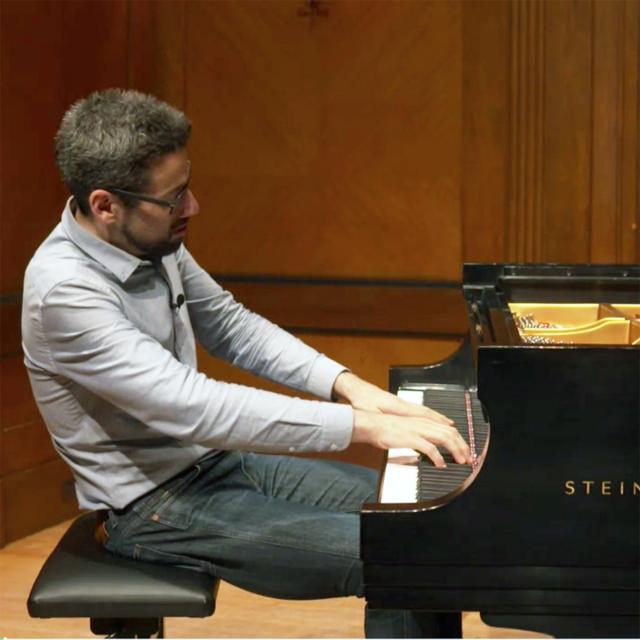
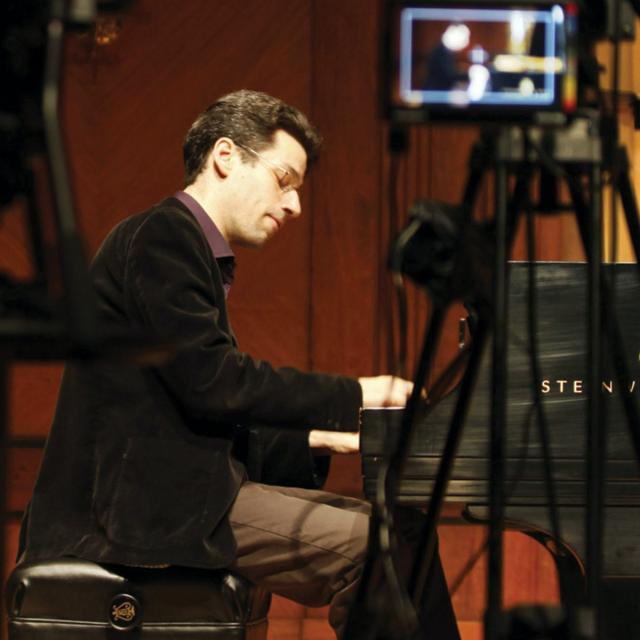
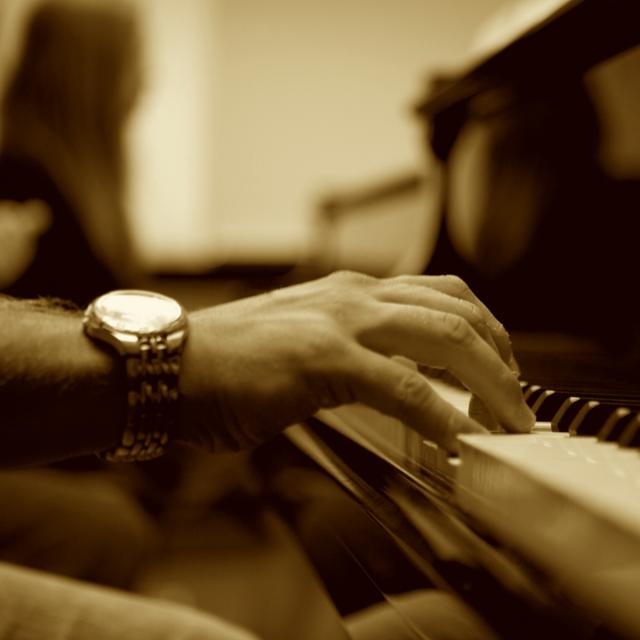
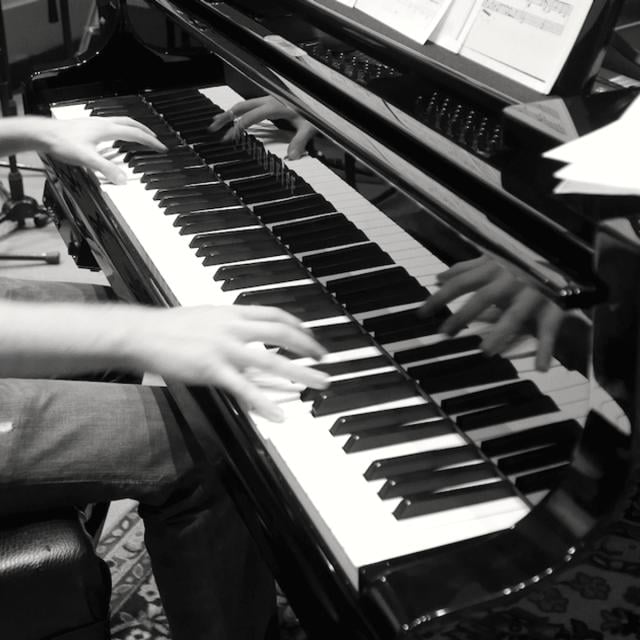
If you have always dreamed of playing the piano or keyboard but did not know where to start, this is the course for you. This course will take you through the fundamental skills necessary to build your playing capability quickly and healthily. In addition to the fundamentals, you will learn from exercises and examples from popular music so that you can start playing in multiple styles. You will start by focusing on posture, breathing, movement, and sound production that will help you strengthen your finger independence and control over dynamics, phrasing, articulation, tempo, and pulse.

Class Deals by MOOC List - Click here and see Coursera's Active Discounts, Deals, and Promo Codes.

At the end of this course, you will have all of the tools necessary to build a dependable piano technique for performing contemporary music. You will be able to identify common chord progressions used in contemporary music and learn how to play both as a soloist and as an ensemble member. Finally, you will be able to improvise over common chord progressions in various contemporary music settings.

What You Will Learn

  • Develop proper technique to play the piano
  • Maintain healthy playing habits
  • Apply proper piano technique while playing modern/contemporary music

Syllabus

WEEK 1
Welcome to Piano Techniques for Modern Music
Welcome to Piano Techniques for Modern Music! Before you begin, we will cover all the details about the course and what you'll need to know to get the most out of your experience.

WEEK 2
Lesson 1: Fundamentals of Posture and Hand Position
In this first lesson, we will begin with the fundamentals of healthy piano playing, starting with proper posture and breathing, finger placement and hand position, before moving on to the C major scale and popular cadences. We will begin to build a healthy practice routine and have some fun with improvisation.

WEEK 3
Lesson 2: Finger and Arm Technique
In lesson 2, we will start to add greater finger independence to our practice and learn to shift our hands across the keyboard in order to play a wider range of notes with minimal tension in our hands and arms. We will also look at expanding our dynamic range on the piano and applying these techniques to several contemporary music examples.

WEEK 4
Lesson 3: Wrist Technique and Chord Tones
In lesson 3, we will begin to advance our harmonic techniques by expanding our chord knowledge and increasing our playing speed. We will also identify proper wrist technique to minimize tension while playing. We will continue to play through popular tunes and focus on building hand independence.

WEEK 5
Lesson 4: Pedal Technique
In lesson 4, we will combine all of the hand techniques we have been developing with pedaling. This will require coordinating our hands and feet. We will practice these techniques using classical music and contemporary tunes. We will also identify what pedaling techniques are common in contemporary music and how to develop virtuosity on the piano. We'll finish by discussing how to organize practice time to learn difficult pieces and why using a practice journal and recording practice session can lead to bigger improvements at a faster rate.
Go to Class
MOOC List is learner-supported. When you buy through links on our site, we may earn an affiliate commission.

Related Courses

The Music of the Beatles (Coursera) Coursera
University of Rochester

The Music of the Beatles (Coursera)

The Music of the Beatles will track the musical development of the band, starting from the earliest days in Liverpool and Hamburg, moving through the excitement of Beatlemania, the rush of psychedelia, and the maturity of Abbey Road. While the focus will be on the music, we will also consider how recording techniques, the music business, the music of other artists, and the culture of the 1960s affected John, Paul, George, and Ringo as they created the Beatles repertory.

Sep 28th 2026
5-12 Weeks
Music as Biology: What We Like to Hear and Why (Coursera) Coursera
Duke University

Music as Biology: What We Like to Hear and Why (Coursera)

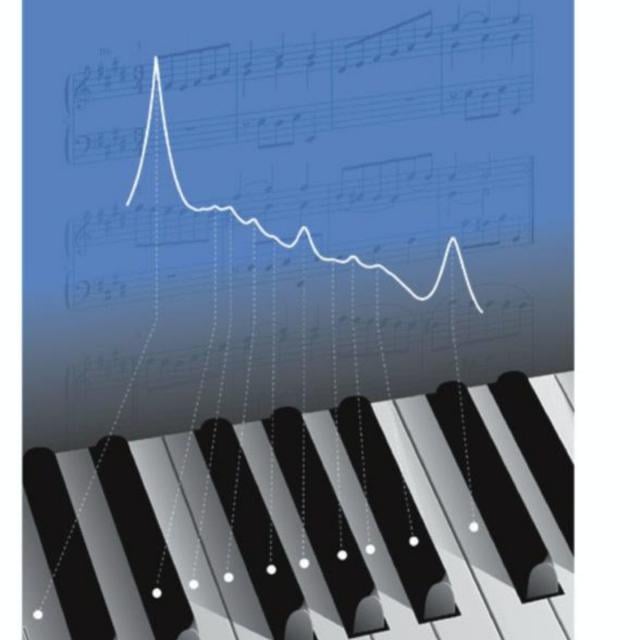
The course will explore the tone combinations that humans consider consonant or dissonant, the scales we use, and the emotions music elicits, all of which provide a rich set of data for exploring music and auditory aesthetics in a biological framework. Analyses of speech and musical databases are consistent with the idea that the chromatic scale (the set of tones used by humans to create music), consonance and dissonance, worldwide preferences for a few dozen scales from the billions that are possible, and the emotions elicited by music in different cultures all stem from the relative similarity of musical tonalities and the characteristics of voiced (tonal) speech.

Sep 21st 2026
5-12 Weeks
So You Think You Know Tango? (Coursera) Coursera
Emory University

So You Think You Know Tango? (Coursera)

How well do you think you know tango? This two-week mini-course is designed for music lovers, musicians, and dancers who are interested in learning more about the Argentine Tango. It will explore the many dimensions of the Argentine Tango music, including its origins, popularization during the Golden Age, dissemination abroad, evolution into an artistic music-dance form, and adoption by Argentine and international art-music composers to date.

Sep 28th 2026
2 Weeks
Fundamentals of Audio and Music Engineering: Part 1 Musical Sound & Electronics (Coursera) Coursera
University of Rochester

Fundamentals of Audio and Music Engineering: Part 1 Musical Sound & Electronics (Coursera)

In this course students learn the basic concepts of acoustics and electronics and how they can applied to understand musical sound and make music with electronic instruments. Topics include: sound waves, musical sound, basic electronics, and applications of these basic principles in amplifiers and speaker design.

Sep 28th 2026
5-12 Weeks
Electronic Music Performance Techniques (Coursera) Coursera
Berklee College of Music

Electronic Music Performance Techniques (Coursera)

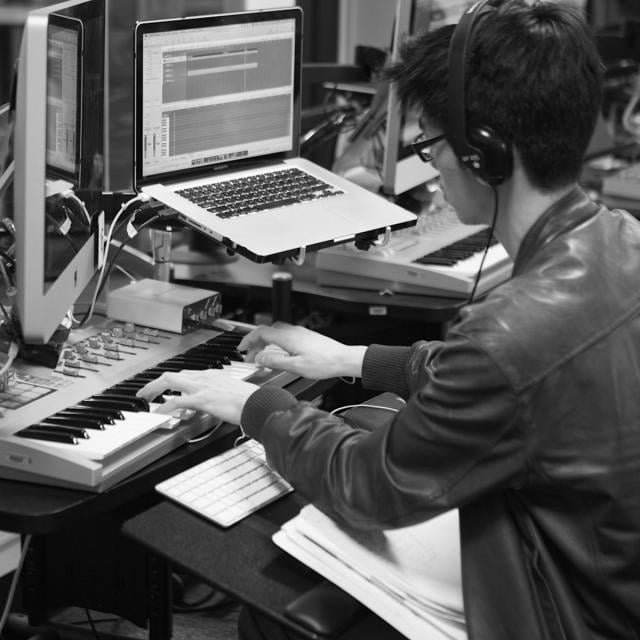
From the Moog analog synthesizers in the 1960s to the contemporary usage of computers, performance controllers, and mobile devices, Electronic Digital Instruments (EDIs) have long been capable of offering artists a new range of musical expression. In this one-of-a-kind course, you'll learn the essential skills you need to perform on an EDI.

Sep 28th 2026
4 Weeks
Exploring Beethoven's Piano Sonatas (Coursera) Coursera
Curtis Institute of Music

Exploring Beethoven's Piano Sonatas (Coursera)

Our relationship to Beethoven is a deep and paradoxical one. For many musicians, he represents a kind of holy grail: His music has an intensity, rigor, and profundity which keep us in its thrall, and it is perhaps unequalled in the interpretive, technical, and even spiritual challenges it poses to performers. At the same time, Beethoven’s music is casually familiar to millions of people who do not attend concerts or consider themselves musically inclined. Two hundred years after his death, he is everywhere in the culture, yet still represents its summit. This course takes an inside-out look at the 32 piano sonatas from the point of view of a performer.

Sep 28th 2026
5-12 Weeks
History of Rock, Part One (Coursera) Coursera
University of Rochester

History of Rock, Part One (Coursera)

This course, part 1 of a 2-course sequence, examines the history of rock, primarily as it unfolded in the United States, from the days before rock (pre-1955) to the end of the 1960s. This course covers the music of Elvis Presley, Chuck Berry, Phil Spector, Bob Dylan, the Beatles, the Rolling Stones, Jimi Hendrix, Cream, and many more artists, with an emphasis both on cultural context and on the music itself. We will also explore how developments in the music business and in technology helped shape the ways in which styles developed.

Sep 28th 2026
5-12 Weeks
Creating Sounds for Electronic Music (Coursera) Coursera
Berklee College of Music

Creating Sounds for Electronic Music (Coursera)

What you’ll achieve: In this project-centered course*, you will create sounds and use them in your own musical compositions. Whether you're an aspiring producer, composer, or hobbyist, this course will help you gain skills in music production and confidence using software synthesizers. Along with your classmates, you will create a massive database of designed sounds, or patches, to use in your compositions. As part of the course, you will work with a free version of FXpansion Strobe 2.

Sep 28th 2026
4 Weeks
History of Rock, Part Two (Coursera) Coursera
University of Rochester

History of Rock, Part Two (Coursera)

This course, part 2 of a 2-course sequence, examines the history of rock, primarily as it unfolded in the United States, from the early 1970s to the early 1990s. This course covers the music of Led Zeppelin, the Allman Brothers, Carole King, Bob Marley, the Sex Pistols, Donna Summer, Michael Jackson, Madonna, Prince, Metallica, Run-DMC, and Nirvana, and many more artists, with an emphasis both on cultural context and on the music itself. We will also explore how developments in the music business and in technology helped shape the ways in which styles developed.

Sep 28th 2026
5-12 Weeks
Korean Music, A Philosophical Exploration (Coursera) Coursera
Sungkyunkwan University - SKKU

Korean Music, A Philosophical Exploration (Coursera)

This course introduces Korean philosophy projected into the subject of Korean music, especially K-POP, which is drawing global attention today. We confirm that Korea's unique philosophy was the basis for maintaining originality while being universally accepted by many people, and seek the role of philosophy for the continuous development and spread of Korean music.

Oct 5th 2026
5-12 Weeks
Desarrollando tu musicalidad (Coursera) Coursera
Berklee College of Music,Inter-American Development Bank - IDB

Desarrollando tu musicalidad (Coursera)

Aprende los conceptos básicos y enfoques necesarios para entender, crear e interpretar música contemporánea. Esta obra fue financiada con una donación del Banco Inter-Americano de Desarrollo con recursos del Fondo Coreano para la Reducción de la Pobreza. Las opiniones expresadas en esta obra son exclusivamente de los autores y no necesariamente reflejan el punto de vista del Banco Interamericano de Desarrollo, de su Directorio Ejecutivo ni de los países que representa.

Sep 28th 2026
5-12 Weeks