Introduction to Italian Opera (Coursera)

Offered by Dartmouth College,
Introduction to Italian Opera (Coursera)

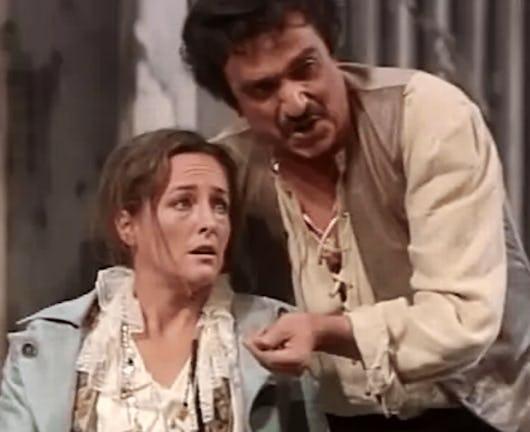
This course gives us an introduction to Italian Opera right from its very beginning in Florence, Italy. You will understand how Mozart’s opera is the midpoint of opera. It explores how music tells the audience about the characters' thoughts through musical gestures. It also sheds light on the importance of close listening to understand opera thoroughly.

Class Deals by MOOC List - Click here and see Coursera's Active Discounts, Deals, and Promo Codes.

Syllabus

Act I, Scene 1 (Week 1) - Mozart and Close Listening
This module utilizes Mozart’s opera Le Nozze di Figaro to explore opera and close listening in detail.

Act I, Scene 2 (Week 2) - Italian opera before Mozart
This module introduces you to the origin of opera. It also utilizes Monteverdi's L’Orfeo to distinguish different styles in opera from one era to another.

Act I, Scene 3 (Week 3) - Conventions in Italian opera
This module discusses the purpose of specific operatic conventions in the overture, arias, recitative, finales, choruses, cantabile-cabaletta, and instrumental interludes. It also utilizes various approaches on how music conveys the drama.

Act II, Scene 1 (Week 4) - The bel canto era
This module introduces you to the bel canto era in Italian Opera. It also utilizes Rossini's Il barbiere di Siviglia to explore the bel canto style.

Act II, Scene 2 (Week 5) - Verdi
This module discusses the contribution of Giuseppi Verdi in the bel canto era. It also gives you an understanding of Verdi’s influence from Rossini’s work.

Act II, Scene 3 (Week 6) - Puccini and his contemporaries
This module discusses how Puccini and his contemporaries challenge history and conventions in Italian opera. It also discusses his presence in the regular repertoire of Italian opera.

FAQs

Go to Class
MOOC List is learner-supported. When you buy through links on our site, we may earn an affiliate commission.

Related Courses

20世纪西方音乐 Western Music in the 20th Century (Coursera) Coursera
Peking University

20世纪西方音乐 Western Music in the 20th Century (Coursera)

课程所涉不仅涵盖古典音乐如新古典主义、表现主义、民族主义等流派,也对爵士乐、摇滚乐与流行音乐在20世纪的风格情状投以深切关注;在将包括中国音乐在内的世界各国民族民间音乐纳入20世纪大背景予以研究探索之同时,关于大型综合艺术品例如歌剧、音乐剧、电影音乐的考察与分析,也设为专题,绝无偏废。

Jun 1st 2026
5-12 Weeks
Copyright Law in the Music Business (Coursera) Coursera
Berklee College of Music

Copyright Law in the Music Business (Coursera)

In this course taught by E. Michael Harrington, students will learn the basis for copyright including what is and is not covered by copyright law. This course will help clarify what rights artists have as creators as well as what the public is free to take from their work. Students will also learn what to do if someone copies their work and what to do if they are accused of copying someone else. Finally, the course will discuss how technology has changed copyright for the better (and worse) and how copyright laws may change in the coming years.

Jun 8th 2026
4 Weeks
The Music of American English Pronunciation (Coursera) Coursera
University of California, Irvine

The Music of American English Pronunciation (Coursera)

In this third course of The Pronunciation of American English specialization, you will learn and practice the "music" of American English, the features of pronunciation such as stress, rhythm, and intonation that will help improve your listening comprehension as well as your ability to communicate more clearly. Each week you will receive practical advice from successful English learners and practice an effective technique called shadowing to improve your pronunciation of the musical features of English.

Jun 8th 2026
4 Weeks
The Beauty of Kunqu Opera (Coursera) Coursera
The Chinese University of Hong Kong

The Beauty of Kunqu Opera (Coursera)

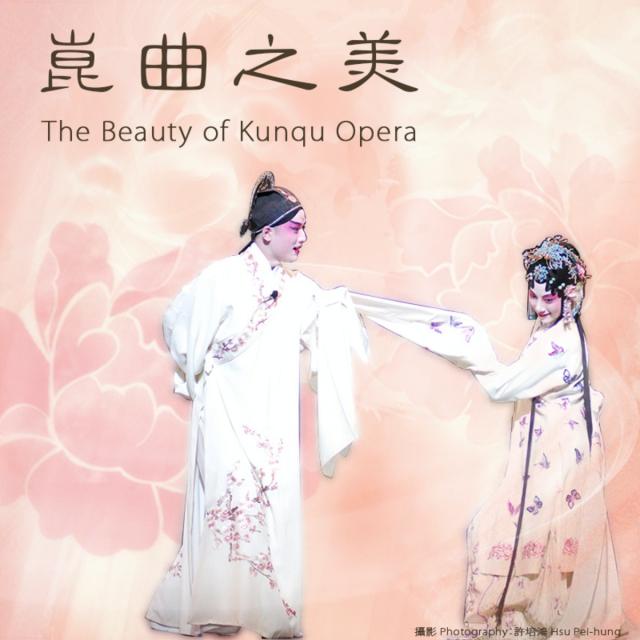
This course will focus on the historical and cultural background, literary aesthetics, music, and performance of Kunqu, China’s classical opera. After viewing the lecture videos presented by scholars and renowned maestros in the field of Kunqu, students’ understanding and appreciation of Chinese performing arts, classical literature and traditional culture will be enhanced.

Jun 8th 2026
5-12 Weeks
In the Studio: Postwar Abstract Painting (Coursera) Coursera
The Museum of Modern Art

In the Studio: Postwar Abstract Painting (Coursera)

Want to know how some of the 20th century’s most celebrated artists made abstract paintings? This course offers an in-depth, hands-on look at the materials, techniques, and thinking of seven New York School artists, including Willem de Kooning, Yayoi Kusama, Agnes Martin, Barnett Newman, Jackson Pollock, Ad Reinhardt, and Mark Rothko. Through studio demonstrations and gallery walkthroughs, you’ll form a deeper understanding of what a studio practice means and how ideas develop from close looking, and you’ll gain a sensitivity to the physical qualities of paint.

Jun 8th 2026
5-12 Weeks
Teaching the Violin and Viola: Creating a Healthy Foundation (Coursera) Coursera
Northwestern University

Teaching the Violin and Viola: Creating a Healthy Foundation (Coursera)

Join us as we explore the fundamental principles and early stages of teaching violin and viola through a series of engaging video lectures and lesson demonstrations, including: 1) Master classes with some of the world’s top string pedagogues, 2) Individual lesson demos of teaching violin/viola set up, left and right hand technique and pieces from the early violin/viola repertoire, 3) Group lesson demos of teaching music theory, ear training and fun activities that encourage good playing habits, and 4) A “field trip” to the violin shop, where we will outfit a new beginning student with a proper instrument and bow.

Jun 8th 2026
5-12 Weeks
The Importance and Power of Music in our Society (Coursera) Coursera
Leiden University,University of the Arts The Hague

The Importance and Power of Music in our Society (Coursera)

Music plays an important role in our daily lives and is woven into the fabric of society. We listen to music while alone or in company, in a dance club or at home, through simple headphones or via high-end speakers, as background or as foreground, after we get up or before we go to bed. Music accompanies us when we are traveling, doing sports, shopping, working or relaxing. This omnipresence of music raises several questions: how does music affect our lives? What is the relation between the society we live in and the role, function, and position of music within that society? How is music influenced by and does music influence social, political, economic, technological, and multiple other developments?

Jun 9th 2026
4 Weeks
Musicianship: Tensions, Harmonic Function, and Modal Interchange (Coursera) Coursera
Berklee College of Music

Musicianship: Tensions, Harmonic Function, and Modal Interchange (Coursera)

After a tremendous response from learners on Coursera, Berklee Online has created a Developing Your Musicianship specialization, and this course is the third course in the series. If you have a general understanding of music theory or if you have completed Developing Your Musicianship I and II, this course will continue to help you understand musical concepts, enabling you to create and perform contemporary music. Taught by Berklee College of Music professor George W. Russell, Jr., the course includes four lessons that delve into an intermediate level of harmony and ear training.

Jun 8th 2026
4 Weeks
Introduction to Ableton Live (Coursera) Coursera
Berklee College of Music

Introduction to Ableton Live (Coursera)

In the past, Digital Audio Workstations (DAWs) were programs used only by audio engineers with a highly specific knowledge base, on machines inaccessible to most people. But over the past 10-15 years, DAWs and the act of recording music have evolved from being a luxury of the few to being available to the masses.

Jun 1st 2026
3 Weeks
The Piano Sonata: Russian and 20th-21st Century Composers (Coursera) Coursera
University of Michigan

The Piano Sonata: Russian and 20th-21st Century Composers (Coursera)

In this course, you’ll review sonata form and learn how the piano sonata was revitalized in the 20th century, with a particular attention to composers from Russia, where the sonata was an especially popular and successful genre. You’ll study some of the most influential piano sonatas of the 20th century, in both Neo-Classical and avant-garde styles. This course will also expose you to a variety of lesser-known and more recent compositions, showing how the piano sonata genre continues to expand and to thrive.

Jun 8th 2026
4 Weeks
Building Your Artistic Brand (Coursera) Coursera
University of Colorado Boulder

Building Your Artistic Brand (Coursera)

In a world where musical content of all kinds can be found anywhere and everywhere, developing a distinctive artistic brand is critical to any musician's professional success. Whether you're an emerging professional musician or a seasoned pro looking to up your game, you will gain knowledge of basic marketing principles as applied to the performing arts. These principles include using visual and design elements to define your artistic identity, strategies for effective marketing through a variety of media and channels, and developing a social media strategy for their professional brand.

Jun 8th 2026
4 Weeks