Pro Tools Basics (Coursera)

Pro Tools Basics (Coursera)

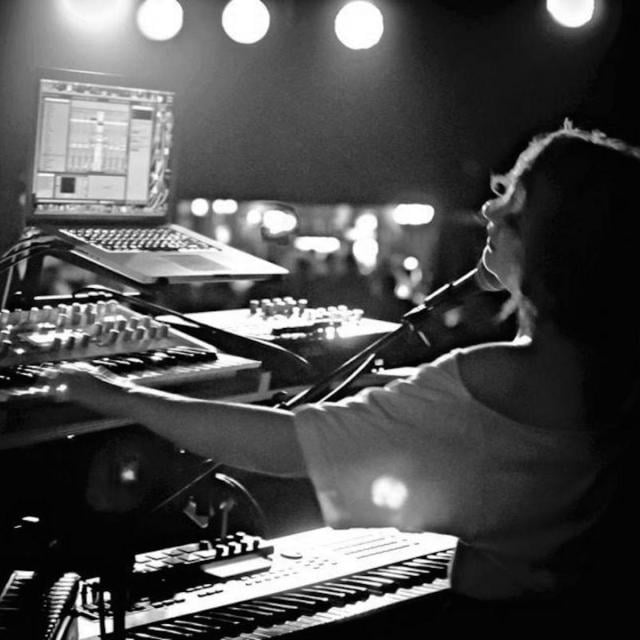
Producing music is an incredibly creative process, and knowing the tools of the trade is essential in order to transmit the musical ideas in your head into the DAW in a creative and uninhibited way. Whether you have used a computer to create music before, or you have been curious about production for years, this 4-week course will give you an introductory look into the world of Avid Pro Tools and Pro Tools First.

Class Deals by MOOC List - Click here and see Coursera's Active Discounts, Deals, and Promo Codes.

Completing this course will count towards your learning in any of the following programs:

What You Will Learn

  • Identify the various components in the Pro Tools interface and organize session files
  • Discuss difference between a synthesizer and sampler and know how to use each of them
  • Record a live performance into Pro Tools
  • Balance your production mix by adjusting levels, using pan, and applying effects such as EQ, reverb, and compression

Syllabus

WEEK 1
Welcome to Pro Tools Basics!
Welcome to your Berklee MOOC! Before you begin the course, we will cover all the details about the course and what you'll need to know to get the most out of your experience.
Diving In
In this first lesson, we will roll up our sleeves and dive into the Pro Tools interface. We'll learn how to set up a session and how to add instrument and audio tracks. We'll also learn how to save and bounce our work while keeping everything organized.

WEEK 2
Exploring MIDI and Software Instruments
In this lesson, we'll focus on MIDI and software instruments. We'll start by learning about the different kinds of sound waves. Next, we'll learn the difference between samplers and synthesizers and how to use them in music production. We'll also learn how to manipulate and automate MIDI.

WEEK 3
Recording and Manipulating Audio
This week we'll dive into the world of audio. We'll learn how to properly import and manage audio in Pro Tools. We'll learn how to record into Pro Tools, and we'll also learn how to use AudioSuite to manipulate audio regions.

WEEK 4
Mixing and Mastering
In this final lesson we will be discussing mixing and mastering. You'll learn how to make a radio-quality production by adding reverb, EQ, compression, and limiters.
Go to Class
MOOC List is learner-supported. When you buy through links on our site, we may earn an affiliate commission.

Related Courses

The Art of Vocal Production (Coursera) Coursera
Berklee College of Music

The Art of Vocal Production (Coursera)

This course addresses recorded vocal performances and the technologies used to highlight and support them in modern record production and mixes. Most of us know that vocals serve as the focal point of modern recordings but many do not know the tools used or when the tools are used best in modern record production. The course begins with simple vocal placement in a mix, where you will also learn the fundamentals of compression and equalization. You’ll further study delays and reverbs before moving to advanced concepts in audio editing, synthetic processing, automatic & graphic pitch correction, time compression, time expansion, flex and elastic audio.

Aug 17th 2026
4 Weeks
Fundamentals of Audio and Music Engineering: Part 1 Musical Sound & Electronics (Coursera) Coursera
University of Rochester

Fundamentals of Audio and Music Engineering: Part 1 Musical Sound & Electronics (Coursera)

In this course students learn the basic concepts of acoustics and electronics and how they can applied to understand musical sound and make music with electronic instruments. Topics include: sound waves, musical sound, basic electronics, and applications of these basic principles in amplifiers and speaker design.

Aug 3rd 2026
5-12 Weeks
Exploring Beethoven's Piano Sonatas (Coursera) Coursera
Curtis Institute of Music

Exploring Beethoven's Piano Sonatas (Coursera)

Our relationship to Beethoven is a deep and paradoxical one. For many musicians, he represents a kind of holy grail: His music has an intensity, rigor, and profundity which keep us in its thrall, and it is perhaps unequalled in the interpretive, technical, and even spiritual challenges it poses to performers. At the same time, Beethoven’s music is casually familiar to millions of people who do not attend concerts or consider themselves musically inclined. Two hundred years after his death, he is everywhere in the culture, yet still represents its summit. This course takes an inside-out look at the 32 piano sonatas from the point of view of a performer.

Aug 3rd 2026
5-12 Weeks
Teaching the Violin and Viola: Creating a Healthy Foundation (Coursera) Coursera
Northwestern University

Teaching the Violin and Viola: Creating a Healthy Foundation (Coursera)

Join us as we explore the fundamental principles and early stages of teaching violin and viola through a series of engaging video lectures and lesson demonstrations, including: 1) Master classes with some of the world’s top string pedagogues, 2) Individual lesson demos of teaching violin/viola set up, left and right hand technique and pieces from the early violin/viola repertoire, 3) Group lesson demos of teaching music theory, ear training and fun activities that encourage good playing habits, and 4) A “field trip” to the violin shop, where we will outfit a new beginning student with a proper instrument and bow.

Aug 3rd 2026
5-12 Weeks
Princípios Gerais da Técnica do Violino e da Viola de Arco (Coursera) Coursera
Universidade Estadual de Campinas - UNICAMP

Princípios Gerais da Técnica do Violino e da Viola de Arco (Coursera)

Esse curso visa fornecer informações sobre aspectos básicos da técnica do violino e da viola de arco. Ao longo de 18 aulas, com duração média de 7 minutos cada, serão abordados temas como posicionamento do instrumento, maneiras de posicionar a mão esquerda, como segurar o arco, como executar os principais golpes de arco, como estudar mudanças de posição, etapas para desenvolvimento do vibrato e sugestões para a organização do estudo diário do instrumento.

Aug 10th 2026
4 Weeks
Introdução à Guitarra (Coursera) Coursera
Berklee College of Music

Introdução à Guitarra (Coursera)

Compreenda os fundamentos necessários para começar a tocar guitarra elétrica ou acústica (violão). Você aprenderá uma abordagem fácil para tocar rapidamente, por meio de uma combinação de exploração do instrumento, técnicas de execução e teoria musical básica.

Aug 17th 2026
5-12 Weeks
Understanding the Music Business: What is Music Worth? (Coursera) Coursera
Vanderbilt University

Understanding the Music Business: What is Music Worth? (Coursera)

This course will examine the music industry in the United States, with the unique perspective gained by Vanderbilt University’s location in Nashville, TN. Nashville is a major center of music in the United States, and the music created here has a global reach, particularly in the country, rock, pop, singer-songwriter, and Americana genres. However, students will learn that the basic principles of recording, marketing, copyright, licensing, and live performance are the same, regardless of musical style or genre.

Aug 17th 2026
5-12 Weeks
Career Planning: A Pathway to Employment (Coursera) Coursera
University System of Georgia

Career Planning: A Pathway to Employment (Coursera)

This course is designed to foster creative approaches to launching a new career. You will articulate best ways to make a first impression and analyze your strengths by creating a personal statement. You will identify appropriate elements to make your resume stand out from the crowd. You will also identify the most effective ways a cover letter can answer a job description, and how to best leverage social media in your job search.

Aug 10th 2026
5-12 Weeks
History of Rock, Part One (Coursera) Coursera
University of Rochester

History of Rock, Part One (Coursera)

This course, part 1 of a 2-course sequence, examines the history of rock, primarily as it unfolded in the United States, from the days before rock (pre-1955) to the end of the 1960s. This course covers the music of Elvis Presley, Chuck Berry, Phil Spector, Bob Dylan, the Beatles, the Rolling Stones, Jimi Hendrix, Cream, and many more artists, with an emphasis both on cultural context and on the music itself. We will also explore how developments in the music business and in technology helped shape the ways in which styles developed.

Aug 3rd 2026
5-12 Weeks