In the Studio: Postwar Abstract Painting (Coursera)

In the Studio: Postwar Abstract Painting (Coursera)

Want to know how some of the 20th century’s most celebrated artists made abstract paintings? This course offers an in-depth, hands-on look at the materials, techniques, and thinking of seven New York School artists, including Willem de Kooning, Yayoi Kusama, Agnes Martin, Barnett Newman, Jackson Pollock, Ad Reinhardt, and Mark Rothko. Through studio demonstrations and gallery walkthroughs, you’ll form a deeper understanding of what a studio practice means and how ideas develop from close looking, and you’ll gain a sensitivity to the physical qualities of paint.

Class Deals by MOOC List - Click here and see Coursera's Active Discounts, Deals, and Promo Codes.

Readings and other resources will round out your understanding, providing broader cultural, intellectual, and historical context about the decades after World War II, when these artists were active.
The works of art you will explore in this course may also serve as points of departure to make your own abstract paintings. You may choose to participate in the studio exercises, for which you are invited to post images of your own paintings to the discussion boards, or you may choose to complete the course through its quizzes and written assessments only.
Learners who wish to participate in the optional studio exercises may need to purchase art supplies. A list of suggested materials is included in the first module.
Learning Objectives:
Learn about the materials, techniques, and approaches of seven New York School artists who made abstract paintings.
Trace the development of each artist’s work and studio practice in relation to broader cultural, intellectual, and historical contexts in the decades after World War II.
Hone your visual analysis skills.
Use each artist’s works as a point of departure for making your own abstract paintings.

Syllabus

WEEK 1: Introduction
WEEK 2: Barnett Newman
WEEK 3: Willem de Kooning
WEEK 4: Jackson Pollock
WEEK 5: Mark Rothko
WEEK 6: Agnes Martin
WEEK 7: Ad Reinhardt
WEEK 8: Yayoi Kusama - Yayoi Kusama: Lesson Choices

Go to Class
MOOC List is learner-supported. When you buy through links on our site, we may earn an affiliate commission.

Related Courses

Creating Sounds for Electronic Music (Coursera) Coursera
Berklee College of Music

Creating Sounds for Electronic Music (Coursera)

What you’ll achieve: In this project-centered course*, you will create sounds and use them in your own musical compositions. Whether you're an aspiring producer, composer, or hobbyist, this course will help you gain skills in music production and confidence using software synthesizers. Along with your classmates, you will create a massive database of designed sounds, or patches, to use in your compositions. As part of the course, you will work with a free version of FXpansion Strobe 2.

Nov 23rd 2026
4 Weeks
Introduction to Italian Opera (Coursera) Coursera
Dartmouth College

Introduction to Italian Opera (Coursera)

This course gives us an introduction to Italian Opera right from its very beginning in Florence, Italy. You will understand how Mozart’s opera is the midpoint of opera. It explores how music tells the audience about the characters' thoughts through musical gestures. It also sheds light on the importance of close listening to understand opera thoroughly.

Nov 23rd 2026
5-12 Weeks
Historia del Arte: Del Arte Prehistórico al Renacimiento (Coursera) Coursera
Universidad de Palermo

Historia del Arte: Del Arte Prehistórico al Renacimiento (Coursera)

El arte deriva de un deseo de la persona para comunicarse con otros” (Edvard Munch). Y es desde la prehistoria que el humano ha dejado impresas sus huellas a través del arte. ¿Qué características tienen esas huellas artísticas? ¿Qué nos comunican sobre el periodo de tiempo al que pertenecen? Sumergite en la historia del arte recorriendo este curso.

Nov 23rd 2026
4 Weeks
Wonders of Ancient Egypt (Coursera) Coursera
University of Pennsylvania

Wonders of Ancient Egypt (Coursera)

Colossal pyramids, imposing temples, golden treasures, enigmatic hieroglyphs, powerful pharaohs, strange gods, and mysterious mummies are features of Ancient Egyptian culture that have fascinated people over the millennia. The Bible refers to its gods, rulers, and pyramids. Neighboring cultures in the ancient Near East and Mediterranean wrote about its god-like kings and its seemingly endless supply of gold. The Greeks and Romans describe aspects of Egypt's culture and history.

Nov 23rd 2026
5-12 Weeks
So You Think You Know Tango? (Coursera) Coursera
Emory University

So You Think You Know Tango? (Coursera)

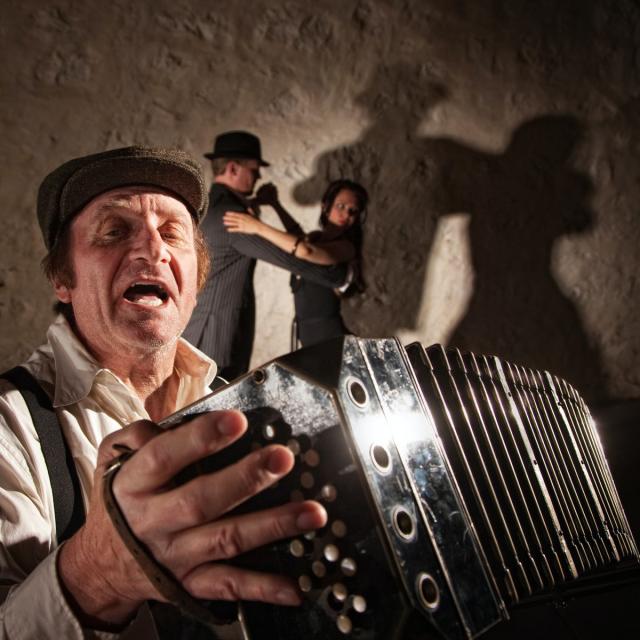
How well do you think you know tango? This two-week mini-course is designed for music lovers, musicians, and dancers who are interested in learning more about the Argentine Tango. It will explore the many dimensions of the Argentine Tango music, including its origins, popularization during the Golden Age, dissemination abroad, evolution into an artistic music-dance form, and adoption by Argentine and international art-music composers to date.

Nov 23rd 2026
2 Weeks
Arts and Culture Strategy (Coursera) Coursera
University of Pennsylvania,National Arts Strategies - NAS

Arts and Culture Strategy (Coursera)

Arts and culture leaders have a rewarding but tough task: creating sustainable organizations that deliver real social value. There is a lot of competition out there. Being an effective leader means constantly adapting, cleverly using the best tools to reach as many people as possible. This course is designed to help leaders at any level do just that.

Nov 16th 2026
5-12 Weeks
Videojuegos: ¿de qué hablamos? (Coursera) Coursera
Universitat Autònoma de Barcelona

Videojuegos: ¿de qué hablamos? (Coursera)

Probablemente, todos hemos jugado a algún videojuego, pero ¿qué hay detrás de él? Podemos decir que - con independencia del videojuego - hay un árduo trabajo multidisciplinar que incluye desde aspectos de diseño hasta la programación como tal del videojuego. Este curso pretende ser un curso introductorio que muestre qué aspectos hay que considerar en el videojuego, y que permita con posterioridad abordar individualmente los temas que se consideran nucleares: diseño, arte, motor del videojuego y 'game play'.

Nov 16th 2026
5-12 Weeks
History of Rock, Part Two (Coursera) Coursera
University of Rochester

History of Rock, Part Two (Coursera)

This course, part 2 of a 2-course sequence, examines the history of rock, primarily as it unfolded in the United States, from the early 1970s to the early 1990s. This course covers the music of Led Zeppelin, the Allman Brothers, Carole King, Bob Marley, the Sex Pistols, Donna Summer, Michael Jackson, Madonna, Prince, Metallica, Run-DMC, and Nirvana, and many more artists, with an emphasis both on cultural context and on the music itself. We will also explore how developments in the music business and in technology helped shape the ways in which styles developed.

Nov 23rd 2026
5-12 Weeks
Leading Innovation in Arts and Culture (Coursera) Coursera
Vanderbilt University,National Arts Strategies - NAS

Leading Innovation in Arts and Culture (Coursera)

Developed by David Owens at Vanderbilt University and customized for the cultural sector with National Arts Strategies, this course will help arts and culture leaders create an environment where new ideas are constantly created, shared, evaluated and the best ones are successfully put to work. One of the toughest challenges for any leader is getting traction for new ideas. Winning support can be a struggle. As a result, powerful new ideas often get stuck. This is especially true in the cultural sector. People involved in arts and culture often have little time and even less money for experimentation and risks. This course will help those in the performing arts, museums, zoos, libraries and other cultural organizations build environments where new management and program ideas flourish.

Nov 16th 2026
5-12 Weeks