Songwriting: Writing the Lyrics (Coursera)

Songwriting: Writing the Lyrics (Coursera)

There’s a songwriter lurking somewhere inside you, peeking around corners, wondering if it’s safe to come out. Now it is. This course is an invitation to let your inner songwriter step into the sunlight. All it takes is a simple “yes” and you’ll be climbing that windy hill, marveling at the view. If you haven’t written any or many songs, this course will show you an efficient, effective process for tailoring songs to express your ideas and emotions. If you have, you’ll look at your process differently, taking control of aspects of the process you may have not noticed.

Class Deals by MOOC List - Click here and see Coursera's Active Discounts, Deals, and Promo Codes.

The course will start by examining the tools available to you, all revolving around the essential concept of prosody. You’ll learn to use your tools to enhance your message—to work compositionally at the same time you’re developing your ideas.
You’ll be working both lyrically and musically, though musically it’s not necessary that you either read music or play an instrument. If you play, great, and you’ll be encouraged to play and record your musical responses to the assignments. If you don’t play, the course offers you a number of musical loops to work with. All you’ll have to do is sing your melodies over the loops.
Assignments will ask you to post something for peer review—sometimes lyric lines or sections, sometimes melodies, sometimes both. None of it has to be polished. The course is about writing, not performing.
This course can be applied to multiple Specializations or Professional Certificates programs. Completing this course will count towards your learning in any of the following programs:

What You Will Learn:

  • Define and identify the point of view, form, and the "who, what, where, when, and how" in a song
  • Identify whether a lyric is stable or unstable through the use of line lengths, number of lines, stressed and unstressed syllables, and melody
  • Utilize the various rhyming techniques to evoke specific emotions in a song and define the difference between Assonance and Consonance rhyme
  • Use phrasing to clarify your ideas

Syllabus

WEEK 1
Welcome to Songwriting: Writing the Lyrics
Welcome to the course! Here we will cover all the details about the course and what you'll need to know to get the most out of your experience.
The Journey of the Song
By the end of this lesson, you will see how to develop your song idea so it creates an interesting journey from start to finish. You’ll understand your options developing the point of view of your song and will be introduced to the songwriter’s six best friends.

WEEK 2
The Journey of the Song
By the end of this lesson, you will see how to develop your song idea so it creates an interesting journey from start to finish. You’ll understand your options developing the point of view of your song and will be introduced to the songwriter’s six best friends.

WEEK 3
Stopping and Going
By the end of this lesson, you will understand the concept of prosody as it relates to the number of lines/musical phrases in a section and to line lengths/musical phrases. You’ll create both stable and unstable line/musical groupings, using an odd or even number of lines and musical phrases. Using these tools, you’ll write a verse and chorus.

WEEK 4
Sonic GPS—Mapping Your Song with Rhyme
By the end of this lesson, you will understand the relationship of rhyme schemes to prosody. You’ll create both stable and unstable sections, using various rhyme schemes to show your ear the way to go home. Using these tools, you’ll write a new verse and chorus.

WEEK 5
Making It Move
By the end of this lesson, you will understand language rhythms—the difference between stressed and unstressed syllables and how to put rhythm in your lines, preparing them to join into the dance with musical rhythm. Using these tools, you’ll put last week’s verse and chorus to music.

Go to Class
MOOC List is learner-supported. When you buy through links on our site, we may earn an affiliate commission.

Related Courses

Princípios Gerais da Técnica do Violino e da Viola de Arco (Coursera) Coursera
Universidade Estadual de Campinas - UNICAMP

Princípios Gerais da Técnica do Violino e da Viola de Arco (Coursera)

Esse curso visa fornecer informações sobre aspectos básicos da técnica do violino e da viola de arco. Ao longo de 18 aulas, com duração média de 7 minutos cada, serão abordados temas como posicionamento do instrumento, maneiras de posicionar a mão esquerda, como segurar o arco, como executar os principais golpes de arco, como estudar mudanças de posição, etapas para desenvolvimento do vibrato e sugestões para a organização do estudo diário do instrumento.

Aug 10th 2026
4 Weeks
Korean Music, A Philosophical Exploration (Coursera) Coursera
Sungkyunkwan University - SKKU

Korean Music, A Philosophical Exploration (Coursera)

This course introduces Korean philosophy projected into the subject of Korean music, especially K-POP, which is drawing global attention today. We confirm that Korea's unique philosophy was the basis for maintaining originality while being universally accepted by many people, and seek the role of philosophy for the continuous development and spread of Korean music.

Aug 10th 2026
5-12 Weeks
Music and Social Action (Coursera) Coursera
Yale University

Music and Social Action (Coursera)

What is a musician’s response to the condition of the world? Do musicians have an obligation and an opportunity to serve the needs of the world with their musicianship? At a time of crisis for the classical music profession, with a changing commercial landscape, a shrinking audience base, and a contraction in the number of professional orchestras, how does a young musician construct a career today? Are we looking at a dying art form or a moment of reinvigoration?

Aug 10th 2026
5-12 Weeks
The Art of Vocal Production (Coursera) Coursera
Berklee College of Music

The Art of Vocal Production (Coursera)

This course addresses recorded vocal performances and the technologies used to highlight and support them in modern record production and mixes. Most of us know that vocals serve as the focal point of modern recordings but many do not know the tools used or when the tools are used best in modern record production. The course begins with simple vocal placement in a mix, where you will also learn the fundamentals of compression and equalization. You’ll further study delays and reverbs before moving to advanced concepts in audio editing, synthetic processing, automatic & graphic pitch correction, time compression, time expansion, flex and elastic audio.

Aug 17th 2026
4 Weeks
Fundamentals of Audio and Music Engineering: Part 1 Musical Sound & Electronics (Coursera) Coursera
University of Rochester

Fundamentals of Audio and Music Engineering: Part 1 Musical Sound & Electronics (Coursera)

In this course students learn the basic concepts of acoustics and electronics and how they can applied to understand musical sound and make music with electronic instruments. Topics include: sound waves, musical sound, basic electronics, and applications of these basic principles in amplifiers and speaker design.

Aug 3rd 2026
5-12 Weeks
Fundamentals of Music Theory (Coursera) Coursera
University of Edinburgh

Fundamentals of Music Theory (Coursera)

This course will introduce students to the theory of music, providing them with the skills needed to read and write Western music notation, as well as to understand, analyse, and listen informedly. It will cover material such as pitEli Appleby-Donaldches and scales, intervals, clefs, rhythm, form, meter, phrases and cadences, and basic harmony.

Aug 3rd 2026
5-12 Weeks
Exploring Beethoven's Piano Sonatas (Coursera) Coursera
Curtis Institute of Music

Exploring Beethoven's Piano Sonatas (Coursera)

Our relationship to Beethoven is a deep and paradoxical one. For many musicians, he represents a kind of holy grail: His music has an intensity, rigor, and profundity which keep us in its thrall, and it is perhaps unequalled in the interpretive, technical, and even spiritual challenges it poses to performers. At the same time, Beethoven’s music is casually familiar to millions of people who do not attend concerts or consider themselves musically inclined. Two hundred years after his death, he is everywhere in the culture, yet still represents its summit. This course takes an inside-out look at the 32 piano sonatas from the point of view of a performer.

Aug 3rd 2026
5-12 Weeks
Composición de canciones (Coursera) Coursera
Berklee College of Music,Inter-American Development Bank - IDB

Composición de canciones (Coursera)

Aprende un proceso eficiente y efectivo para escribir canciones que expresen tus ideas y emociones, incluyendo una gama de herramientas que giren alrededor del concepto de prosodia; la adecuación de letra y música para apoyar tu mensaje subyacente.

Aug 17th 2026
5-12 Weeks
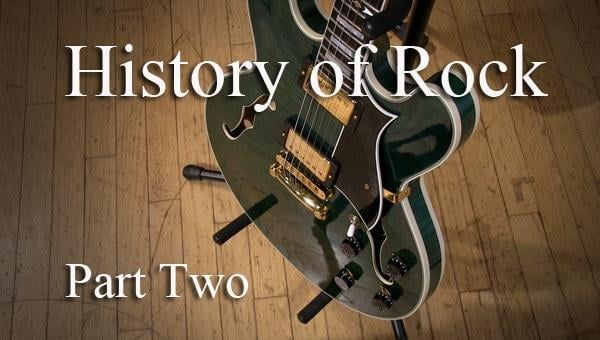
History of Rock, Part One (Coursera) Coursera
University of Rochester

History of Rock, Part One (Coursera)

This course, part 1 of a 2-course sequence, examines the history of rock, primarily as it unfolded in the United States, from the days before rock (pre-1955) to the end of the 1960s. This course covers the music of Elvis Presley, Chuck Berry, Phil Spector, Bob Dylan, the Beatles, the Rolling Stones, Jimi Hendrix, Cream, and many more artists, with an emphasis both on cultural context and on the music itself. We will also explore how developments in the music business and in technology helped shape the ways in which styles developed.

Aug 3rd 2026
5-12 Weeks