Exploring Beethoven's Piano Sonatas Part 6 (Coursera)

Exploring Beethoven's Piano Sonatas Part 6 (Coursera)

Welcome to Exploring Beethoven's Piano Sonatas Part 6! You’re joining thousands of learners currently enrolled in the course. I'm excited to have you in the class and look forward to your contributions to the learning community.

Class Deals by MOOC List - Click here and see Coursera's Active Discounts, Deals, and Promo Codes.

To begin, I recommend taking a few minutes to explore the course site. Review the material we’ll cover each week, and preview the assignments you’ll need to complete to pass the course. Click Discussions to see forums where you can discuss the course material with fellow students taking the class.
If you have questions about course content, please post them in the forums to get help from others in the course community. For technical problems with the Coursera platform, visit the Learner Help Center.
Good luck as you get started, and I hope you enjoy the course!

Syllabus

WEEK 1
Welcome to Class
Welcome to class! We are thrilled that you have joined us for Part 6 of Exploring Beethoven's Piano Sonatas course, taught by Jonathan Biss, Chair of Piano Studies at the Curtis Institute of Music. Jonathan is recognized as a world-renown concert artist and musical thinker. This course is Part 6 of the existing series called Exploring Beethoven’s Piano Sonatas. As with all sections of this course, Part 6 contains new and separate sets of lectures. Specifically, we will dive into Beethoven's Piano Sonatas Opp. 14 and 49; Sonata Op. 31 No. 3; Op. 54; and Op. 111. It is important to remind you that it is not necessary to have taken the previous Exploring Beethoven's Piano Sonatas courses, in order to enroll in this one. We think you will be perfectly comfortable to start learning with Part 6 if you wish and continue backwards. Between these courses, there exists a large amount of additional resources and learning that might be helpful as you embark on Part 6. And of course, we strongly encourage you to take Parts 1, 2, 3, 4, and 5, if you have not yet. In the meantime, have a terrific time taking this class and Part 6 of Exploring Beethoven’s Piano Sonatas.

WEEK 2
Opp. 14 and 49

WEEK 3
Op. 31 No. 3

WEEK 4
Op. 54

WEEK 5
Op. 111

WEEK 6
Your Thoughts Welcome

Go to Class
MOOC List is learner-supported. When you buy through links on our site, we may earn an affiliate commission.

Related Courses

Sharpened Visions: A Poetry Workshop (Coursera) Coursera
California Institute of the Arts

Sharpened Visions: A Poetry Workshop (Coursera)

Why just write poems when you can write better ones? This course is built on the notion that the most exciting writing begins after the first draft. It is specifically for folks who believe that writing poems just to express oneself is like using the Internet just for email. After all, poetry can change the way you and your readers think of the world and its inhabitants; it can break new ground for language; turn a blank sheet of paper into a teeming concert of voices and music.

Nov 23rd 2026
5-12 Weeks
20世纪西方音乐 Western Music in the 20th Century (Coursera) Coursera
Peking University

20世纪西方音乐 Western Music in the 20th Century (Coursera)

课程所涉不仅涵盖古典音乐如新古典主义、表现主义、民族主义等流派,也对爵士乐、摇滚乐与流行音乐在20世纪的风格情状投以深切关注;在将包括中国音乐在内的世界各国民族民间音乐纳入20世纪大背景予以研究探索之同时,关于大型综合艺术品例如歌剧、音乐剧、电影音乐的考察与分析,也设为专题,绝无偏废。

Nov 16th 2026
5-12 Weeks
El Valle de los Reyes (Coursera) Coursera
Universitat Autònoma de Barcelona

El Valle de los Reyes (Coursera)

Este curso va dirigido a todos los amantes de la historia y arqueología, en general, y de manera particular a todos los interesados en egiptología, independientemente de su nivel de conocimiento inicial. El Valle de los Reyes constituye uno de los yacimientos arqueológicos más importantes de Egipto y su estudio, desde diferentes enfoques, resulta muy atractivo para cualquier aficionado o profesional de la egiptología. Con este curso nos proponemos conocer su historia y evolución a lo largo de las dinastías XVIII-XX del Reino Nuevo egipcio, desde su origen hasta su abandono y desmantelamiento.

Nov 23rd 2026
5-12 Weeks
History of Rock, Part Two (Coursera) Coursera
University of Rochester

History of Rock, Part Two (Coursera)

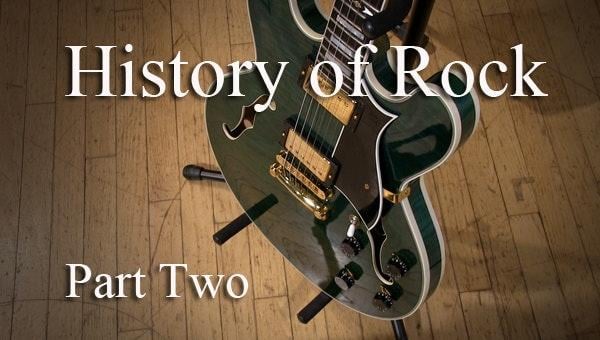
This course, part 2 of a 2-course sequence, examines the history of rock, primarily as it unfolded in the United States, from the early 1970s to the early 1990s. This course covers the music of Led Zeppelin, the Allman Brothers, Carole King, Bob Marley, the Sex Pistols, Donna Summer, Michael Jackson, Madonna, Prince, Metallica, Run-DMC, and Nirvana, and many more artists, with an emphasis both on cultural context and on the music itself. We will also explore how developments in the music business and in technology helped shape the ways in which styles developed.

Nov 23rd 2026
5-12 Weeks
Soul Beliefs: Causes and Consequences - Unit 2: Belief Systems (Coursera) Coursera
Rutgers University

Soul Beliefs: Causes and Consequences - Unit 2: Belief Systems (Coursera)

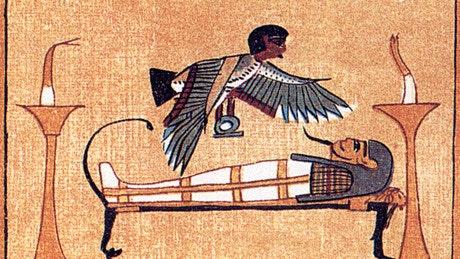
Throughout history, the vast majority of people around the globe have believed they have, however defined, a “soul.” While the question of whether the soul exists cannot be answered by science, what we can study are the causes and consequences of various beliefs about the soul and its prospects of surviving the death of the body. Why are soul and afterlife beliefs so common in human history? Are there adaptive advantages to assuming souls exist?

Nov 23rd 2026
5-12 Weeks
History of Rock, Part One (Coursera) Coursera
University of Rochester

History of Rock, Part One (Coursera)

This course, part 1 of a 2-course sequence, examines the history of rock, primarily as it unfolded in the United States, from the days before rock (pre-1955) to the end of the 1960s. This course covers the music of Elvis Presley, Chuck Berry, Phil Spector, Bob Dylan, the Beatles, the Rolling Stones, Jimi Hendrix, Cream, and many more artists, with an emphasis both on cultural context and on the music itself. We will also explore how developments in the music business and in technology helped shape the ways in which styles developed.

Nov 23rd 2026
5-12 Weeks
So You Think You Know Tango? (Coursera) Coursera
Emory University

So You Think You Know Tango? (Coursera)

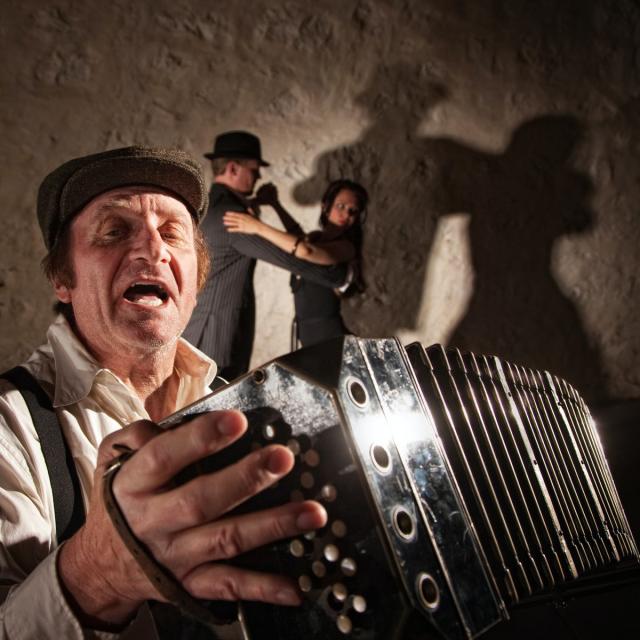
How well do you think you know tango? This two-week mini-course is designed for music lovers, musicians, and dancers who are interested in learning more about the Argentine Tango. It will explore the many dimensions of the Argentine Tango music, including its origins, popularization during the Golden Age, dissemination abroad, evolution into an artistic music-dance form, and adoption by Argentine and international art-music composers to date.

Nov 23rd 2026
2 Weeks
Understanding China, 1700-2000: A Data Analytic Approach, Part 2 (Coursera) Coursera
The Hong Kong University of Science and Technology - HKUST

Understanding China, 1700-2000: A Data Analytic Approach, Part 2 (Coursera)

The purpose of this course is to summarize new directions in Chinese history and social science produced by the creation and analysis of big historical datasets based on newly opened Chinese archival holdings, and to organize this knowledge in a framework that encourages learning about China in comparative perspective. Our course demonstrates how a new scholarship of discovery is redefining what is singular about modern China and modern Chinese history.

Nov 23rd 2026
4 Weeks
Arch of Titus: Rome and the Menorah (Coursera) Coursera
Yeshiva University

Arch of Titus: Rome and the Menorah (Coursera)

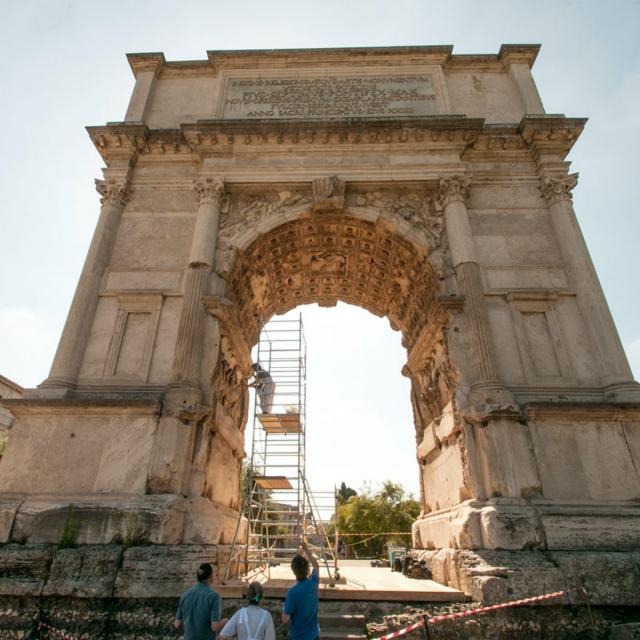
The Arch of Titus: Rome and the Menorah explores one of the most significant Roman monuments to survive from antiquity, from the perspectives of Roman, Jewish and later Christian history and art. The Arch of Titus commemorates the destruction of Jerusalem by the emperor Titus in 70 CE, an event of pivotal importance for the history of the Roman Empire, of Judaism, of Christianity and of modern nationalism. Together with your guide, Professor Steven Fine, you will examine ancient texts and artifacts, gaining skills as a historian as you explore the continuing significance of the Arch of Titus from antiquity to the very present.

Nov 23rd 2026
5-12 Weeks
Introduction to Italian Opera (Coursera) Coursera
Dartmouth College

Introduction to Italian Opera (Coursera)

This course gives us an introduction to Italian Opera right from its very beginning in Florence, Italy. You will understand how Mozart’s opera is the midpoint of opera. It explores how music tells the audience about the characters' thoughts through musical gestures. It also sheds light on the importance of close listening to understand opera thoroughly.

Nov 23rd 2026
5-12 Weeks
Fundamentals of Music Theory (Coursera) Coursera
University of Edinburgh

Fundamentals of Music Theory (Coursera)

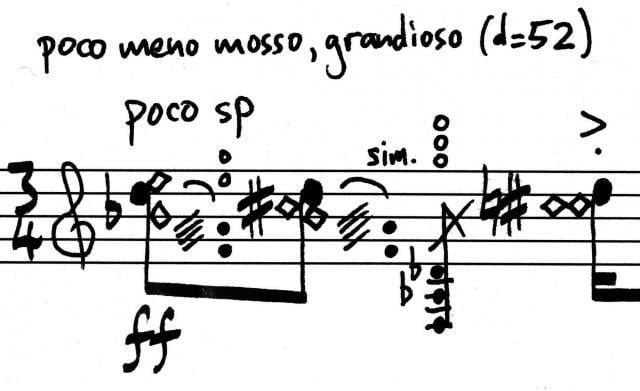
This course will introduce students to the theory of music, providing them with the skills needed to read and write Western music notation, as well as to understand, analyse, and listen informedly. It will cover material such as pitEli Appleby-Donaldches and scales, intervals, clefs, rhythm, form, meter, phrases and cadences, and basic harmony.

Nov 23rd 2026
5-12 Weeks
Paradoxes of War (Coursera) Coursera
Princeton University

Paradoxes of War (Coursera)

The Paradoxes of War teaches us to understand that war is not only a normal part of human existence, but is arguably one of the most important factors in making us who we are. Through this course, I hope that you will come to appreciate that war is both a natural expression of common human emotions and interactions and a constitutive part of how we cohere as groups. That is, war is paradoxically an expression of our basest animal nature and the exemplar of our most vaunted and valued civilized virtues.

Nov 16th 2026
13-24 Weeks