Jazz Improvisation (Coursera)

Jazz Improvisation (Coursera)

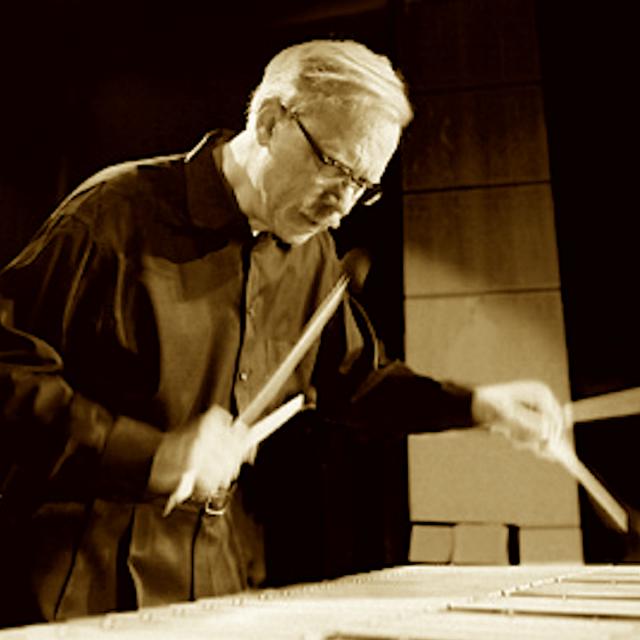
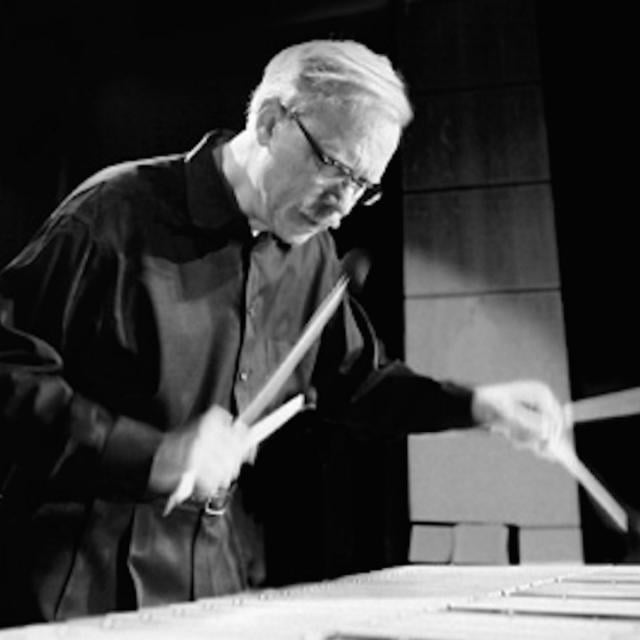
Learn the basic concepts of improvisation from Gary Burton, one of the most renowned improvisers in the jazz world, including the mental, melodic, and harmonic processes that contribute to the instinctive skills that an improviser puts to use when taking a solo. While many people are fans of jazz and understand that musicians are often “making up” the notes they are playing during a performance, most people—often including musicians, themselves, who are beginning to learn improvising—aren’t clear about what exact processes take place to enable this to happen. The purpose of this course is to introduce the basic concepts of modern improvisation and how to go about mastering the different musical and mental skills involved.

Class Deals by MOOC List - Click here and see Coursera's Active Discounts, Deals, and Promo Codes.

Course author Gary Burton codifies a sought-after approach to improvisation that has been at the core of Berklee College of Music's curriculum for decades. Students who complete this course will know what to practice and how to practice the various aspects of improvising, in addition to understanding how the improviser spontaneously communicates to the listeners through their musical creations.
Course 2 of 4 in the Music Education for Teachers Specialization.

What You Will Learn

  • Use storytelling as a tool to improve your improvisation
  • Practice and use various scales to improve your improvisation skills
  • Identify harmonic motion in a song
  • Use guide tones and guide tone lines when you're improvising

Syllabus

WEEK 1
Welcome to Jazz Improvisation
Welcome to the course! Here we will cover all the details about the course and what you'll need to know to get the most out of your experience.
Improvisation as a Language
Since everybody who is taking this course starts from a different place in terms of their experience as an improviser, it's important at first to cover some basic material. We'll begin our journey by exploring the language used by jazz improvisors. Improvisation is analogous to language in many ways. With music, we become fluent when the vocabulary (scales and chords) and grammar (harmonic progressions) are assimilated into conversational content or story (melodic themes and structure) and we no longer have to consciously think about them while we play.

WEEK 2
The Improviser's Vocabulary
In this lesson, we'll explore the improviser's lingo. We'll identify the most common chord scales and the type of harmony they relate to including major, minor, and dominant 7.

WEEK 3
Making Scale Choices in Real Time
Improvisers must be able to quickly recall chord scales and be able to play around on them fluently. This becomes important when choosing which chord scale to use on a given harmony—another thing we must be able to determine immediately. When a new tune is put in front of you at a session or a rehearsal, there isn't time to take the music home and spend an hour or two working out the correct scales. Improvisers need a quick, mostly intuitive way of making these scale choices in real time as the tune is being played. This week, we'll explore my method for making these quick musical decisions.

WEEK 4
Harmony for Improvisers
It is important for an improviser to clearly imply the harmonies when improvising. It is not enough to just play correct notes on each chord. In this lesson we'll examine how the improviser helps the harmonies move. Part of the improviser's job is to help the listener follow the changes as the chords move from one to another.

WEEK 5
Theme and Variation
This week we will discuss how the improviser develops melodic themes in a solo. As mentioned in week 1, there are natural comparisons between speech and improvising that illustrate how this functions. The most common technique for telling a musical story that engages the listener for the duration of your solo is by using a traditional concept called theme and variation. That is, you introduce a theme—a musical phrase—then repeat it, making variations on it to develop an interesting storyline. A good solo is like an explanation, or a good story. The explanation or story is the content of improvisation.

Go to Class
MOOC List is learner-supported. When you buy through links on our site, we may earn an affiliate commission.

Related Courses

Music Business Foundations (Coursera) Coursera
Berklee College of Music

Music Business Foundations (Coursera)

This course has been developed to provide students with the latest instruction on the best way for creators, consumers, and facilitators to navigate the resurgence of one of the world’s most exciting industries: the music business. Three things are clear about today’s music industry: The consumption of music is expanding at the greatest rate in history and from the most portals ever imagined, the cost of producing music is decreasing, and the number of artists creating and seeking to expose their work and develop careers through the Internet has increased dramatically.

Sep 21st 2026
4 Weeks
The Art of Music Production (Coursera) Coursera
Berklee College of Music

The Art of Music Production (Coursera)

Explore the art of record production and how to make recordings that other people will love listening to. This course will teach you how to make emotionally moving recordings on almost any recording equipment, including your phone or laptop. The emphasis is on mastering tangible artistic concepts; the gear you use is up to you. You will learn to develop the most important tool in the recording studio: your ears. You will learn to enhance every aspect of your own productions, both sonically and musically, by employing deeper listening skills.

Sep 21st 2026
4 Weeks
Music as Biology: What We Like to Hear and Why (Coursera) Coursera
Duke University

Music as Biology: What We Like to Hear and Why (Coursera)

The course will explore the tone combinations that humans consider consonant or dissonant, the scales we use, and the emotions music elicits, all of which provide a rich set of data for exploring music and auditory aesthetics in a biological framework. Analyses of speech and musical databases are consistent with the idea that the chromatic scale (the set of tones used by humans to create music), consonance and dissonance, worldwide preferences for a few dozen scales from the billions that are possible, and the emotions elicited by music in different cultures all stem from the relative similarity of musical tonalities and the characteristics of voiced (tonal) speech.

Sep 21st 2026
5-12 Weeks
Improvisación de jazz (Coursera) Coursera
Berklee College of Music

Improvisación de jazz (Coursera)

Aprenda los conceptos básicos de la improvisación con Gary Burton, uno de los improvisadores más reconocidos en el mundo del jazz, incluidos los procesos mentales, melódicos y armónicos que contribuyen a las habilidades instintivas que aplica un improvisador cuando realiza un solo.

Oct 5th 2026
5-12 Weeks
Electronic Music Performance Techniques (Coursera) Coursera
Berklee College of Music

Electronic Music Performance Techniques (Coursera)

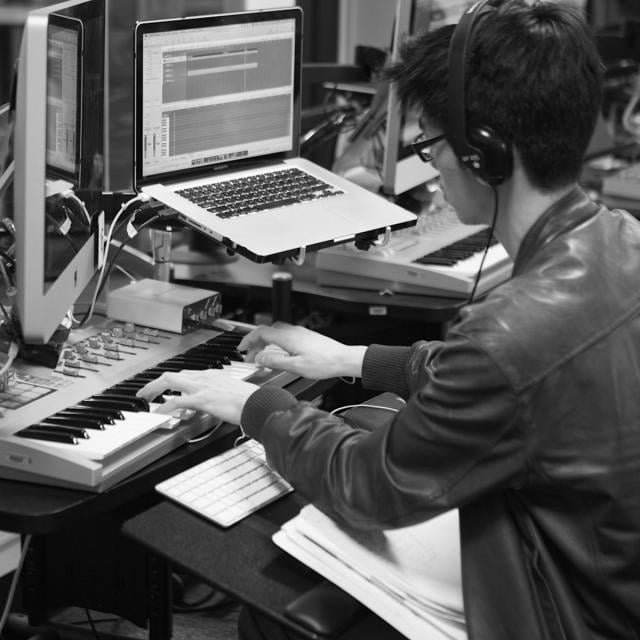
From the Moog analog synthesizers in the 1960s to the contemporary usage of computers, performance controllers, and mobile devices, Electronic Digital Instruments (EDIs) have long been capable of offering artists a new range of musical expression. In this one-of-a-kind course, you'll learn the essential skills you need to perform on an EDI.

Sep 28th 2026
4 Weeks
Today’s Music Industry (Coursera) Coursera
West Virginia University

Today’s Music Industry (Coursera)

This course provides an engaging and methodical insight into the past and present cultural and commercial music industry developments, directions, and trends. It will equip the students with the knowledge and skills necessary to appreciate, understand and more productively participate in today’s music industry field.

Sep 28th 2026
5-12 Weeks
Fundamentals of Music Theory (Coursera) Coursera
University of Edinburgh

Fundamentals of Music Theory (Coursera)

This course will introduce students to the theory of music, providing them with the skills needed to read and write Western music notation, as well as to understand, analyse, and listen informedly. It will cover material such as pitEli Appleby-Donaldches and scales, intervals, clefs, rhythm, form, meter, phrases and cadences, and basic harmony.

Sep 28th 2026
5-12 Weeks
Korean Music, A Philosophical Exploration (Coursera) Coursera
Sungkyunkwan University - SKKU

Korean Music, A Philosophical Exploration (Coursera)

This course introduces Korean philosophy projected into the subject of Korean music, especially K-POP, which is drawing global attention today. We confirm that Korea's unique philosophy was the basis for maintaining originality while being universally accepted by many people, and seek the role of philosophy for the continuous development and spread of Korean music.

Oct 5th 2026
5-12 Weeks
Creating Sounds for Electronic Music (Coursera) Coursera
Berklee College of Music

Creating Sounds for Electronic Music (Coursera)

What you’ll achieve: In this project-centered course*, you will create sounds and use them in your own musical compositions. Whether you're an aspiring producer, composer, or hobbyist, this course will help you gain skills in music production and confidence using software synthesizers. Along with your classmates, you will create a massive database of designed sounds, or patches, to use in your compositions. As part of the course, you will work with a free version of FXpansion Strobe 2.

Sep 28th 2026
4 Weeks
Princípios Gerais da Técnica do Violino e da Viola de Arco (Coursera) Coursera
Universidade Estadual de Campinas - UNICAMP

Princípios Gerais da Técnica do Violino e da Viola de Arco (Coursera)

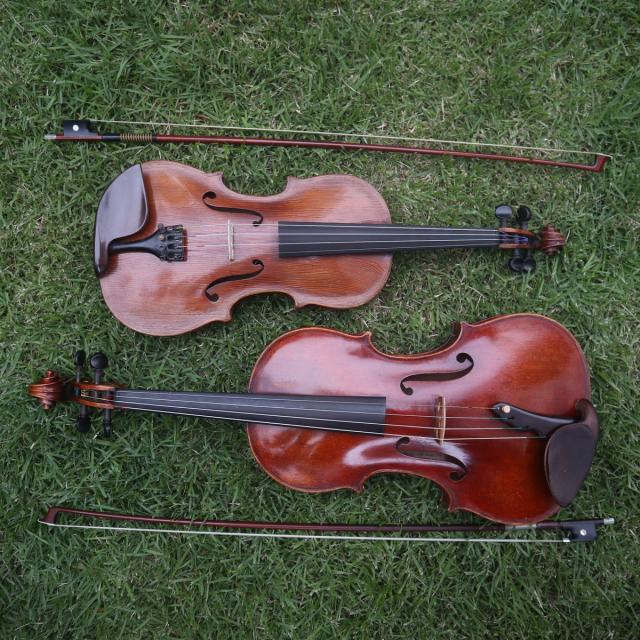
Esse curso visa fornecer informações sobre aspectos básicos da técnica do violino e da viola de arco. Ao longo de 18 aulas, com duração média de 7 minutos cada, serão abordados temas como posicionamento do instrumento, maneiras de posicionar a mão esquerda, como segurar o arco, como executar os principais golpes de arco, como estudar mudanças de posição, etapas para desenvolvimento do vibrato e sugestões para a organização do estudo diário do instrumento.

Oct 5th 2026
4 Weeks