The Art of Music Production (Coursera)

The Art of Music Production (Coursera)

Explore the art of record production and how to make recordings that other people will love listening to. This course will teach you how to make emotionally moving recordings on almost any recording equipment, including your phone or laptop. The emphasis is on mastering tangible artistic concepts; the gear you use is up to you. You will learn to develop the most important tool in the recording studio: your ears. You will learn to enhance every aspect of your own productions, both sonically and musically, by employing deeper listening skills.

Class Deals by MOOC List - Click here and see Coursera's Active Discounts, Deals, and Promo Codes.

Assignments will include posting your own recordings for peer review, and reviewing your classmates’ work by employing specific tools and strategies. If you use a digital audio workstation to record and mix, that’s great, but as long as you can record into your computer and post an MP3, you can complete the assignments.
As you learn about the art of record production in this 4-week course, you will also learn about yourself and who you are as an artist and producer. It is not necessary that you read music or play an instrument to take this course.
This course can be applied to multiple Specializations or Professional Certificates programs. Completing this course will count towards your learning in any of the following programs:

What You Will Learn

  • Discuss why one musical recording is more compelling than another and identify the unique elements of the recording that contribute to it
  • Begin to assess and establish your identity, vision, and intention as an artist and producer
  • Write and develop a compelling piece of music by utilizing various tools
  • Establish the sonic signature of your production by utilizing specific production techniques

Syllabus

WEEK 1
Welcome to The Art of Music Production
Welcome to The Art of Music Production! Before you begin the course, we will cover all the details about the course and what you'll need to know to get the most out of your experience.
Listening Like A Producer
By the end of this lesson, you’ll understand the concepts of listening to music emotionally and technically. Strategies for maintaining objectivity and using kinesthetic observations to discover musical effectiveness will be internalized. You’ll train yourself to make distinctions on what works and what doesn’t work, rather than just passively listening as a fan.

WEEK 2
Identity, Vision, and Intention
In this lesson, you’ll hone in on your identity as a recording artist: who are you, and what are you meaning to convey through your music? You’ll work on refining your vision and intention for the recordings you’ll make employing these skills, and record and post a “work tape” of a new piece of music.

WEEK 3
Strengthening Musical Productions: Tools & Strategies
By the end of this lesson, you will be able to employ several useful techniques for strengthening your songs and instrumental tracks. You’ll acquire skills in prosody, focus, and an intelligent approach to repetition. You’ll also learn to craft better melodies, write better lyrics, and construct a musical form that best suits the emotional contour you are trying to accomplish with your recording. You’ll understand the principles of getting the most out of feedback on your recordings, in order to gather valuable perspective to better convey your intended response. You’ll incorporate notes from your colleagues to further refine your recording and re-post an updated version.

WEEK 4
Defining the Sonic Signature of your Song
By the end of this lesson, you will address the sonic signature as it relates to your intention and vision, as well as your technology resources and acoustic space. You’ll learn about microphone techniques, getting good levels, and mixing with reverb, EQ and compression. You will record your material, having made some deliberate decisions about the sound of your record, and post your recording for peer review according to specific criteria.
Go to Class
MOOC List is learner-supported. When you buy through links on our site, we may earn an affiliate commission.

Related Courses

Guitar for Beginners (Coursera) Coursera
Berklee College of Music

Guitar for Beginners (Coursera)

Grasp the essentials needed to begin playing acoustic or electric guitar. You'll learn an easy approach to get you playing quickly, through a combination of exploring the instrument, performance technique, and basic music theory. For students who have long thought about picking up the acoustic or electric guitar, this course will provide an easy-access foundation that will get you playing.

Sep 28th 2026
5-12 Weeks
Music as Biology: What We Like to Hear and Why (Coursera) Coursera
Duke University

Music as Biology: What We Like to Hear and Why (Coursera)

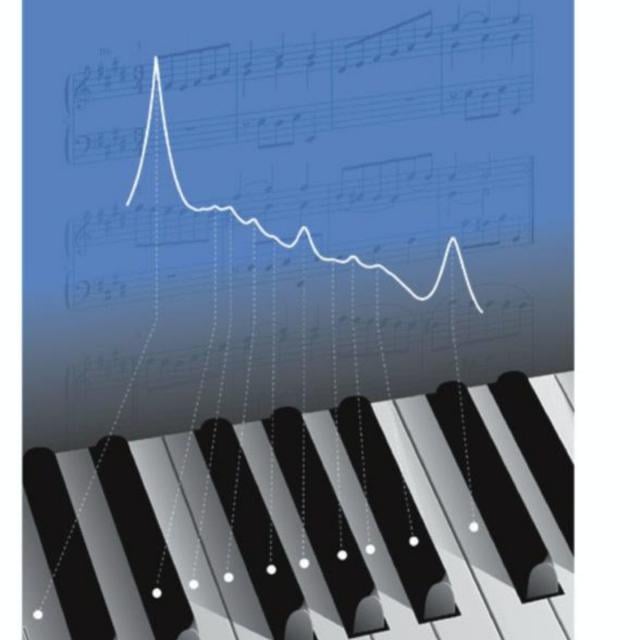
The course will explore the tone combinations that humans consider consonant or dissonant, the scales we use, and the emotions music elicits, all of which provide a rich set of data for exploring music and auditory aesthetics in a biological framework. Analyses of speech and musical databases are consistent with the idea that the chromatic scale (the set of tones used by humans to create music), consonance and dissonance, worldwide preferences for a few dozen scales from the billions that are possible, and the emotions elicited by music in different cultures all stem from the relative similarity of musical tonalities and the characteristics of voiced (tonal) speech.

Sep 21st 2026
5-12 Weeks
The Music of the Beatles (Coursera) Coursera
University of Rochester

The Music of the Beatles (Coursera)

The Music of the Beatles will track the musical development of the band, starting from the earliest days in Liverpool and Hamburg, moving through the excitement of Beatlemania, the rush of psychedelia, and the maturity of Abbey Road. While the focus will be on the music, we will also consider how recording techniques, the music business, the music of other artists, and the culture of the 1960s affected John, Paul, George, and Ringo as they created the Beatles repertory.

Sep 28th 2026
5-12 Weeks
Guitar Performance Techniques (Coursera) Coursera
Berklee College of Music

Guitar Performance Techniques (Coursera)

Your favorite guitarist didn't become your favorite guitarist without the support of other musicians. The most important skill for a guitarist to learn is the exact same skill that was so important in kindergarten: playing well with others. Guitar Performance Techniques gives guitarists the essential and practical skills to play well with others in any ensemble situation.

Sep 28th 2026
4 Weeks
Music and Social Action (Coursera) Coursera
Yale University

Music and Social Action (Coursera)

What is a musician’s response to the condition of the world? Do musicians have an obligation and an opportunity to serve the needs of the world with their musicianship? At a time of crisis for the classical music profession, with a changing commercial landscape, a shrinking audience base, and a contraction in the number of professional orchestras, how does a young musician construct a career today? Are we looking at a dying art form or a moment of reinvigoration?

Oct 5th 2026
5-12 Weeks
History of Rock, Part One (Coursera) Coursera
University of Rochester

History of Rock, Part One (Coursera)

This course, part 1 of a 2-course sequence, examines the history of rock, primarily as it unfolded in the United States, from the days before rock (pre-1955) to the end of the 1960s. This course covers the music of Elvis Presley, Chuck Berry, Phil Spector, Bob Dylan, the Beatles, the Rolling Stones, Jimi Hendrix, Cream, and many more artists, with an emphasis both on cultural context and on the music itself. We will also explore how developments in the music business and in technology helped shape the ways in which styles developed.

Sep 28th 2026
5-12 Weeks
Jazz Improvisation (Coursera) Coursera
Berklee College of Music

Jazz Improvisation (Coursera)

Learn the basic concepts of improvisation from Gary Burton, one of the most renowned improvisers in the jazz world, including the mental, melodic, and harmonic processes that contribute to the instinctive skills that an improviser puts to use when taking a solo. While many people are fans of jazz and understand that musicians are often “making up” the notes they are playing during a performance, most people—often including musicians, themselves, who are beginning to learn improvising—aren’t clear about what exact processes take place to enable this to happen. The purpose of this course is to introduce the basic concepts of modern improvisation and how to go about mastering the different musical and mental skills involved.

Oct 5th 2026
5-12 Weeks
So You Think You Know Tango? (Coursera) Coursera
Emory University

So You Think You Know Tango? (Coursera)

How well do you think you know tango? This two-week mini-course is designed for music lovers, musicians, and dancers who are interested in learning more about the Argentine Tango. It will explore the many dimensions of the Argentine Tango music, including its origins, popularization during the Golden Age, dissemination abroad, evolution into an artistic music-dance form, and adoption by Argentine and international art-music composers to date.

Sep 28th 2026
2 Weeks
Richard Schechner's Introduction to Performance Studies (Coursera) Coursera
New York University

Richard Schechner's Introduction to Performance Studies (Coursera)

Performance Studies: An Introduction explores the wide world of performance--from theatre, dance, and music to ritual, play, political campaigns, social media, and the performances of everyday life. Performance studies also ranges across cultures--Asia, Africa, the Caribbean, Europe, the Americas. And it spans historical periods from the art of the paleolithic caves to YouTube and the avantgarde. This course is devised by Richard Schechner, one of the pioneers of performance studies, in dialogue with more than a dozen expert scholars and artists.

Sep 28th 2026
13-24 Weeks