Origens da Vida no Contexto Cósmico (Coursera)

Origens da Vida no Contexto Cósmico (Coursera)

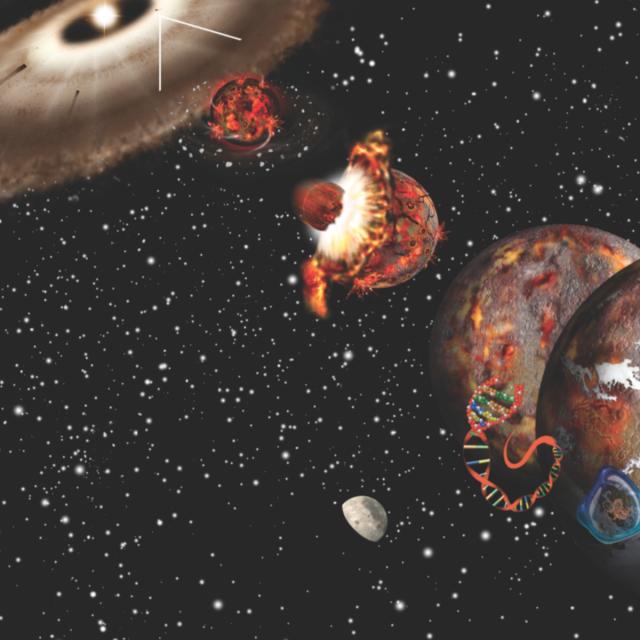
Origens da vida no contexto cósmico é um curso desenvolvido no Instituto de Astronomia, Geofísica e Ciências Atmosféricas da Universidade de São Paulo, com o objetivo de apresentar os mais recentes avanços científicos na compreensão deste intrigante assunto. É um curso com formato multidisciplinar que o levará a compreender melhor os aspectos envolvidos no surgimento de vida na Terra e no possível surgimento de vida em outros planetas.

Class Deals by MOOC List - Click here and see Coursera's Active Discounts, Deals, and Promo Codes.

Como o curso está sendo oferecido em sessões contínuas, não haverá interação dos professores no fórum.

Syllabus

WEEK 1
Olá! Nesta primeira semana do curso “Origens da vida no contexto cósmico” seremos guiados pelo fantástico espetáculo da diversidade da vida na Terra. Seria a vida fruto de um ato de criação ou o resultado de transformações químicas? E o nosso sistema solar? Sempre existiu? Sempre foi assim, ou surgiu em um determinado momento, por meio de processos cósmicos que poderíamos observar em outros pontos do universo? Compreenderemos um pouco melhor o que é o nosso universo e as escalas de distância envolvidas na medição dos grandes fenômenos cósmicos, como o nosso sistema solar, as galáxias e aglomerados. Será que podemos medir o tamanho do universo? E sua idade, seria possível sabermos o quão antigo é? Inicie sua jornada assistindo os vários vídeos que foram disponibilizados essa semana. Leia o artigo “Origens da vida”, que é um recurso extra muito importante para seu aprofundamento no curso. Em seguida faça o teste proposto. Estaremos esperando vocês em nosso fórum ! A grande jornada vai começar. Venha conosco!

WEEK 2
Já aprendemos sobre os cenários antagônicos que discutem a origem da vida. Vimos que nosso sistema solar surgiu como vestígio da formação do Sol, a nossa estrela, além disso, também pudemos compreender melhor as escalas empregadas na medição do universo. Nesta semana vamos compreender como os elementos químicos que constituem o Sol, os planetas e a nós mesmo foram formados. Compreenderemos um pouco melhor o processo de formação do sistema solar e dos corpos menores que o constituem, os cometas e asteroides, além disso vamos compreender a primeira forma experimental usada para simular e explicar a origem da vida na Terra – o experimento de Urey e Miller – e porque este experimento falhou nesta explicação. Ainda há muito o que aprendermos. Vamos lá, nos vemos no fórum!

WEEK 3
Olá! Preparados para continuarmos em nossa jornada do conhecimento? Antes de mais nada, vamos recapitular que na última semana tratamos de assuntos de extrema importância, como cometas, meteoritos e o experimento de Urey e Miller. Nesta semana vamos usar nossa habilidade de detetives: buscando pistas que nos levam a reconstruir a história da vida na Terra. Será que encontraremos com facilidade estas evidências? Onde estariam? Seria possível estuda-las? Será que a vida na origem era similar a vida tal qual a conhecemos hoje? Talvez as coisas não sejam tão elementares, meu caro Watson! Nos vemos no fórum.

WEEK 4
Estamos chegando ao final de nossa jornada. Vimos, na última semana, as grandes dificuldades envolvidas na tentativa de reconstrução da vida até seus primórdios em nosso planeta, mas será que a vida que conhecemos na Terra seria a única forma de vida possível? Será que novos instrumentos de observação e prospecção do espaço poderiam nos dar mais pistas sobre a compreensão da vida em um contexto mais amplo? Exoplanetas, grandes telescópios e a compreensão da vida como um fenômeno cósmico serão os grandes temas desta semana, mas lembrem-se, o final desta jornada é o início de outra jornada. Agora é com você !
Go to Class
MOOC List is learner-supported. When you buy through links on our site, we may earn an affiliate commission.

Related Courses

Mechanics: Motion, Forces, Energy and Gravity, from Particles to Planets (Coursera) Coursera
UNSW Sydney - University of New South Wales

Mechanics: Motion, Forces, Energy and Gravity, from Particles to Planets (Coursera)

Most of the phenomena in the world around you are, at the fundamental level, based on physics, and much of physics is based on mechanics. Mechanics begins by quantifying motion, and then explaining it in terms of forces, energy and momentum. This allows us to analyse the operation of many familiar phenomena around us, but also the mechanics of planets, stars and galaxies.

Aug 17th 2026
5-12 Weeks
From the Big Bang to Dark Energy (Coursera) Coursera
The University of Tokyo

From the Big Bang to Dark Energy (Coursera)

We have learned a lot recently about how the Universe evolved in 13.7 billion years since the Big Bang. More than 80% of matter in the Universe is mysterious Dark Matter, which made stars and galaxies to form. The newly discovered Higgs-boson became frozen into the Universe a trillionth of a second after the Big Bang and brought order to the Universe.

Aug 10th 2026
4 Weeks
Control of Nonlinear Spacecraft Attitude Motion (Coursera) Coursera
University of Colorado Boulder

Control of Nonlinear Spacecraft Attitude Motion (Coursera)

This course trains you in the skills needed to program specific orientation and achieve precise aiming goals for spacecraft moving through three dimensional space. First, we cover stability definitions of nonlinear dynamical systems, covering the difference between local and global stability. We then analyze and apply Lyapunov's Direct Method to prove these stability properties, and develop a nonlinear 3-axis attitude pointing control law using Lyapunov theory. Finally, we look at alternate feedback control laws and closed loop dynamics.

Aug 3rd 2026
4 Weeks
The Sun and the Total Eclipse of August 2017 (Coursera) Coursera
University of Colorado Boulder

The Sun and the Total Eclipse of August 2017 (Coursera)

A total eclipse is one of the most spectacular sights you can ever see! It looks like the end of the world may be at hand. There is a black hole in the sky where the sun should be. Pink flames of solar prominences and long silver streamers of the sun's corona stretch across the sky. It gets cold, and animals do strange things. People scream and shout and cheer, and remember the experience their whole life. But total eclipses are important scientifically as well.

Aug 3rd 2026
5-12 Weeks
Magic in the Middle Ages (Coursera) Coursera
University of Barcelona

Magic in the Middle Ages (Coursera)

Magical thought has always attracted human imagination. In this course we will introduce you to the Middle Ages through a wide conception of magic. Students will have an approach to medieval culture, beliefs and practices from the perspective of History and History of Science. Popular magic, as well as learned magic (alchemy, geomancy and necromancy) will be addressed. Moreover, we will also deal with how eastern practices and texts influenced western culture. In July 2016, the course will contain a brand-new module devoted to astrology. Magic in the Middle Ages offers a captivating overview of medieval society and promotes reflection about certain stereotypes associated with this period.

Aug 17th 2026
5-12 Weeks
Global Warming I: The Science and Modeling of Climate Change (Coursera) Coursera
University of Chicago

Global Warming I: The Science and Modeling of Climate Change (Coursera)

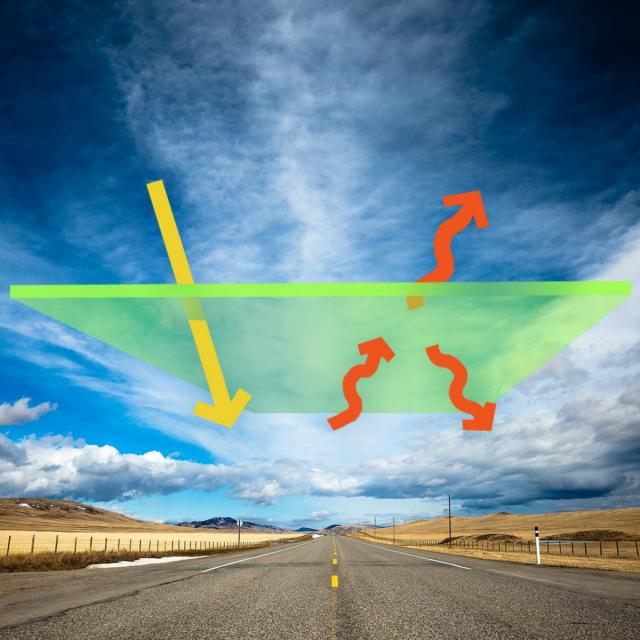
This class describes the science of global warming and the forecast for humans’ impact on Earth’s climate. Intended for an audience without much scientific background but a healthy sense of curiosity, the class brings together insights and perspectives from physics, chemistry, biology, earth and atmospheric sciences, and even some economics—all based on a foundation of simple mathematics (algebra).

Jul 27th 2026
5-12 Weeks
Quantum Optics 1 : Single Photons (Coursera) Coursera
École Polytechnique

Quantum Optics 1 : Single Photons (Coursera)

This course gives you access to basic tools and concepts to understand research articles and books on modern quantum optics. You will learn about quantization of light, formalism to describe quantum states of light without any classical analogue, and observables allowing one to demonstrate typical quantum properties of these states. These tools will be applied to the emblematic case of a one-photon wave packet, which behaves both as a particle and a wave.

Aug 10th 2026
5-12 Weeks
Deep Time: Discovering an Ancient Earth (Coursera) Coursera
University of Colorado Boulder

Deep Time: Discovering an Ancient Earth (Coursera)

Ever since our ancestors ventured onto the African savanna, human beings have searched, explored, and wondered about the world. Nowadays, and certainly for most, science is the vehicle that takes us along a path towards understanding nature. It can bring us from sub-atomic realms to the most distant galaxies. Largely through the discipline of geology, science allows us to push back the mists of time and peer into a past measured in billions of years, and aptly referred to as “Deep Time.” Climb on board!

Aug 3rd 2026
4 Weeks
Introduction to Sustainability (Coursera) Coursera
University of Illinois at Urbana-Champaign

Introduction to Sustainability (Coursera)

This course introduces the academic approach of Sustainability and explores how today’s human societies can endure in the face of global change, ecosystem degradation and resource limitations. The course focuses on key knowledge areas of sustainability theory and practice, including population, ecosystems, global change, energy, agriculture, water, environmental economics and policy, ethics, and cultural history.

Aug 3rd 2026
5-12 Weeks
Big History - From the Big Bang until Today (Coursera) Coursera
University of Amsterdam

Big History - From the Big Bang until Today (Coursera)

Welcome to this Big History course! In this course, renowned scientists and scholars from the University of Amsterdam and beyond will take you on a journey from the Big Bang until today while addressing key questions in their fields. After completing this journey you will have developed a better understanding of how you and everything around you became the way they are today.

Aug 3rd 2026
4 Weeks
Understanding Einstein: The Special Theory of Relativity (Coursera) Coursera
Stanford University

Understanding Einstein: The Special Theory of Relativity (Coursera)

In this course we will seek to “understand Einstein,” especially focusing on the special theory of relativity that Albert Einstein, as a twenty-six year old patent clerk, introduced in his “miracle year” of 1905. Our goal will be to go behind the myth-making and beyond the popularized presentations of relativity in order to gain a deeper understanding of both Einstein the person and the concepts, predictions, and strange paradoxes of his theory.

Aug 10th 2026
5-12 Weeks