At the Origins of the Mediterranean Civilization: Archaeology of the City from the Levant to the West - 3rd-1st millennium BC (Coursera)

At the Origins of the Mediterranean Civilization: Archaeology of the City from the Levant to the West - 3rd-1st millennium BC (Coursera)

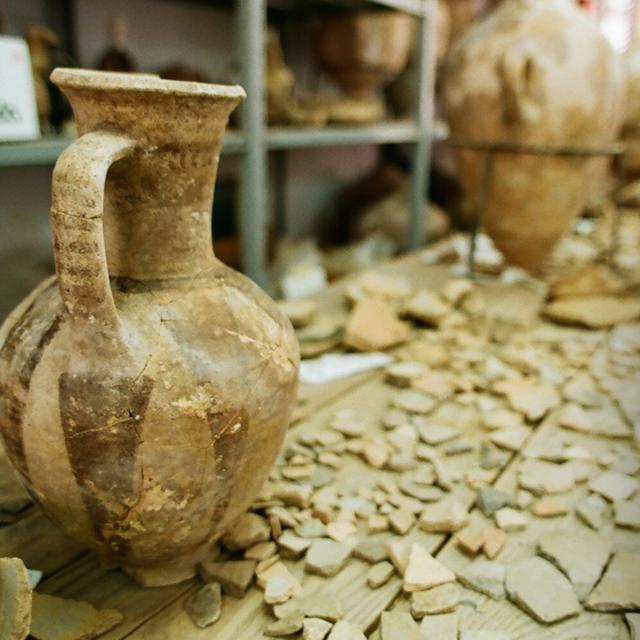
Which are the deepest roots of that mix of cultures that we use to call ‘Mediterranean Civilization’? Which are comminglings and exchanges which produced its most complete fruit, i.e. the city, a place for landscape-modelling communities? And which elements did contribute to build up that baulk of customs, ideas, and innovations which compelled to confrontation and hybridizations different peoples for millennia? What did it made, from pottery to metallurgy, from gastronomy to architecture, from art to religion, of a sea a cradle of civilization? Archaeology may help in disentangling such questions, seeking unexpected answers , by tinkering what ancient Mediterranean peoples left buried in the ground.

Class Deals by MOOC List - Click here and see Coursera's Active Discounts, Deals, and Promo Codes.

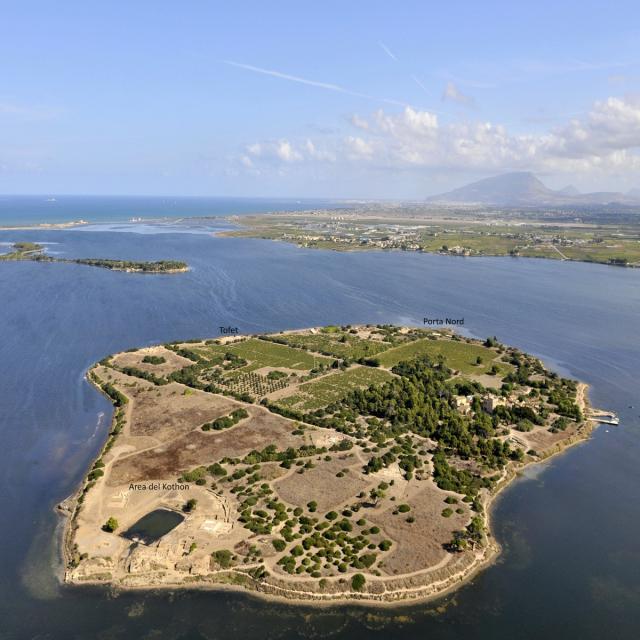
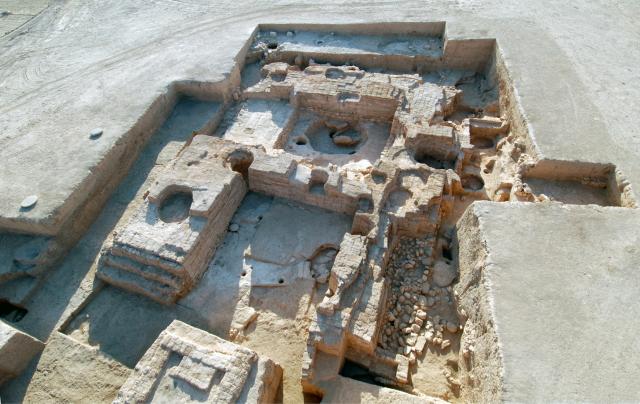
A privileged point of view of our course is the ancient Phoenician city of Motya, located exactly at the centre of the “sea in the middle”. Throughout the live experience of excavation, with images taken on the field, this course will let you touch the many tesserae of the great mosaic of the Mediterranean Civilization. The field diary of the archaeologist, and the handpick will be the two tools, which will lead us across the sea to discover what such early cities actually were, and how their contribute is still a major part of our shared memory.

Syllabus

WEEK 1: Towards the West
WEEK 2: Concept of the city
WEEK 3: Discovering Motya
WEEK 4: Life and Ideology
WEEK 5: Stars sparkling in the waters
WEEK 6: An Identity to share
WEEK 7: A changing society
WEEK 8: Portrait of an harbour city
Go to Class
MOOC List is learner-supported. When you buy through links on our site, we may earn an affiliate commission.

Related Courses

Introduction to Archaeology: Knowing The Past (Coursera) Coursera
Rice University

Introduction to Archaeology: Knowing The Past (Coursera)

This course is an introduction to a series on the discipline of Archaeology. It is intended for learners at all stages, including advanced high school, college students, or life-long learners. Basic information about Archaeology and its history are presented in this course, while the following three courses cover scientific methods, forms of interpretation, and contemporary social issues that archaeologists engage with.

Aug 3rd 2026
4 Weeks
Forensic Archaeology and Anthropology (FutureLearn) FutureLearn
Durham University

Forensic Archaeology and Anthropology (FutureLearn)

Enter the fascinating world of forensics, and learn how the deceased are located, recovered and analysed using DNA and pathology. Learn the science behind the exhumation and identification of skeletal remains. The location, exhumation and identification of the dead requires highly specialised expertise. On this course, you’ll learn the latest scientific techniques for body location, recovery and analysis.

Self Paced
5-12 Weeks
Ancient topography, relief and technical analysis of ancient monuments (UNINETTUNO) UNINETTUNO OpenupEd
International Telematic University UNINETTUNO

Ancient topography, relief and technical analysis of ancient monuments (UNINETTUNO)

The course aims to define the goals and the systematic methodological research related to a discipline of historical and archaeological area, such as the Ancient Topography, Survey and technical analysis of ancient monuments, in order to reconstruct the shape and meaning of the ancient anthropic contexts, through the traces that remain in modern urban landscapes.

Self Paced Course - Start anytime
Self-Paced
The Changing Landscape of Ancient Rome. Archaeology and History of the Palatine Hill (Coursera) Coursera
Sapienza University of Rome

The Changing Landscape of Ancient Rome. Archaeology and History of the Palatine Hill (Coursera)

Studying ancient - as well as medieval or modern - cities basically means telling local urban stories based on the reconstruction of changing landscapes through the centuries. Given the fragmentary nature of archaeological evidence, it is necessary to create new images that would give back the physical aspect of the urban landscape and that would bring it to life again. We are not just content with analyzing the many elements still visible of the ancient city.

Aug 17th 2026
5-12 Weeks
Biblical Archaeology: The archaeology of ancient Israel and Judah (edX) EdX
IsraelX

Biblical Archaeology: The archaeology of ancient Israel and Judah (edX)

Join me as I share with you my passion for archaeological discovery and learn about the exciting methods of modern archaeology. Explore how archaeology illuminates biblical Israel and Judah, and the archaeological finds relate to the bible. Join me for an introductory course on biblical archaeology of ancient Israel and Judah during the Iron Age (ca. 1200-586 BCE).

Nov 1st 2022
5-12 Weeks
Sustainable Food Systems: A Mediterranean Perspective (edX) EdX
SDGAcademyX,SDG Academy

Sustainable Food Systems: A Mediterranean Perspective (edX)

How do we produce more, better quality, and safer food while simultaneously achieving social and environmental goals? The Mediterranean region is one of the most biodiverse in the world, home to a complex and intricate patchwork of cultures, climates, and cuisines. Food systems in the region -- represented worldwide by the "Mediterranean diet" -- are equally complex, demanding analysis across the political, social, cultural, economic and nutritional spectrums from landscape to table.

Self Paced
Self-Paced
Discover Palestine (An-Najah National University) Other Providers
An-Najah National University

Discover Palestine (An-Najah National University)

Discover Palestine is the first English language certified Massive Open Online Course (MOOC) about Palestinian history, archaeology, culture, and heritage.
 Discover Palestine will explore the ancient land of Palestine. We will learn about the geographical and ecological makeup of the land, the different types of agriculture and water installations that have been adopted by various groups over the centuries, as well as trade and other relations between groups. We will also learn about the art, architecture and technology of the different periods covered by this course.

No sessions available
5-12 Weeks
Magic in the Middle Ages (Coursera) Coursera
University of Barcelona

Magic in the Middle Ages (Coursera)

Magical thought has always attracted human imagination. In this course we will introduce you to the Middle Ages through a wide conception of magic. Students will have an approach to medieval culture, beliefs and practices from the perspective of History and History of Science. Popular magic, as well as learned magic (alchemy, geomancy and necromancy) will be addressed. Moreover, we will also deal with how eastern practices and texts influenced western culture. In July 2016, the course will contain a brand-new module devoted to astrology. Magic in the Middle Ages offers a captivating overview of medieval society and promotes reflection about certain stereotypes associated with this period.

Aug 17th 2026
5-12 Weeks
Osteoarchaeology: The Truth in Our Bones (Coursera) Coursera
Leiden University

Osteoarchaeology: The Truth in Our Bones (Coursera)

This course is about what we can learn from examining the human skeleton, and how we can use this knowledge to reconstruct the lives of people who lived in the past. In archaeology and anthropology, human skeletal remains can provide unique insights into the past and the present; insights that cannot be gained otherwise.

May 15th 2023
5-12 Weeks