Visualizing Women's Work: Using Art Media for Social Justice (Coursera)

Visualizing Women's Work: Using Art Media for Social Justice (Coursera)

Discover the historical erasure of women’s work through social justice art. Public art has often ignored the work and legacy of minorities and women, but recently there has been a welcome reappraisal of publicly displayed visual monuments and art media. This course dives into the artistic process, exploring how art has the power to address issues of social justice and gender equality and answer historic injustices.

Class Deals by MOOC List - Click here and see Coursera's Active Discounts, Deals, and Promo Codes.

Critique art history through the lens of gender
You’ll begin the course by evaluating public monuments in terms of form, content, and context, undertaking a critical analysis of art through a social justice lens.
With a focus on both the local and global picture, you’ll address the historical erasure of women’s work – compensated and uncompensated – learning about the role of gender bias in historical public art.
Examine the creative process and creative research
The course will also give you a foundation in visual literacy and interpretation, as you explore the artistic process and creative practice as a form of research.
You’ll then learn how to develop your own media-based or literary projects that respond to gender bias in public commemoration.
Examine real-world examples of social justice art projects
On the final sections of the course, you’ll identify and interpret existing art-based social justice projects in a variety of media, including site-specific work and web-based initiatives.
Learning alongside world-renowned visual and performance artist Melanie Manos, you’ll come away armed with creative and provocative ways to counter historical erasure in public art.

What You Will Learn
How to describe the role of gender bias in historical public art and design and how it perpetuates cultural norms of gender inequity, such as "work"

Syllabus

WEEK 1
Visual Literacy
This week introduces you to the foundational skills for interpreting visual art. You’ll learn terms and concepts utilized to identify, describe, and classify art. In the process, you’ll gain vocabulary for discussing art disciplines and media, and learn how artists' motivations are key to understanding works of art - a great primer for unpacking the complexities of social justice art.

WEEK 2
Art and Social Justice
This week you’ll view art projects that aim to increase the visibility of social justice issues and raise public consciousness, each in a remarkably distinct way. You’ll read about the role of research in art making, view some stretchy materials-based research - and be invited to try some material explorations right where you are! Lastly, you’ll utilize your new art vocabulary to analyze publicly displayed visual markers and monuments that march us into week 3.

WEEK 3
Gender Bias
This week you’ll see artists utilizing visuals, actions and interventions to raise awareness of socially and structurally normalized gender bias, including a highly strategic, non-violent guerrilla offensive! You'll also return to historic monuments in Detroit, Michigan, U.S., to evaluate the value systems that these elevated cultural representatives convey, including a tacit but monumental perpetuation of gender bias and see a great hypocrisy unfolding between a Japanese artist arrested for distributing vagina figurines, while huge phallus sculptures are paraded annually at a traditional - and popular - public festival!

WEEK 4
Visualizing Women's Work

Go to Class
MOOC List is learner-supported. When you buy through links on our site, we may earn an affiliate commission.

Related Courses

International Labour Law (Coursera) Coursera
Saint Petersburg State University

International Labour Law (Coursera)

In an interconnected world, international labour law is vital for securing workers’ rights and dealing with the negative effects of globalization. In this course, we will tell you the story of international labour law and human rights at work in an accessible, clear and comprehensive way. This basic course is designed for a wide audience: for people interested in labour law, human rights, corporate social responsibility, social policy, labour management and the functioning of international organizations.

Jul 25th 2022
5-12 Weeks
'Their' World and How You Define It (Coursera) Coursera
University of Colorado Boulder

'Their' World and How You Define It (Coursera)

Thriving organizations strive for equity at all levels. Dynamic global DEI initiatives strengthen connectivity within individual teams and foster cross-cultural collaboration and mutual understanding while encouraging the inclusion of employees from all regions. Broader global relations aside, there also exist country-specific ethnic dynamics that make DEI a critical conversation. Global dynamics present a possible risk (and opportunity) for organizations. In this course, we will develop a more profound knowledge and understanding of diverse groups by hearing actual accounts from various marginalized populations and adopting an approach of first looking inward, then confronting ignorances, biases, and stereotypes of marginalized populations, and ending each lesson with a personal reflection.

Nov 9th 2026
5-12 Weeks
Areas of Social Work Practice (edX) EdX
University of Alaska Fairbanks,AlaskaX

Areas of Social Work Practice (edX)

This course will orient the learner to the context for social work, including the diversity of human needs, human services, social policy, and legislation. Learners will also gain information about social services, social programs, and career opportunities within rural and urban Alaska, as well as nationally.

Self Paced
Self-Paced
Female Genital Mutilation (FGM): Health, Law, and Socio-Cultural Sensitivity (FutureLearn) FutureLearn
University of Aberdeen

Female Genital Mutilation (FGM): Health, Law, and Socio-Cultural Sensitivity (FutureLearn)

Understand the many impacts of FGM and the legal duty of a health and social care professional in reporting FGM practices. Help bridge the gap between FGM and medical education. FGM causes devastating mental and physical health impacts. Yet a gap in education on FGM has led to a lack of confidence among health care professionals to deal with this harmful practice. On this four-week course, you’ll build your understanding of Female Genital Mutilation to help you recognise and report indicators of FGM or plans to inflict it.

Self Paced
4 Weeks
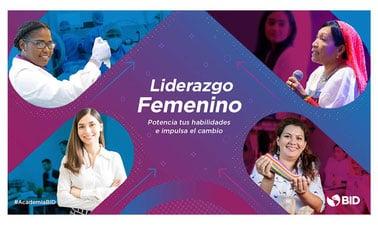
Liderazgo femenino: potencia tus habilidades e impulsa el cambio (edX) EdX
Inter-American Development Bank - IDB,IDBx

Liderazgo femenino: potencia tus habilidades e impulsa el cambio (edX)

Construye tu plan individual de desarrollo personal, fortalece tus habilidades intrapersonales y comunicacionales y consigue potenciar tu liderazgo. ¿Sabes cuál es tu estilo de liderazgo? ¿Te gustaría desarrollar o fortalecer habilidades de liderazgo con un enfoque de género?¿Conoces cómo se encuentran los países de América Latina y el Caribe en temas de liderazgo femenino o cuál es la importancia de que más mujeres asuman cargos de toma de decisiones en la región?

Self Paced
Self-Paced
Forced Marriage: Challenges and Dilemmas (FutureLearn) FutureLearn
University of Strathclyde

Forced Marriage: Challenges and Dilemmas (FutureLearn)

Develop your knowledge of human rights and societal issues as you explore the impact of forced marriage and measures to combat it. Learn how to define forced marriages. Forced marriage is recognised internationally as a violation of women and children’s human rights and as a form of violence against women. This course will explore the meaning and impact of forced marriage on the individual and communities where it takes place.

May 30th 2022
4 Weeks
Cultural impact of housing displacement gentrification (Coursera) Coursera
University of Glasgow

Cultural impact of housing displacement gentrification (Coursera)

This course provides an introduction to gentrification and to the cultural impacts of housing displacement for people in cities and neighbourhoods across the world. Gentrification is a term which has been used to describe the process by which wealthier people move into an area leading to the displacement of poorer groups who are priced out of the area by increases in rents and housing prices. It is usually associated with physical improvements to the housing stock and to changes in local shops and services. Sometimes it is closely associated with the displacement of black people by white people.

Nov 16th 2026
4 Weeks
Pets, Politics and Pandemics (Coursera) Coursera
Columbia University

Pets, Politics and Pandemics (Coursera)

This course is designed to be a fun and accessible introduction to the topic of systems theory. Systems theory describes a number of fundamental concepts that undergird a broad array of phenomena across many different social, political and natural arenas. It is from this broad applicability that the course derives its title: Pets (social), politics (political and economic) and Pandemics (natural).

Nov 2nd 2026
5-12 Weeks
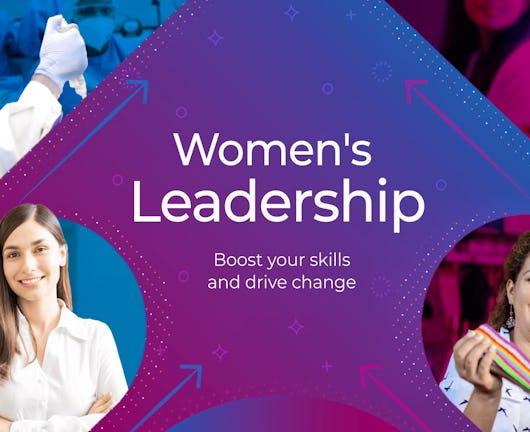
Women's Leadership: Boost your skills and drive change (Coursera) Coursera
Inter-American Development Bank - IDB

Women's Leadership: Boost your skills and drive change (Coursera)

In this course, you will be able to learn about the importance of female leadership in Latin America and the Caribbean for the growth and development of economies, democracies, and societies. It focuses on gender equality as a fundamental pillar for sustainable and inclusive growth in the region.

Nov 23rd 2026
5-12 Weeks
Foundations of Diversity, Equity, and Inclusion (Coursera) Coursera
Parsons School of Design, The New School

Foundations of Diversity, Equity, and Inclusion (Coursera)

In this course, you will explore questions such as: Who is represented in your workplace, and who is not? Who doesn’t feel heard, and why not? Are we treating one another equitably? What history has led us here? What has brought all of these issues to the forefront of society today? You will analyze the complex, multifaceted concept of justice and its role in determining society’s ability to be diverse, equitable, and inclusive. You will explore concepts from different disciplines, including sociology, media, communications, history, and education. This course will equip you with solid foundational knowledge of diversity, equity, and inclusion that can provide a useful framework for application in professional contexts.

Oct 7th 2024
4 Weeks
Love as a Force for Social Justice (Coursera) Coursera
Stanford University

Love as a Force for Social Justice (Coursera)

This course will explore the concept of agape love (compassion/kindness) as a force for social justice and action and as the inspiration for service and the application of knowledge to positive social change. Biological, psychological, religious, and social perspectives of love will be discussed, drawing on the expertise of people from a variety of disciplines.

Nov 16th 2026
5-12 Weeks