Food, the Connector of Life (CanopyLAB)

Offered by The Mindful Kitchen,
Food, the Connector of Life (CanopyLAB)

Without food, there would be no life. Without life, there would be no food. Is it a positive or negative loop? The answer makes the difference between eating for survival and eating to thrive. Learn how our decisions about how to feed ourselves continue to shape our culture, our cities, global political and economic stability, climate change, human equality and societal wellbeing.

Unit 1: Food and Civilization
Unit 2: Food and the City
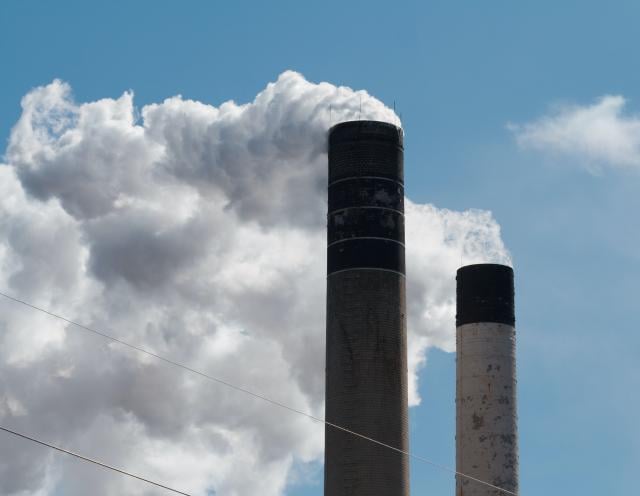
Unit 3: Food and Climate Change
Unit 4: Food and Peace
Unit 5: Food and Equality
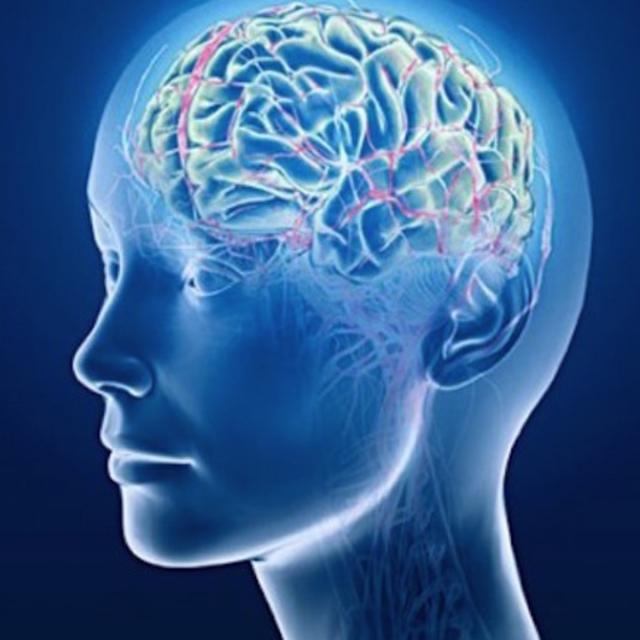
Unit 6: Food and MentalnWellbeing

You are what you eat. What does that phrase mean to you? In this course, we will dig deep into the exploration of this question and reveal how food is a connector of life (both human and non-human life) in ways that extend far beyond the obvious.
The cultivation, processing, distribution, purchase, serving and consumption of food defines what it is to be human in ways that far exceed providing us with energy and nutrition. Whilst we will be touching on the sciences of biology and climatology, as this course is an exploration of how humanity’s quest for food security has shaped and is shaped by our political, economic, social and ecological systems, our focus will mainly be on how we use the humanities and social sciences to help us to better understand scientific discovery and shape new problems (or questions) that lead to discoveries that have the potential to create a more equitable and resilient world for all forms of life.
I have shaped this course in the spirit of my understanding of renowned Harvard Evolutionary Biologist Edward O. Wilson´s explanation of the interdependency of the sciences and the humanities: “Humanists are the shamans of the intellectual tribe, wise (humans) who interpret knowledge and transmit folklore, rituals and sacred texts. Scientists are the scouts and the hunters.” I invite you to come with me on a journey to understand how food is the connector of life as we know it, and how our relationship to food plays a critical role in shaping life in the future. We will be exploring the intersection of food and anthropology, urban studies, climatology, economics, political science, peace studies, human rights, sociology and psychology. Along the way, you will develop your skill as both scout and shaman. Talk about food for thought!

Go to Class
MOOC List is learner-supported. When you buy through links on our site, we may earn an affiliate commission.

Related Courses

ROMA: A Discussion of Diversity and the Treatment of Minorities in Europe (CanopyLAB) CanopyLAB
Humanity in Action, Denmark

ROMA: A Discussion of Diversity and the Treatment of Minorities in Europe (CanopyLAB)

Learning about the Roma experience in Europe is not only about learning history. It is about understanding the presence, and it is also an insight into a common European future. Konstanty Gebert analyses the Roma people’s past and present and discusses issues of race, identity, integration and discrimination that are at the forefront of contemporary European politics.

Self Paced
Self-Paced
Global Postharvest Loss Prevention: Fundamentals, Technologies, and Actors (Coursera) Coursera
University of Illinois at Urbana-Champaign

Global Postharvest Loss Prevention: Fundamentals, Technologies, and Actors (Coursera)

This course provides an overview of the issue of postharvest loss of grains by exploring essential physical, technical, and social dimensions of postharvest supply chains and loss prevention methods globally. Each year, estimates suggest that 1/3 of all food produced is lost or wasted, making postharvest loss a critical global food security and sustainability issue of today. Key knowledge areas are presented including: an overview of postharvest loss; supply chain activities such as harvesting, drying, and storage; economics and markets; an introduction to the network of actors working in this field.

Jun 1st 2026
4 Weeks
Inequality and Democracy (Coursera) Coursera
Universiteit Utrecht

Inequality and Democracy (Coursera)

Most countries are getting more and more unequal. But the core of democracy is political equality: that everyone should have an equal say in how their country is run. Can we really expect these things to go together? Can people have equal political power while economic inequality grows and grows? Take this course and decide for yourself.

Jun 1st 2026
5-12 Weeks
Sustainable Development Goal 8: Decent Work and Economic Growth (CanopyLAB) CanopyLAB
SDG LAB

Sustainable Development Goal 8: Decent Work and Economic Growth (CanopyLAB)

This course aims at introducing you to Goal 8: Decent Work and Economic Growth. In Unit 1, we will take a look at what this goal means, and why the UN views it as an important goal for sustainable development. In Unit 2, we will focus on the targets set under Goal 8, and some real-world examples of how governments and businesses are doing their part to achieve the goal by 2030. In Unit 3, we will look at the organizations and figures who are making great contributions to Goal 8 and what we can learn from their dedication and approaches. Finally, in Unit 4, you will get the opportunity to take the reigns and become a champion of Goal 8 yourself.

Self Paced
Self-Paced
De-Mystifying Mindfulness (Coursera) Coursera
Leiden University

De-Mystifying Mindfulness (Coursera)

Interest in meditation, mindfulness, and contemplation has grown exponentially in recent years. Rather than being seen as mystical practices from ancient Buddhism or esoteric philosophy, they are increasingly seen as technologies rooted in evidence from psychology and neuroscience. Mindfulness has become the basis for numerous therapeutic interventions, both as a treatment in healthcare and as a means of enhancing well-being and happiness. For millions around the world, mindfulness has become a life-style choice, enhancing and enriching everyday experience. Mindfulness is big business.

Jun 1st 2026
5-12 Weeks
Cities are back in town : urban sociology for a globalizing urban world (Coursera) Coursera
Sciences Po

Cities are back in town : urban sociology for a globalizing urban world (Coursera)

Urbanization is reaching a new peak in the contemporary world with the rise of mega cities. Researchers try to make sense of these large urban areas using a variety of concepts. The class will review debates and present social science models of cities to analyse and compare contemporary developments. The class will review debates and present social science models of cities and metropolis to analyse and compare contemporary developments.

Jun 1st 2026
5-12 Weeks
Sustainable Development Goal 15: Life On Land (CanopyLAB) CanopyLAB
SDG LAB

Sustainable Development Goal 15: Life On Land (CanopyLAB)

Humans rely heavily on agriculture, both as an economic resource and for social development. It is what brings food to the table and it is also an important source of income for many families and countries, especially in Africa and Latin America. At the same time, natural resources such as water, forests and animal life are being threatened by human activities, with consequences ranging from drought and deterioration of land to poaching and trafficking of wildlife. To combat these requires a concerted effort that restore land and wildlife to health and use these resources responsibly going forward for food production and economic development. In this course, you will learn about the challenges facing our land, what is being done around the world, and how you can help protect the Earth and promote Goal 15.

Self Paced
Self-Paced
Questionnaire Design for Social Surveys (Coursera) Coursera
University of Michigan

Questionnaire Design for Social Surveys (Coursera)

This course will cover the basic elements of designing and evaluating questionnaires. We will review the process of responding to questions, challenges and options for asking questions about behavioral frequencies, practical techniques for evaluating questions, mode specific questionnaire characteristics, and review methods of standardized and conversational interviewing.

Jun 1st 2026
5-12 Weeks
Sustainable Development Goal 2: Zero Hunger (CanopyLAB) CanopyLAB
SDG LAB

Sustainable Development Goal 2: Zero Hunger (CanopyLAB)

The course will walk you through the content and targets of the Sustainable Development Goals 2 titled “Zero Hunger”, and provide you with information on how different UN agencies, civil society, governments, the private sector, and education/research institutes work to achieve this goal. But it does not stop there. Through the course, you will gain not only important knowledge but also skills to help you champion this goal and take action to bring about the end of hunger by 2030.

Self Paced
Self-Paced
Positive Psychology: Martin E. P. Seligman’s Visionary Science (Coursera) Coursera
University of Pennsylvania

Positive Psychology: Martin E. P. Seligman’s Visionary Science (Coursera)

Dr. Martin E.P. Seligman—renowned worldwide as the “father of Positive Psychology”—has led visionary leaps in the scientific research, empirical data and personal understandings of human flourishing. This course explores the past, present and future of positive psychology as a journey through the key scientific leaps led by Dr. Seligman and his colleagues at the University of Pennsylvania's Positive Psychology Center and Master of Applied Positive Psychology program.

Jun 1st 2026
4 Weeks
Sustainable Development Goal 11: Sustainable Cities and Communities (CanopyLAB) CanopyLAB
SDG LAB

Sustainable Development Goal 11: Sustainable Cities and Communities (CanopyLAB)

This course aims at providing you with a deeper understanding of the reasons why the United Nations chose to focus on Sustainable Cities and Communities as an important goal for sustainable development. In Unit 1, we look at the issues cities around the world are facing. In Unit 2, we focus on the targets set under this goal and the progress made so far. In Unit 3, we go around the world to see what different countries, cities, and communities are doing to become more sustainable. Finally, in Unit 4 we give you the opportunity to take the reigns and become the champion of Goal 11.

Self Paced
Self-Paced
Firm Level Economics: Consumer and Producer Behavior (Coursera) Coursera
University of Illinois at Urbana-Champaign

Firm Level Economics: Consumer and Producer Behavior (Coursera)

All goods and services are subject to scarcity at some level. Scarcity means that society must develop some allocation mechanism – rules to determine who gets what. Over recorded history, these allocation rules were usually command based – the king or the emperor would decide. In contemporary times, most countries have turned to market based allocation systems. In markets, prices act as rationing devices, encouraging or discouraging production and encouraging or discouraging consumption in such a way as to find an equilibrium allocation of resources.

Jun 1st 2026
4 Weeks