Sustainable Development Goal 11: Sustainable Cities and Communities (CanopyLAB)

Offered by SDG LAB,
Sustainable Development Goal 11: Sustainable Cities and Communities (CanopyLAB)

This course aims at providing you with a deeper understanding of the reasons why the United Nations chose to focus on Sustainable Cities and Communities as an important goal for sustainable development. In Unit 1, we look at the issues cities around the world are facing. In Unit 2, we focus on the targets set under this goal and the progress made so far. In Unit 3, we go around the world to see what different countries, cities, and communities are doing to become more sustainable. Finally, in Unit 4 we give you the opportunity to take the reigns and become the champion of Goal 11.

What would your ideal city or living community look like? More skating ramps, larger parks, better malls? Goal#11 actually takes all of these big ideas into consideration and relates them to safety, sustainability, resilience and inclusivity. This course gives you a glimpse into the future of cities (that is actually already here) and an eye-opener about cities that are actually slowly killing its inhabitants.
Make an impact on your home and planet- take action!

Unit 1 - Introduction to Goal 11: Sustainable Cities and Communities
Unit 2 - The Targets of Goal 11: Sustainable Cities and Communities
Unit 3 - A Progress Check on Goal 11
Unit 4 - What Can You Do to Promote Goal 11?
Go to Class
MOOC List is learner-supported. When you buy through links on our site, we may earn an affiliate commission.

Related Courses

Energy, Environment, and Everyday Life (Coursera) Coursera
University of Illinois at Urbana-Champaign

Energy, Environment, and Everyday Life (Coursera)

This course teaches you everything you need to know about energy, the environment, and at least a number of things in everyday life. It starts by talking about energy itself and where it comes from. This includes how much we have, who has it, who uses it, and what that all means. The video clips are produced in a fast-paced multimedia format during which Professor Ruzic throws in fun and demonstrations. There are multiple-choice questions to check your understanding and some more in-depth exercises to guide you deeper into the subject.

Nov 23rd 2026
5-12 Weeks
ROMA: A Discussion of Diversity and the Treatment of Minorities in Europe (CanopyLAB) CanopyLAB
Humanity in Action, Denmark

ROMA: A Discussion of Diversity and the Treatment of Minorities in Europe (CanopyLAB)

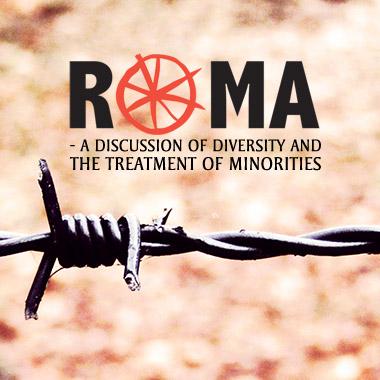
Learning about the Roma experience in Europe is not only about learning history. It is about understanding the presence, and it is also an insight into a common European future. Konstanty Gebert analyses the Roma people’s past and present and discusses issues of race, identity, integration and discrimination that are at the forefront of contemporary European politics.

Self Paced
Self-Paced
Public Health in Humanitarian Crises 1 (Coursera) Coursera
Johns Hopkins University

Public Health in Humanitarian Crises 1 (Coursera)

This course, Public Health in Humanitarian Crises 1, introduces discussions about the public health approach to problems experienced by people affected by disasters, both natural and related to conflict. The course discusses the many changes which occur in people’s lives when they are uprooted by a disaster, ranging from changes in disease patterns, access to health care, livelihoods, shelter, sanitary conditions, nutritional status, etceteras. We will explore what humanitarian interventions could look like if we want to mitigate the effects of disasters. The course content is a mix of theoretical knowledge and many practical examples from recent disasters. We think this course is unique because it contains so many practical ‘real-life’ examples and is taught by instructors and guest lecturers who together have over 200 years of experience in this field.

Nov 23rd 2026
5-12 Weeks
Sustainable Development Goal 17: Partnerships for the Goals (CanopyLAB) CanopyLAB
SDG LAB

Sustainable Development Goal 17: Partnerships for the Goals (CanopyLAB)

The Sustainable Development Goals present an ambitious vision for the future ad it calls on many stakeholders to work in tandem and support each other. From government to civil society, from private companies to social enterprises, each must acknowledge their responsibility and embrace their role in making the goals a reality. Thus, the final goal, Goal 17, is about achieving partnerships that go beyond good will. These partnerships must drive in results, and fortunately, emerging trends in co-creation within the public and private sphere are making it easier than ever for stakeholders to work shoulder-to-shoulder.

Self Paced
Self-Paced
Business Model Canvas: A Tool for Entrepreneurs and Innovators (Project-Centered Course) (Coursera) Coursera
University System of Georgia

Business Model Canvas: A Tool for Entrepreneurs and Innovators (Project-Centered Course) (Coursera)

In this project-centered course*, you will use the Business Model Canvas innovation tool to approach either a personal or corporate challenge or opportunity. You’ll learn to identify and communicate the nine key elements of a business model: Customer Segments, Value Proposition, Channels, Customer Relationships, Key Resources, Key Activities, Key Partners, Revenue Streams, and Cost Structure. Your completed project will be a polished Business Model Canvas that outlines the business case for a new product or service to address your selected challenge or opportunity. You’ll present your case in both a one-page document and a 10-minute video presentation.

Nov 23rd 2026
5-12 Weeks
Sustainable Development Goal 2: Zero Hunger (CanopyLAB) CanopyLAB
SDG LAB

Sustainable Development Goal 2: Zero Hunger (CanopyLAB)

The course will walk you through the content and targets of the Sustainable Development Goals 2 titled “Zero Hunger”, and provide you with information on how different UN agencies, civil society, governments, the private sector, and education/research institutes work to achieve this goal. But it does not stop there. Through the course, you will gain not only important knowledge but also skills to help you champion this goal and take action to bring about the end of hunger by 2030.

Self Paced
Self-Paced
Sustainable Development Goal 8: Decent Work and Economic Growth (CanopyLAB) CanopyLAB
SDG LAB

Sustainable Development Goal 8: Decent Work and Economic Growth (CanopyLAB)

This course aims at introducing you to Goal 8: Decent Work and Economic Growth. In Unit 1, we will take a look at what this goal means, and why the UN views it as an important goal for sustainable development. In Unit 2, we will focus on the targets set under Goal 8, and some real-world examples of how governments and businesses are doing their part to achieve the goal by 2030. In Unit 3, we will look at the organizations and figures who are making great contributions to Goal 8 and what we can learn from their dedication and approaches. Finally, in Unit 4, you will get the opportunity to take the reigns and become a champion of Goal 8 yourself.

Self Paced
Self-Paced
Sustainable Development Goal 6: Clean Water and Sanitation (CanopyLAB) CanopyLAB
SDG LAB

Sustainable Development Goal 6: Clean Water and Sanitation (CanopyLAB)

In this course, we provide you with an introduction to the Sustainable Development Goal 6: Clean Water and Sanitation and all its related targets aiming to achieve the goal by the year 2030. We will also learn about how the United Nations, civil society, the private sector and governments work both independently and interdependently on this issue. We will be “visiting” countries such as Somalia, the U.S., India, Qatar, Palestine, Bosnia and Herzegovina and Chile to get a better understanding of the very different challenges each country faces. We will also do many fun exercises to help you analyze the knowledge you have gained, link theory to examples, and partake in the fight for water rights for all. Finally, we will look at what YOU can do to make a difference for Goal 6!

Self Paced
Self-Paced
The Search for Great Ideas: Harnessing creativity to empower innovation (Coursera) Coursera
Michigan State University

The Search for Great Ideas: Harnessing creativity to empower innovation (Coursera)

Where do great business ideas come from? We all have compelling business concepts that we've been thinking about for years. In this course we will explore how to use observational tools and other techniques for idea generation and we will talk about how to evaluate the good ideas from the bad. The goal is to settle on a business idea that you are not only passionate about but also has real market application.

Nov 23rd 2026
3 Weeks
A Circular Economy of Metals: Towards a Sustainable Societal Metabolism (Coursera) Coursera
Leiden University

A Circular Economy of Metals: Towards a Sustainable Societal Metabolism (Coursera)

Metals are present everywhere around us and are one of the major materials upon which our economies are built. Economic development is deeply coupled with the use of metals. During the 20th century the variety of metal applications in society grew rapidly. In addition to mass applications such as steel in buildings and aluminium in planes, more and more different metals are in use for innovative technologies such as the use of the specialty metal indium in LCD screens. A lot of metals will be needed in the future. It will not be easy to provide them. In particular in emerging economies, but also in industrialized countries, the demand for metals is increasing rapidly. Mining and production activities expand, and with that also the environmental consequences of metal production. In this course, we will explore those consequences and we will also explore options to move towards a more sustainable system of metals production and use.

Nov 30th 2026
5-12 Weeks
Global Environmental Management (Coursera) Coursera
Technical University of Denmark - DTU

Global Environmental Management (Coursera)

Learn about the best environmental technologies for a sustainable development and how they are managed in various settings around the world. This course gives you an opportunity to learn about global trends that influence our environment and the living conditions and how different management systems and approaches that are used around the world to manage the environment. This includes current environmental technologies built for the environment and technologies for sustainable soil management, groundwater protection methods and integrated Water resources management.

Nov 23rd 2026
5-12 Weeks