EdX

Drones for Agriculture: Prepare and Design Your Drone (UAV) Mission (edX)

Drones for Agriculture: Prepare and Design Your Drone (UAV) Mission (edX)

Take a dive and expand your knowledge about drones en drone technology. Learn how to prepare and execute a flight mission with an Unmanned Aerial Vehicle (UAV) and how to use, process and understand the collected drone data for your own applications.

Class Deals by MOOC List - Click here and see EdX's Active Discounts, Deals, and Promo Codes.

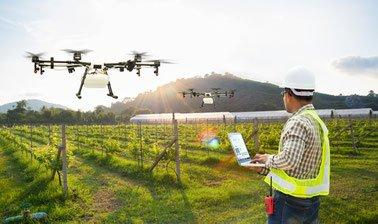
We are all getting familiar with the image of a drone in the sky. Although flying a drone is fun, drones are not toys. More and more UAVs or drones are used by governments and companies to gain answers and insights on nature, agricultural and metropolitan challenges among other fields. For example, small Drones/UAVs (Unmanned Aerial Systems) are employed in agriculture for crop observation, crop monitoring, field analysis and map generation through aerial surveys. And with the available software and 'mission planning tools' market growing, so is the demand for knowledge and understanding about its usage and limitations.
Our top professors of the 'Information Technology Group' and the 'Laboratory of Geo-Information Science and Remote Sensing group' of Wageningen University & Research will teach you whether it makes sense to use drones for your application, challenge or question. You will learn how to plan an end-to-end mission (from image acquisition to data visualization) for your specific drone application and how to execute a drone mission safely. Afther finishing this online course you will have gained full understanding of the aerial mapping workflow and how to implement it in a programmable small drone. You will know which steps you need to take to gain the valuable insights you are looking for.

Do I need a drone to complete this course?
No! You do not need a drone to complete this course. For all the assignments and exercises we will provide the necessary material (in case it is needed). But, we expect to pick your curiosity with this course and hopefully nudge you into buying one and joining the community ;).

For who
Although the course is initially made for agriculture technicians, researchers or graduate students from multidisciplinary technical fields, everyone that aims to learn how to use an off-the-shelf small drone for generating a high-resolution image from a field, or has a general high interest in drones, is very welcome.

What you'll learn

  • Learn to decide whether it makes sense to use a drone for your application or challenge
  • Design a process from acquisition to data visualization and evaluation for your specific drone application
  • Learn about the available airborne technology and software
  • Understand what UAV international legislation and regulations are concerning drones
  • How to make an aerial surveying workflow
  • How to make the required flight preparations and create- and execute a safe mission setup
  • You will learn about mission planning and the available open source and commercial tools
  • You will gain understanding about aerial imaging product delivery

Syllabus

Module 1: Remote Sensing, UAV's and Applications
In this module you will learn about what Remote Sensing is and how we can use UAVs as tool for our applications. We will explore the possibilities that airborne technology offers.
Module 2: Planning a mission and acquiring the data
During module 2 we will cover the steps that need to be followed when planning a mission, how to do it, what is needed and what to look out for and how the data is acquired.
Module 3: From acquisition to visualisation
Module 3 focuses on evaluating and processing the data that we have obtained during the mission and how we can process it to deliver a product instead of just a photo gallery! This module will also show some simple examples of data processing techniques used in academia and professional work.
Go to Class
MOOC List is learner-supported. When you buy through links on our site, we may earn an affiliate commission.

Related Courses

Risk Management in agricultural business and Financing (edX) EdX
State Bank of India - SBI

Risk Management in agricultural business and Financing (edX)

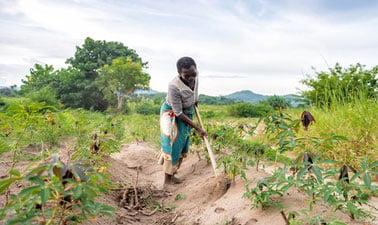
Make yourself aware about the various types of risk that affect the stakeholders of the Agricultural Economy and the ways with which these risks can be mitigated. Agriculture has been and will be for ever an essential part of the economics in the modern world. But this essential ingredient of the economy as well as the existence of the human civilisation is having a lot of risks associated with it. However, as food is an essential part of survival, the risk must be endured.

Self Paced
Self-Paced
Retos de la Agricultura y la Alimentación en el Siglo XXI (edX) EdX
Universitat Politècnica de València,UPValenciaX

Retos de la Agricultura y la Alimentación en el Siglo XXI (edX)

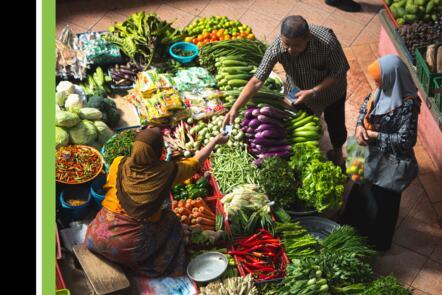
Reflexionaremos sobre agricultura y alimentación en un planeta que tiene que alimentar a una población creciente con recursos limitados. El planeta se enfrenta al reto de alimentar a una población creciente en un escenario de limitación de recursos, mercados agroalimentarios imperfectos, crisis de alimentos, y población rural vulnerable. El curso invita a una reflexión sobre las alternativas de la agricultura y la alimentación, vistas como solución a los desafíos socio-económicos y ambientales, con énfasis en el papel de la agricultura familiar y en modos de producción sostenibles, en el marco de cadenas de valor más equilibradas.

No sessions available
5-12 Weeks
Climate Change and Resilience in Food Systems (FutureLearn) FutureLearn
University of Leeds,Africap

Climate Change and Resilience in Food Systems (FutureLearn)

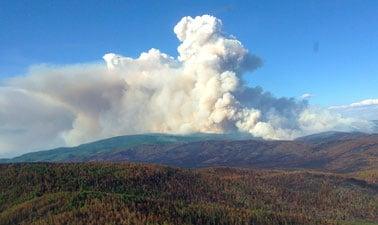
Learn new research-led strategies designed to mitigate the effects of climate change on agriculture and food systems. Learn about the effects of climate change and how to build resilience in agriculture and food systems. Even small climate changes can have large-scale consequences in agriculture and food systems with devastating effects for the people and their economies. On this course, you will learn strategies designed to mitigate the impact of climate change, develop resilient food systems and create sustainable development in local communities.

Self Paced
2 Weeks
Introduction to Sustainability (Coursera) Coursera
University of Illinois at Urbana-Champaign

Introduction to Sustainability (Coursera)

This course introduces the academic approach of Sustainability and explores how today’s human societies can endure in the face of global change, ecosystem degradation and resource limitations. The course focuses on key knowledge areas of sustainability theory and practice, including population, ecosystems, global change, energy, agriculture, water, environmental economics and policy, ethics, and cultural history.

Aug 31st 2026
5-12 Weeks
Coberturas de riesgo con futuros y opciones para agrobusiness (Coursera) Coursera
Universidad Austral

Coberturas de riesgo con futuros y opciones para agrobusiness (Coursera)

La producción agropecuaria y agroalimentaria tiene una gran importancia en las economías latinoamericanas tanto desde el punto de vista de su participación en el PBI de los países, generación de empleo y exportaciones , ya que en muchos casos las exportaciones agroalimentarias constituyen una fuente muy importante de divisas en las economías latinoamericanas.

Sep 14th 2026
4 Weeks
A Nutritional Approach to Agriculture and Food Security (FutureLearn) FutureLearn
University of Leeds

A Nutritional Approach to Agriculture and Food Security (FutureLearn)

Develop skills to apply and evaluate innovative solutions that place nutrition at the heart of a sustainable food system. Modern agriculture and global food systems have become very complex and do not always provide people with affordable and nutritious food. This course presents current research, which aims to place nutrition at the heart of the food system.

Self Paced
2 Weeks
Feeding a Hungry Planet: Agriculture, Nutrition and Sustainability (edX) EdX
SDGAcademyX,SDG Academy

Feeding a Hungry Planet: Agriculture, Nutrition and Sustainability (edX)

How do we create a healthy and sustainable diet for the growing world population? Agriculture is more than waving fields of wheat; our ability to grow food from existing natural resources – and without decimating those resources – is key to sustainably feeding the world. In this course, learn about food security worldwide, the effects of malnutrition, how we manage ecosystems that provide food resources and more.

Self Paced
Self-Paced
Agriculture, Economics and Nature (Coursera) Coursera
University of Western Australia

Agriculture, Economics and Nature (Coursera)

Sound economic thinking is crucial for farmers because they depend on good economic decision making to survive. Governments depend on economic information to make good policy decisions on behalf of the community. This course will help you to contribute to better decision making by farmers, or by agencies servicing agriculture, and it will help you to understand why farmers respond to policies and economic opportunities in the ways they do.

Aug 31st 2026
5-12 Weeks
Black Agricultural Solutions to Food Apartheid: A Teach-Out (Coursera) Coursera
Johns Hopkins University

Black Agricultural Solutions to Food Apartheid: A Teach-Out (Coursera)

Black Agricultural Solutions to Food Apartheid is a series where we dive deep into the historical, ancestral, and spiritual connections that Black people have to land and agriculture. Throughout this course, we encourage participants to learn about their ancestral foodways, agrarian practices, and spiritual connections. These sessions share wisdom and highlight the importance of food sovereignty, rebuilding community, and land based living.

Sep 14th 2026
1 Week
Strategies and Tools to Mitigate Agricultural Risk (Coursera) Coursera
University of Illinois at Urbana-Champaign

Strategies and Tools to Mitigate Agricultural Risk (Coursera)

Learners will examine risk management strategies for crop production, discuss techniques and programs to mitigate financial risk, and describe the types of rental agreements for agricultural land use. Learners will also explore traditional and innovative risk management strategies used in agricultural food production.

Sep 14th 2026
5-12 Weeks