EdX

Introduction to AP* Human Geography (edX)

Introduction to AP* Human Geography (edX)

Explore key issues in human geography, including population, migration, cultural patterns and more as you prepare for the AP exam. Are you interested in what’s happening in your global community? Explore economic, social, political, and environmental issues through the lens of geography.

Class Deals by MOOC List - Click here and see EdX's Active Discounts, Deals, and Promo Codes.

By exploring human influences and patterns, you can better understand the world around you, make predictions, and propose solutions to current issues. In this course, you will investigate geographic perspectives and analyze historical and current patterns of migration, population, political organization of space, agriculture, food production, land use, industrialization and economic development.

In addition, you will learn helpful strategies for answering multiple-choice questions and free response essay questions on the AP Human Geography test.
Each of the seven modules in this course aligns with the concepts in the Advanced Placement* Human Geography course.
This course is specifically designed for students who are interested in learning more about the AP Human Geography course before enrolling, supplementary support and exam review, and for use in blended learning classrooms.

  • Advanced Placement® and AP® are trademarks registered and/or owned by the College Board, which was not involved in the production of, and does not endorse, these offerings.

What you'll learn

  • how to interpret maps and analyze geospatial data
  • ways to determine implications of associations and networks among phenomena in places
  • how to recognize relationships among patterns and processes at different scales of analysis
  • methods to define regions and regionalization processes
  • strategies for analyzing interconnections among places
  • how the AP* Human Geography exam is structured and helpful strategies for doing your best

Syllabus

Module 1: Geography: Its Nature and Perspectives
Module 2: Population and Migration
Module 3: Cultural Patterns and Processes
Module 4: Political Organization of Space
Module 5: Agriculture, Food Production, and Rural Land Use
Module 6: Industrialization and Economic Development
Module 7: Cities and Urban Land Use
Go to Class
MOOC List is learner-supported. When you buy through links on our site, we may earn an affiliate commission.

Related Courses

Exploring Humans’ Space: An Introduction to Geographicity (edX) EdX
École Polytechnique Fédérale de Lausanne,EPFLx

Exploring Humans’ Space: An Introduction to Geographicity (edX)

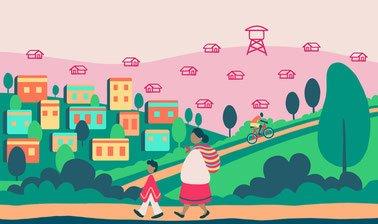
Explore how geography, cartography, urbanization and spatial justice play a role in shaping the notion of human space. How do we understand the notion of space? How have urbanisation, mobility, digital spaces, and globalization changed the way we perceive it? This course aims to help you feel comfortable with the notion of space.

Self Paced
Self-Paced
Sustainable Urban Development (edX) EdX
Wageningen University,Delft University of Technology,DelftX,WageningenX

Sustainable Urban Development (edX)

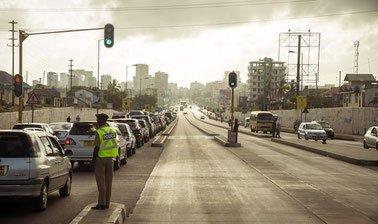
Learn why cities are key in resolving global urbanization and sustainability challenges and how you can engineer tomorrow’s cities today. Did you know that cities take up less than 3% of the earth’s land surface, but more than 50% of the world’s population live in them? And, cities generate more than 70% of the global emissions? Large cities and their hinterlands (jointly called metropolitan regions) greatly contribute to global urbanization and sustainability challenges, yet are also key to resolving these same challenges.

Self Paced
Self-Paced
China’s First Empires and the Rise of Buddhism (edX) EdX
HarvardX,Harvard University

China’s First Empires and the Rise of Buddhism (edX)

Learn about the Qin and Han dynasties, and how Buddhism and ideas of self-realization influenced the medieval period. This course, the second in a collection on Chinese history and culture, addresses how the Qin dynasty conquered China and established a new system of government and how the Han dynasty built a stable, centralized empire that lasted for hundreds of years. We cover the early history of Buddhism in China and how the rising feudal aristocracy responded to the loss of empire by looking inward.

Self Paced
Self-Paced
Migration Law (edX) EdX
LouvainX,Université Catholique de Louvain - UCL

Migration Law (edX)

Law

Learn the fundamentals of Migration Law. This course analyses in a theoretical and practical way the evolution of international migration law. Who can migrate? What are the conditions to move from one country to the other? How are the numbers of migrations evolving over the recent years? Migration is both an ancient and a contemporary question, as it always existed and will never stop.

Self Paced
13-24 Weeks
Co-Creating Sustainable Cities (edX) EdX
Wageningen University,Delft University of Technology,DelftX,WageningenX

Co-Creating Sustainable Cities (edX)

Learn how citizen’s co-creation is key in making cities worldwide more sustainable. Around the world, major challenges of our time such as population growth and climate change are being addressed in cities. Here, citizens play an important role amidst governments, companies, NGOs and researchers in creating social, technological and political innovations for achieving sustainability.

Self Paced
Self-Paced
Sustainable Food Security: The value of systems thinking (edX) EdX
Wageningen University,WageningenX

Sustainable Food Security: The value of systems thinking (edX)

Learn how to solve the ‘Rubik’s cube’ of systems thinking and how it’s applied to improve the environmental sustainability of food production systems! Have you ever considered how many aspects of food production affect the natural environment? Every aspect needs to be considered in attaining the future goal to produce enough food for the growing population while at the same time preserving our planet. It’s as difficult as solving a Rubik’s cube; changing one aspect may affect the environment in a major way.

Self Paced
Self-Paced
Global History Lab (edX) EdX
Princeton University

Global History Lab (edX)

Learn the span of world history from 1300 to the present. In this global history course, you will learn not just by reading and watching lectures, but also by analyzing historical documents and applying your knowledge. The core of this course is a series of weekly lab assignments in which you and your fellow students will work in teams to use historical knowledge from the course to solve problems and develop new connections and interpretations of primary historical materials.

No sessions available
5-12 Weeks
Feeding a Hungry Planet: Agriculture, Nutrition and Sustainability (edX) EdX
SDGAcademyX,SDG Academy

Feeding a Hungry Planet: Agriculture, Nutrition and Sustainability (edX)

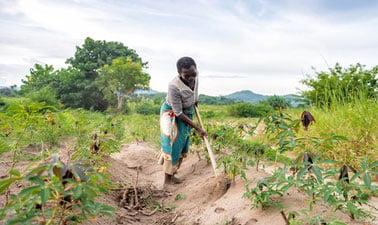
How do we create a healthy and sustainable diet for the growing world population? Agriculture is more than waving fields of wheat; our ability to grow food from existing natural resources – and without decimating those resources – is key to sustainably feeding the world. In this course, learn about food security worldwide, the effects of malnutrition, how we manage ecosystems that provide food resources and more.

Self Paced
Self-Paced