Social Work Practice: Advocating Social Justice and Change (Coursera)

Social Work Practice: Advocating Social Justice and Change (Coursera)

In this course, you will learn how social workers in the United States engage in creating change and supporting the resilience of individuals, families and communities in this new era. Learners will have an opportunity to explore the social work profession, the different roles of social workers in a range of settings, the cross cutting themes that guide social work practice, the history of social work, and current challenges.

Class Deals by MOOC List - Click here and see Coursera's Active Discounts, Deals, and Promo Codes.

Using a social justice lens, learners will reflect on current challenges facing the lives of individuals, families and communities and examine ways to advocate for needed changes.
This course can be taken as a stand-alone learning experience or as part of the "Social Work: Practice, Policy, and Research MasterTrack Certificate Program."

Syllabus

WEEK 1
What is Social Work?
Welcome to Module 1 of the course! This module focuses on defining social work as a profession, exploring roles social workers perform across settings, examining core social work skills at the micro, mezzo, and macro system levels and addressing social work professional ethics. We hope that by the end of this module, you will have a greater understanding of the breadth of social work and the range of roles and skills social workers develop in their work.

WEEK 2
Integrated Themes of Social Work
In this Module, you will have the opportunity to learn about the core frameworks and approaches the guide how social workers engage in change efforts. The core frameworks include: the ecological systems perspective, the strengths approach, and empowerment, the use of a social justice lens, a cultural humility framework, and an evidence-informed practice perspective. The module begins with brief mini-lectures about the core frameworks and some examples of how evidence is used to promote change efforts. You will then engage in applying what you have learned to a case situation. You will listen to a brief discussion of the case from former MSW students. You will also take a brief quiz that highlights the core frameworks. To conclude this module, you will hear from a few professionals about how they link the core frameworks to their own practices.

WEEK 3
A History of Social Work
This module explores the history of social work as a field. You will have the opportunity to engage with an interactive timeline that outlines how different people, events, and policies have helped shape U.S. based social work over the past 100 years. You will also hear from current-day social workers whose work builds upon the historical contexts you’ve explored. Finally, you’ll learn about social work’s “Grand Challenges” and how these are shaping the future direction of the field.

WEEK 4
Privilege, Oppression, Diversity, and Social Justice
Module 4 explores the connection between social work and social justice. Indeed, some social workers maintain that social work is social justice. You’ll learn about a framework for centering justice in social work: Privilege, Oppression, Social Justice, and Diversity (P.O.D.S.), as well as the key concepts of intersectionality and praxis. You will also hear from faculty and social workers in the field about how their work seeks to center justice.


Go to Class
MOOC List is learner-supported. When you buy through links on our site, we may earn an affiliate commission.

Related Courses

Legal Tech and the Digital Transformation of Law (Coursera) Coursera
Universidad Austral

Legal Tech and the Digital Transformation of Law (Coursera)

The digital revolution changed the way we communicate and trade. Now, it is coming into the world of law. This program will give you a broad overview of the main trends that are affecting the legal industry: the birth of the legal tech market and the application of technology in law; the role of artificial intelligence in the automation of the work of lawyers; blockchain technology and its impact on the way we sign and execute contracts; initiatives to ensure access to justice through virtual courts and robot judges.

Oct 5th 2026
5-12 Weeks
Thought Experiments: An introduction to philosophy (Coursera) Coursera
Erasmus University Rotterdam

Thought Experiments: An introduction to philosophy (Coursera)

Doing philosophy is like seeing a movie and wondering what will happen next, or what you would do in the same situation, or what’s real and what’s merely make-believe. You’re probably not aware of it, but since you already know how to see movies and use your imagination, you’re well on your way to becoming a good philosopher. The only thing you still need and want to develop though, is the ability to use your imagination in the philosophical way, and that’s exactly what you’ll learn in this MOOC.

Sep 21st 2026
5-12 Weeks
The People, Power, and Pride of Public Health (Coursera) Coursera
Johns Hopkins University

The People, Power, and Pride of Public Health (Coursera)

The People, Power, and Pride of Public Health provides an engaging overview of the incredible accomplishments and promise of the public health field. The first module includes interviews with legendary public health figures whose work led to millions of lives saved with vaccines, air bags and car seats, and the federal Women Infants and Children (WIC) nutrition program.

Sep 21st 2026
3 Weeks
Life After COVID-19: Get Ready for our Post-Pandemic Future (Coursera) Coursera
Institute for the Future

Life After COVID-19: Get Ready for our Post-Pandemic Future (Coursera)

The pandemic will create long-lasting and surprising ripple effects, even after vaccines are widely available. Are you ready for what's next? This course will give you a clear forecast of the challenges and opportunities you’re most likely to encounter over the next 3-5 years, as a direct result of the ongoing COVID-19 pandemic. Find out what risks still lie ahead; Make a plan for resilience; Play future forecasting games to stretch your imagination about what's possible; Build your post-pandemic confidence; Envision the world you want to live in when we’re all finally on the other side of COVID-19. How can you take advantage of this unprecedented moment of disruption to make positive change in your community, company or other organization?

Sep 28th 2026
4 Weeks
Women's Leadership: Boost your skills and drive change (Coursera) Coursera
Inter-American Development Bank - IDB

Women's Leadership: Boost your skills and drive change (Coursera)

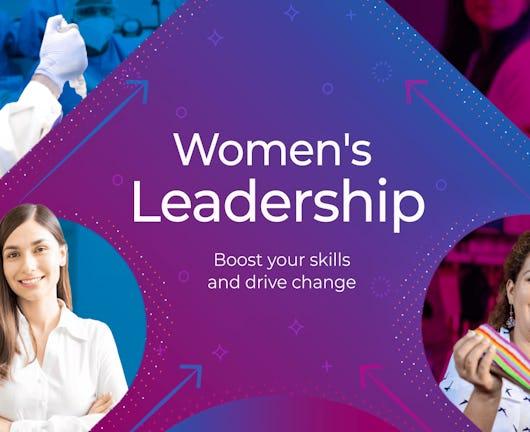
In this course, you will be able to learn about the importance of female leadership in Latin America and the Caribbean for the growth and development of economies, democracies, and societies. It focuses on gender equality as a fundamental pillar for sustainable and inclusive growth in the region.

Sep 28th 2026
5-12 Weeks
Leading transformations: Manage change (Coursera) Coursera
Macquarie University

Leading transformations: Manage change (Coursera)

We live in a globalised world of continuous change. Your ability to successfully manage change will allow you to have a positive impact on your work and your life. Via structured learning activities (video lectures, quizzes, discussion prompts and written assessment) this course will teach you how to effectively influence change by developing a ‘change mindset’, creating a productive change cycle, and leading yourself and others on the change journey.

Sep 21st 2026
5-12 Weeks
Black Lives Matter (Coursera) Coursera
Johns Hopkins University

Black Lives Matter (Coursera)

The #BlackLivesMatter movement is the most significant political movement in African American life in the United States in the last fifty years. BLM leaders denounced anti-black racism, white supremacy, and police brutality and reshaped how we think about gender, sexuality, social justice, economic injustice, and crime.

Sep 28th 2026
4 Weeks
Introduction to International Criminal Law (Coursera) Coursera
Case Western Reserve University

Introduction to International Criminal Law (Coursera)

From the Nuremberg trial to the case against Saddam Hussein, from the prosecution of Al-Qaeda terrorists to the trial of Somali pirates – no area of law is as important to world peace and security as international criminal law. Taught by one of the world’s leading experts in the field, this course will educate students about the fundamentals of international criminal law and policy. We will explore the contours of international crimes such as genocide, war crimes, terrorism, and piracy. We will examine unique modes of international criminal liability and specialized defenses. And we will delve into the challenges of obtaining custody of the accused and maintaining control of the courtroom.

Sep 21st 2026
5-12 Weeks
Economic Growth and Distributive Justice Part II - Maximize Social Wellbeing (Coursera) Coursera
Tel Aviv University

Economic Growth and Distributive Justice Part II - Maximize Social Wellbeing (Coursera)

If you really care about the big questions in the economies and societies of the 21st century, such as distributive justice - namely, inequality of income or wealth, and its correlation with economic growth - this course is meant for you. The knowledge you will gain can truly change your outlook on our world.

Sep 28th 2026
5-12 Weeks
Cultural impact of housing displacement gentrification (Coursera) Coursera
University of Glasgow

Cultural impact of housing displacement gentrification (Coursera)

This course provides an introduction to gentrification and to the cultural impacts of housing displacement for people in cities and neighbourhoods across the world. Gentrification is a term which has been used to describe the process by which wealthier people move into an area leading to the displacement of poorer groups who are priced out of the area by increases in rents and housing prices. It is usually associated with physical improvements to the housing stock and to changes in local shops and services. Sometimes it is closely associated with the displacement of black people by white people.

Sep 21st 2026
4 Weeks
Children's Human Rights - An Interdisciplinary Introduction (Coursera) Coursera
University of Geneva

Children's Human Rights - An Interdisciplinary Introduction (Coursera)

Drawing on the contributions of several academic disciplines including law, psychology, sociology, history, educational and health sciences, economy and anthropology, an interdisciplinary approach guides the student into a selection of critical issues concerning children’s rights. Participants will gain insight relative to the development of this specific human rights category, as well as to the evolution of the challenges faced by children over time and society’s efforts to respond.

Oct 5th 2026
5-12 Weeks
Foundations of Diversity and Inclusion at Work TeachOut (Coursera) Coursera
University of Virginia

Foundations of Diversity and Inclusion at Work TeachOut (Coursera)

The summer of 2020 has brought issues of equity and race to the forefront of society. How do we create tolerant and just climates at work? Changing the culture of an organization is challenging in the best of circumstances; today, it can seem impossible. Yet, it is more necessary and urgent than ever to address these issues thoughtfully and with effective practices that can produce real change. Six Darden professors have designed this teach-out to bring you the latest scholarship and best practices on diversity, equity and inclusion and organizational change.

Sep 28th 2026
2 Weeks