Community Awareness: What is a Socially Just University (Coursera)

Community Awareness: What is a Socially Just University (Coursera)

The course assumes that higher education is a gateway to the resources of society and that there is a need for institutions to become more socially just for all groups, with emphasis on low-income and minority populations that are traditionally underrepresented.

Class Deals by MOOC List - Click here and see Coursera's Active Discounts, Deals, and Promo Codes.

The course includes sessions with institutional leaders about higher education and American society, diversity and inclusion in learning and teaching, professors and students as change agents, socially-just research, and struggles for equity and justice on campus and in communities.
Illustrative modules include: What is a university? What is the role or potential role of universities in making societies more socially just? Do present universities contribute to inequalities and injustices and, if so, how? What changes are needed now?
Sessions will draw upon initiatives at the University of Michigan for starters, and we also will draw upon other educational leaders nationwide.

Syllabus

WEEK 1
Introduction to CAC: What is a Socially Just University
What is a socially-just university? is a question arising at a time when American society is changing, and challenging many institutions to reconsider some of their most fundamental purposes and practices.

WEEK 2
Higher Education and American Society
American society is changing and, in so doing, challenging higher education to adapt to these changes. As society increases in its people of African, Asian, and Latin American descent, and people of color become the majority, for example, unanswered questions are arising about what universities are for, and who are they for?

WEEK 3
Reconceiving Our Purpose
What is, or should be, the purpose of higher education?

WEEK 4
Reconceiving Learning and Teaching
Learning and teaching are central to the core educational mission of universities, but what happens to these activities when the institutions are changing in their population?

WEEK 5
Reconceiving Research & Scholarship
Research and scholarship produce “knowledge for society,” but knowledge development has various approaches.

WEEK 6
Institutional Change: Engaging Faculty
Faculty members are central to higher education, and nothing lasting happens without them. But, what are some ways to engage faculty members, especially at a time when universities are changing in their composition?

WEEK 7
Institutional Change: The Role of Administration
The University of Michigan is involved in a comprehensive effort to transform the institution for diversity, equity, and inclusion, and this effort requires institutional changes at all levels.

WEEK 8
Final Notes
This module will give you an opportunity to reflect on what you’ve learned throughout this experience and to contemplate what pieces of the conversation are missing.
Go to Class
MOOC List is learner-supported. When you buy through links on our site, we may earn an affiliate commission.

Related Courses

Diversity and Inclusion for HR Professionals (Coursera) Coursera
University of California, Irvine

Diversity and Inclusion for HR Professionals (Coursera)

Welcome to Diversity & Inclusion for HR Professionals. In this course we will review the changing landscape of the workplace and discuss the current change drivers that make Diversity and Inclusion an important focus for your organization. We will explore strategies for creating an inclusive climate and a sense of belonging, and how bias and microaggressions can be mitigated. Finally, we will explore the business case for Diversity and Inclusion strategies, and you’ll have the opportunity to develop a DEIB tailored to your organization and situation.

Sep 28th 2026
4 Weeks
Foundations of Diversity and Inclusion at Work TeachOut (Coursera) Coursera
University of Virginia

Foundations of Diversity and Inclusion at Work TeachOut (Coursera)

The summer of 2020 has brought issues of equity and race to the forefront of society. How do we create tolerant and just climates at work? Changing the culture of an organization is challenging in the best of circumstances; today, it can seem impossible. Yet, it is more necessary and urgent than ever to address these issues thoughtfully and with effective practices that can produce real change. Six Darden professors have designed this teach-out to bring you the latest scholarship and best practices on diversity, equity and inclusion and organizational change.

Sep 28th 2026
2 Weeks
Teaching Science at University (Coursera) Coursera
University of Zurich

Teaching Science at University (Coursera)

This course will prepare you for teaching science in higher education. In this MOOC you will learn to make your knowledge as an excellent researcher accessible to your students. We will show you how to communicate science to novices as well as advanced students in science.

Oct 12th 2026
5-12 Weeks
Fundamentals of Diversity, Equity, Inclusion, and Belonging (Coursera) Coursera
Coursera Instructor Network

Fundamentals of Diversity, Equity, Inclusion, and Belonging (Coursera)

“Fundamentals of Diversity, Equity, Inclusion, and Belonging (DEIB)” is an insightful, short-form course designed for beginners interested in starting their DEIB journey in the workplace. As we navigate through increasingly diverse social and professional landscapes, understanding DEIB is no longer optional–it is imperative. This course aims to equip participants with the necessary tools and insights to effectively advocate for DEIB initiatives in professional settings. The course begins by asking participants to craft their own personal DEIB statements, then provides a comprehensive explanation of key DEIB concepts.

Sep 28th 2026
1 Week
Artificial Intelligence (AI) Education for Teachers (Coursera) Coursera
Macquarie University

Artificial Intelligence (AI) Education for Teachers (Coursera)

Today’s learners need to know what artificial intelligence (AI) is, how it works, how to use it in their everyday lives, and how it could potentially be used in their future. Using AI requires skills and values which extend far beyond simply having knowledge about coding and technology. This course is designed by teachers, for teachers, and will bridge the gap between commonly held beliefs about AI, and what it really is. AI can be embedded into all areas of the school curriculum and this course will show you how. This course will appeal to teachers who want to increase their general understanding of AI, including why it is important for learners; and/or to those who want to embed AI into their teaching practice and their students’ learning.

Sep 21st 2026
5-12 Weeks
Disability Awareness and Support (Coursera) Coursera
University of Pittsburgh

Disability Awareness and Support (Coursera)

The goal of this course is to promote equal opportunity and the full participation of students with disabilities in higher education by helping participants advance their awareness of the meaning of accessibility in education. Participants will gain competence and confidence in working with students by focusing on legislation, universal design, and assistive technologies. Thank you to Abbas (Bobby) Husain Quamar, Graduate Student Researcher in the Department of Rehabilitation Science and Technology at the University of Pittsburgh, for his contributions to the course.

Sep 28th 2026
4 Weeks
Introduction to International Criminal Law (Coursera) Coursera
Case Western Reserve University

Introduction to International Criminal Law (Coursera)

From the Nuremberg trial to the case against Saddam Hussein, from the prosecution of Al-Qaeda terrorists to the trial of Somali pirates – no area of law is as important to world peace and security as international criminal law. Taught by one of the world’s leading experts in the field, this course will educate students about the fundamentals of international criminal law and policy. We will explore the contours of international crimes such as genocide, war crimes, terrorism, and piracy. We will examine unique modes of international criminal liability and specialized defenses. And we will delve into the challenges of obtaining custody of the accused and maintaining control of the courtroom.

Sep 21st 2026
5-12 Weeks
Teaching in University Science Laboratories (Developing Best Practice) (Coursera) Coursera
University of Amsterdam

Teaching in University Science Laboratories (Developing Best Practice) (Coursera)

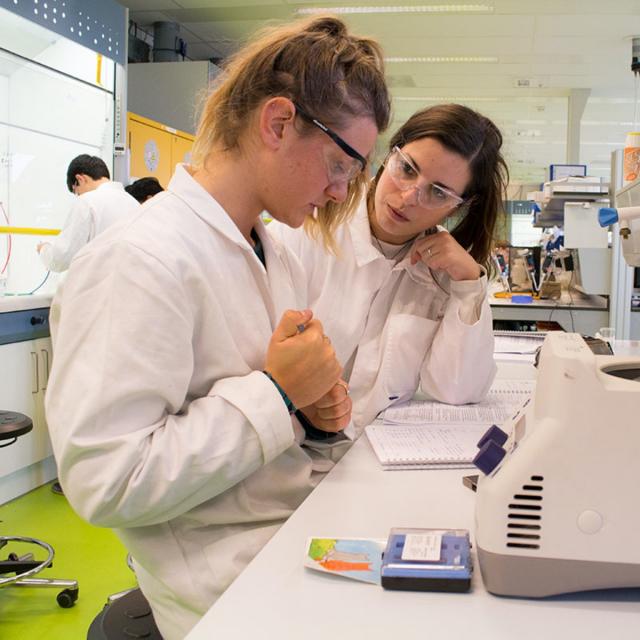
This course is developed to improve the effectiveness of laboratory classes in higher education. It aims to support teachers to improve their teaching skills for active learning in university science laboratory courses. It will show you how laboratory sessions can differ with respect to their aim and expected learning outcomes, how to engage students for learning and how to cope with their different levels of pre-knowledge and experience and probe their understanding. Last but not least it will show how you could assess students in laboratory courses.

Sep 28th 2026
5-12 Weeks
University Studies for Student Veterans (Coursera) Coursera
Columbia University

University Studies for Student Veterans (Coursera)

The skills you learned in the military will go a long way toward helping you succeed in college, but if you’re looking for some extra support – or an academic tune-up – then you’ll find it in this course. We know that the culture of higher education is different from the culture of the military in meaningful ways, and we also know that one of the keys to excelling in college–especially for student veterans–is learning to navigate these differences successfully, right from the very start.

Sep 28th 2026
5-12 Weeks
Legal Tech and the Digital Transformation of Law (Coursera) Coursera
Universidad Austral

Legal Tech and the Digital Transformation of Law (Coursera)

The digital revolution changed the way we communicate and trade. Now, it is coming into the world of law. This program will give you a broad overview of the main trends that are affecting the legal industry: the birth of the legal tech market and the application of technology in law; the role of artificial intelligence in the automation of the work of lawyers; blockchain technology and its impact on the way we sign and execute contracts; initiatives to ensure access to justice through virtual courts and robot judges.

Oct 5th 2026
5-12 Weeks
Community Awareness: Police Brutality in the U.S. (Coursera) Coursera
University of Michigan

Community Awareness: Police Brutality in the U.S. (Coursera)

The tragic deaths of George Floyd, Breonna Taylor, and Ahmaud Arbery have sparked a wave of renewed protests against police brutality across the United States. These nationwide uprisings have transformed into an intense interest from the public around understanding systemic racism and abuse of power. Millions of Americans and people around the world are watching incidents of police violence and excessive force captured on video, but are looking to learn about the inequalities at the root of these incidents. While the calls of Black Lives Matter protesters to #DefundThePolice are being heard for the first time by many Americans, they are part of a longstanding effort by communities and activists to reinvest in communities rather than policing and prisons.

Sep 21st 2026
5-12 Weeks
Revolutionary Ideas: Utility, Justice, Equality, Freedom (Coursera) Coursera
Rutgers University

Revolutionary Ideas: Utility, Justice, Equality, Freedom (Coursera)

What is the purpose of government? Why should we have a State? What kind of State should we have? Even within a political community, there may be sharp disagreements about the role and purpose of government. Some want an active, involved government, seeing legal and political institutions as the means to solve our most pressing problems, and to help bring about peace, equality, justice, happiness, and to protect individual liberty.

Sep 21st 2026
5-12 Weeks